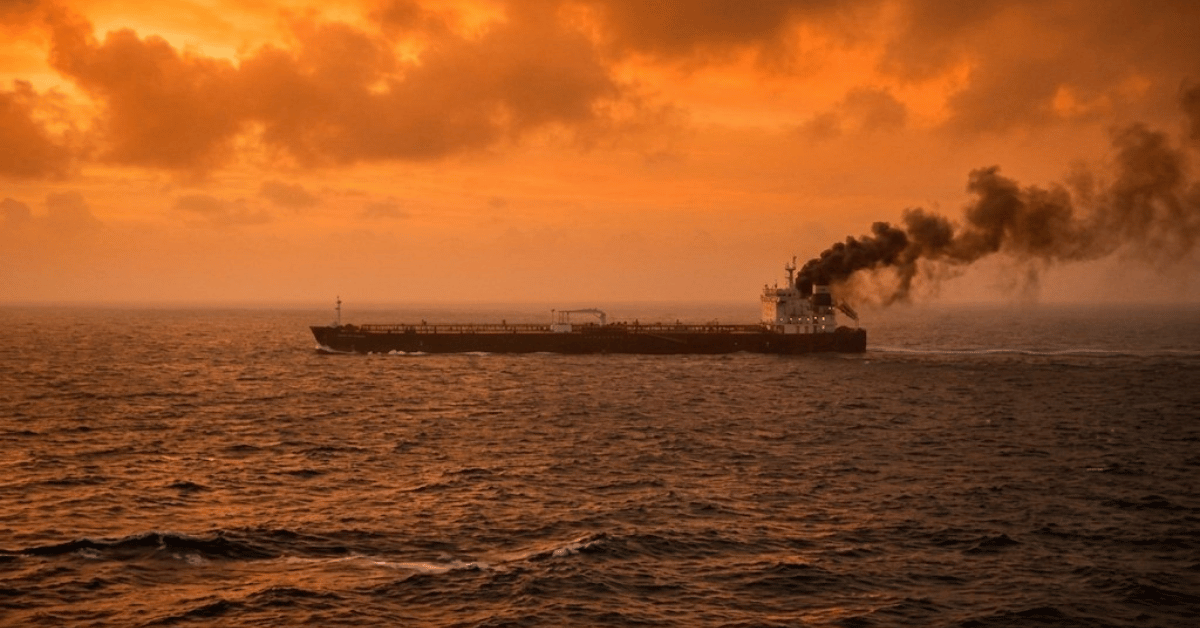
Two projectiles striking a tanker off Qatar represent a troubling escalation in an already volatile maritime corridor, and the lack of confirmed crew status underscores a dangerous information vacuum that threatens navigational safety. For our readers, researchers, policymakers, and maritime professionals, this incident is not an isolated anomaly but a signal that the region's integrated data ecosystem is failing to provide the real-time, validated intelligence needed for safe passage. The UKMTO verified the report but cannot name the vessel or confirm casualties, while Iranian state television separately reports fires on two oil tankers and a tugboat after mine strikes in the Strait of Hormuz. Whether these events are connected remains an open question, but the pattern is clear: attacks are becoming more frequent and less attributable.
This opacity has practical consequences. When vessels sail with transponders off, as UKMTO noted last month is increasingly common, the empirical record of threats becomes fragmented. Without peer-reviewed data on attack vectors or measurable damage assessments, response teams and insurers operate on inference rather than calibrated fact. Consider the contrast with France Extends Black Sea Patrols as Maritime Drones Challenge Detection Capabilities, where a commander openly discusses detection limits and adaptive countermeasures. In the Persian Gulf, by contrast, no party claims responsibility and no agency has confirmed crew status, leaving the shipping industry to navigate a threat environment defined by silence. The recent Strait of Hormuz access secured for four nations under validated passage terms suggests diplomatic progress for some flagged vessels, but the attack 50 nautical miles north of Madinat ash Shamal shows that security assurances do not equate to on-water safety.
A specific takeaway is that the absence of attribution itself becomes a climate indicator for maritime risk. When projectiles strike and no party responds, the operational baseline for safe transit erodes. This is not about assigning blame but about demanding a standardized reporting framework. The Drifting Tanker With 11,000 Tonnes of Sunflower Oil Prompts Measured Response off Bulgaria demonstrates what a coordinated, transparent response can look like: the vessel is named, the cargo quantified, and the hazard communicated. Here, we have none of that. The open question to watch is whether the tanker struck on Wednesday is one of the vessels reported on fire in the Strait of Hormuz. If confirmed, it would link two separate incident reports into a single event, narrowing the search area but widening the implications for passage security. Until UKMTO or another validated source releases the vessel's identity, the shipping community must treat the entire northern Persian Gulf as a zone of unverified risk, and that is an unsustainable basis for global trade.