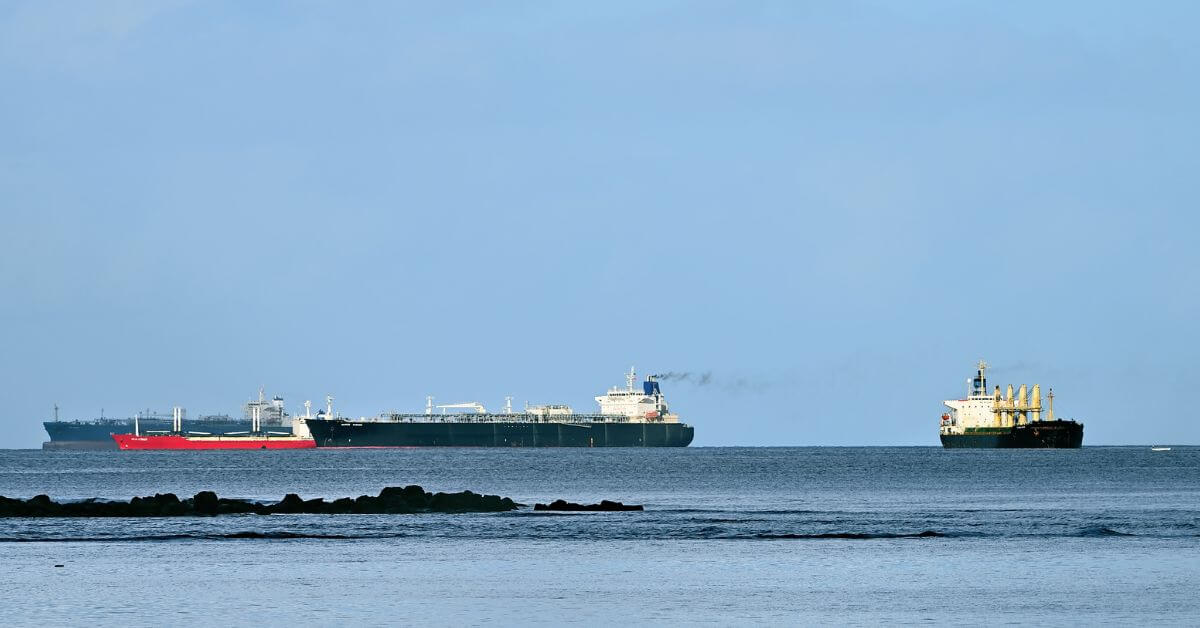
Two tankers were struck by an unknown projectile or debris while transiting the Strait of Hormuz on Monday, and the immediate response from much of the shipping press has been to treat this as a singular event. We see it differently. This is not an isolated incident; it is a data point in a pattern that has been building for months. The fact that two commercial vessels were hit in a waterway that carries roughly a fifth of global oil consumption is not a mystery to be solved in isolation. It is a stress test on the entire maritime logistics chain, and the results are already visible in the market's behavior. Consider how Gulf of Oman STS Transfers Max Out Amid Rising Saudi Oil Exports showed that ship-to-ship transfers have hit capacity, a clear workaround being used to keep cargo moving when direct routes become too risky. That is what we are watching now: not just the incident, but the rerouting, the transshipment, and the added time at sea that follow.
This is where the inquiry into tanker impacts must go beyond identifying the weapon or the actor. The more pressing question is what this means for the insurance calculus, the war-risk premiums, and the scheduling of every vessel that still has to pass through that chokepoint. We would tell any reader with exposure to this trade lane to stop looking at the news cycle and start looking at the data on transit times, waiting zones, and the increased use of STS transfers as a hedging mechanism. The related reporting on Phased Negotiations Aim to Ease Restrictions on Strait of Hormuz and the Eighty Nations Urge Reopening of Vital Strait of Hormuz Shipping Lane tells you that the diplomatic track is active, but diplomatic progress does not move at the speed of a projectile. The gap between those two timelines is where the real risk sits.
Our take is straightforward: do not let the novelty of "unknown projectile" distract from the structural fragility that this incident exposes. The Strait of Hormuz has been a pressure point for decades, but the current combination of high Saudi export volumes, maxed-out STS capacity, and fragile negotiations creates a perfect environment for miscalculation. We would advise charterers and cargo owners to model scenarios where this happens again next week, not to assume this is a one-off. The practical consequence is that voyage calculations must now include a risk premium for delay, not just for damage. For a reader asking us what to watch, we would say this: track the insurance notices, not the headlines. The moment war-risk premiums spike across the board, this stops being a story about two tankers and becomes a story about global supply chain inflation. The concrete point to watch is whether the next 48 hours produce a formal advisory from any major flag state or classification society, because that will tell you if this is an isolated strike or the beginning of a sustained campaign.