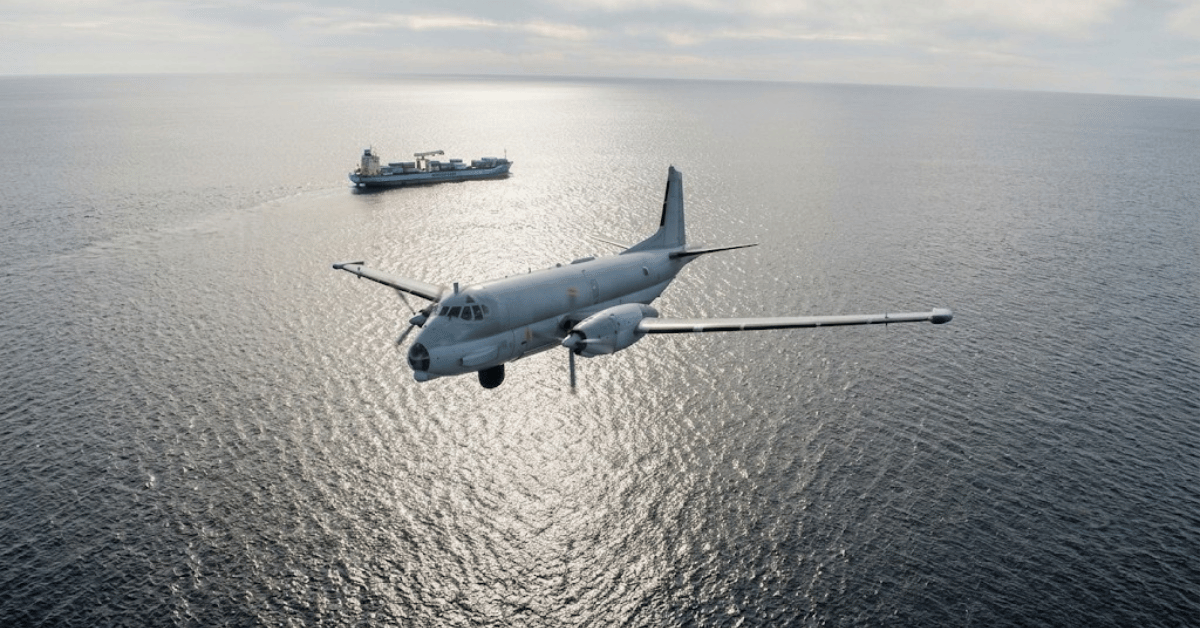
France's decision to extend its Atlantique 2 patrols over the Black Sea confirms what many in the maritime security community have long suspected: detection is no longer the same as deterrence. The aircraft can spot sea drones and warn merchant vessels, but it cannot stop them. That gap between seeing a threat and neutralizing it is now the defining operational challenge for NATO navies. The practical consequence for our readers, whether you command a bulker, manage fleet risk, or advise on allied defense policy, is that the era of passive surveillance alone has ended. What matters now is closing the kill chain.
The Atlantique 2's performance on October 28 illustrates the point precisely. The aircraft identified three sea drones targeting the *Contship Jet*, alerted Bulgarian authorities and the crew, and gave them roughly an hour's notice. All 18 crew members survived. The ship sank. That is a tactical success for warning and a strategic failure for protection. Bulgaria's navy commander acknowledged his forces could not reach the area in time. This is not a criticism of the French crew, they executed their mission with professionalism. It is a structural limitation of the current posture. As we noted in our coverage of the Drifting Tanker With 11,000 Tonnes of Sunflower Oil Prompts Measured Response, the Black Sea remains a zone where commercial vessels operate without assured defense. The same vulnerability that left a tanker adrift off Bulgaria now leaves container ships exposed to drone swarms.
NATO's pledge of over $40 billion on counter-drone systems over five years is a validated recognition of the problem, but it is a procurement timeline, not an immediate solution. Meanwhile, the French commander's candor, the aircraft can detect but cannot intercept, should be read as a direct signal to allied planners. Spending on sensors without spending on shooters leaves a gap that adversaries will exploit. The Validated Milestone in Allied Naval Defense: 1,000th ESSM Block 2 Delivered shows that NATO is building the magazine depth for missile defense, but the Black Sea theater demands directed-energy or kinetic short-range solutions that can engage sea drones before they reach a hull. That capability does not yet exist at scale in the theater.
The specific consequence to watch is how NATO reconciles its collective defense pledge with the reality that a member state's territorial waters, Bulgaria's economic zone, are being used as a hunting ground for commercial shipping. The alliance has reiterated that it will defend every member. The open question is whether that defense extends to the merchant vessels transiting those waters, or only to the warships that patrol them. For the seafarers still moving grain and oil through the Black Sea, the answer determines whether detection becomes protection or merely a final warning.