The Strait of Hormuz is not a laboratory, yet it is being treated as one, a proving ground for unaccountable maritime violence. The delayed reports of five IRGC vessel incidents on October 5, including three attacks from October 3-4 that reached UKMTO only days later, suggest a pattern that demands more than passive documentation. This is not about isolated projectiles; it is about a systemic erosion of navigational safety that directly threatens the global energy supply chain and the empirical data streams we rely on to measure stability.
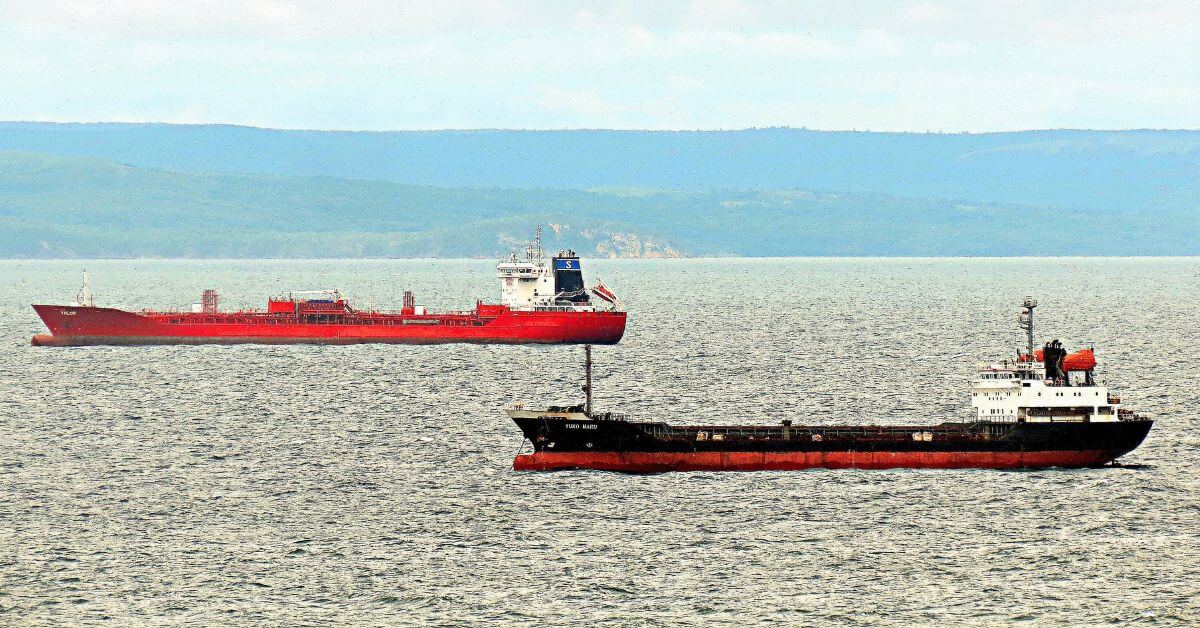
Four tankers were struck by unknown projectiles while transiting the strait, and a fifth vessel was ordered to reverse course by the IRGC under threat of targeting. The master of one tanker reported an engine room fire after a strike. Another vessel briefly lost power after a drone entered its funnel. These are not abstractions. They are measurable disruptions to a chokepoint through which roughly 20 million barrels of oil pass daily. Compare this to the calibrated shift we recently observed when Iraq moved 2 million barrels of crude beyond the Strait of Hormuz in what appeared to be a deliberate rerouting. That move now reads less as a logistical adjustment and more as a hedge against exactly this kind of volatility. Meanwhile, U.S. Central Command continues enforcing a naval blockade against Iran, redirecting commercial vessels and disabling or destroying 16 others over the past twelve weeks. The strait is becoming a contested zone where the rules of passage are written in real time by projectile and ultimatum, not by convention.
What matters for our readers, researchers, analysts, and decision-makers, is the degradation of reliable reporting itself. Three of the five incidents were received late, leaving gaps in the chronological and geospatial record. Without timely, validated data, it becomes impossible to distinguish between an isolated escalation and a coordinated campaign. This is where ocean intelligence meets maritime security. The same integrated data ecosystem that tracks climate indicators and vessel movements should be applied here: longitudinal tracking of attack patterns, calibrated damage assessments, and peer-reviewed analysis of IRGC behavior. We already have the tools to monitor the strait with the same rigor we apply to autonomous robots extending observation reach at 4,500 meters or to Yemeni forces consolidating positions along the Bab el-Mandeb Strait. The question is whether we will deploy them.
The specific consequence to watch is whether the delayed reporting becomes the new normal. If the UKMTO and JMIC cannot issue warnings in near real-time, the margin for de-escalation shrinks. Every hour of delay is an hour in which a second vessel enters the same corridor unaware. That is not a failure of intelligence; it is a failure of integration. The ocean does not wait for confirmed attribution before it responds to a fire in an engine room. Neither should our systems.