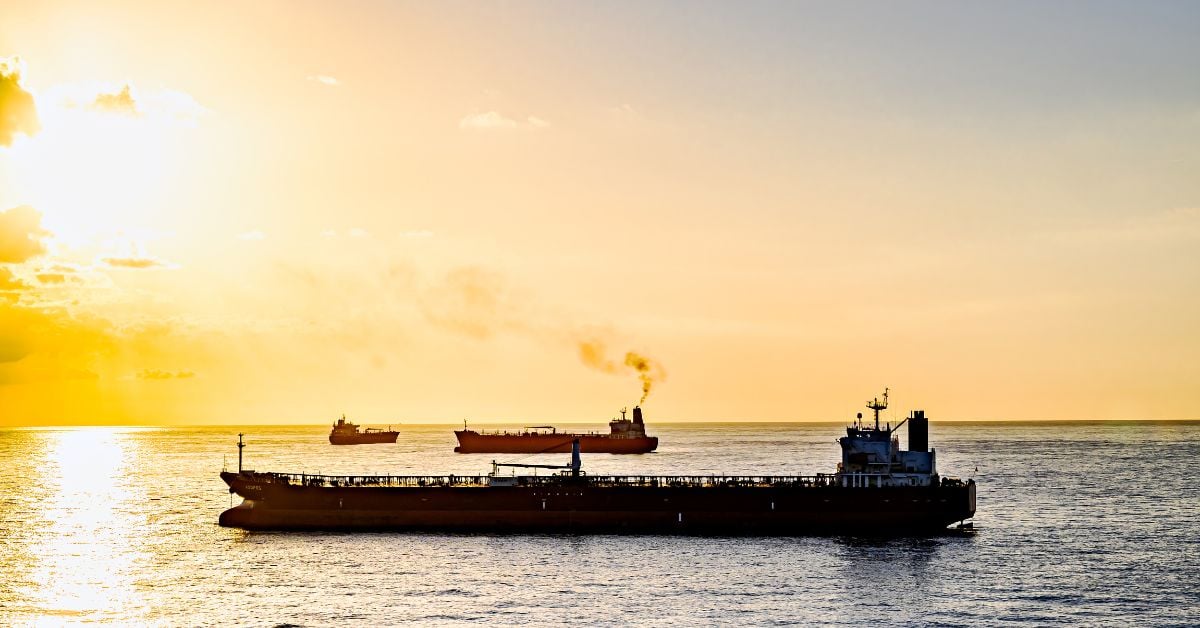
The targeting of three vessels, a crude oil tanker, an LNG tanker, and another undisclosed ship, in the Strait of Hormuz is not merely an isolated security incident; it is a direct stress test on the global energy system's circulatory network. Our view is that this event exposes a dangerous fragility in how the world moves its most essential resources, and it demands a recalibration of how we monitor and model maritime risk. The practical consequence for our readers, whether you are chartering tonnage or tracking climate indicators from orbit, is that the Strait of Hormuz has shifted from a chokepoint of political tension to a chokepoint of verifiable empirical disruption.
The symmetry between this attack and recent operational pivots is unmistakable. Chartering tankers through Hormuz to secure India's oil supply chains already indicated that refiners there were bracing for contingency, opting for spot charters over owned fleet deployment. That was a measured, strategic hedge. What happened this week validates that move and raises the ante: when projectiles threaten both crude and LNG carriers simultaneously, the integrated data ecosystem that underpins global shipping schedules must update its models with a faster cadence. At the same time, Red Sea crude flows rise as Strait of Hormuz disruptions reshape global routes shows that rerouting via Yanbu is already absorbing some displaced barrels. But diversions have limits: they add measurable time, fuel, and emissions to every voyage. If the Strait becomes a repeated target, the industry will be forced to accept a permanently less efficient baseline, one that demands real-time recalibration of supply chain models, not reactive workarounds.
This is where ocean intelligence becomes a matter of practical urgency, not abstract theory. The attack itself, absent immediate attribution or confirmed damage levels, leaves analysts working with incomplete data. That is precisely the gap that peer-reviewed, validated monitoring frameworks can fill. By integrating satellite observation, AIS tracking, and empirical incident reporting into a unified data layer, we can move from anecdotal disruption to longitudinal risk assessment. The question for policymakers and fleet operators is not whether the Strait of Hormuz will remain volatile, it clearly will, but whether they have the calibrated tools to differentiate between a temporary spike and a structural shift. The answer, based on the evidence before us, is that most do not yet have that capability.
The specific detail to watch in the coming days is the assessed damage to the LNG tanker. Natural gas markets are less tolerant of supply interruptions than crude markets because storage capacity and substitution options are narrower. If that vessel proves to have been visibly struck, even lightly, the insurance and routing implications for the LNG fleet will be disproportionate to the actual hull damage. That single data point will tell us more about the new threshold of risk in the Strait of Hormuz than any political statement. The ocean is sending a signal; it is our obligation to measure it, interpret it, and share it without noise.