marine science
149 stories filed under marine science on World Data Ocean. The newest of them: “Integrating Coastal Geology and Marine Science to Decode Shallow Hydrothermal Systems”, “AI Illuminates the Ocean's Hidden Data, From Surface to Seafloor”, and “Charting Your Path from Marine Biology to Ocean-Derived Medicine”. Shallow-water hydrothermal systems are not the primary regulators of coastal ocean processes, they are localized geological forces that introduce heat, fluids, and nutrients into dynamic marine environments. From orbit to seafloor, the ocean holds more data than we can currently interpret. A Global Hub for Ocean Intelligence 4 World Data Ocean is a centralized digital platform where researchers, scientists, and ocean enthusiasts converge to… The list below is every marine science story on World Data Ocean, newest first.

Integrating Coastal Geology and Marine Science to Decode Shallow Hydrothermal Systems
Shallow-water hydrothermal systems are not the primary regulators of coastal ocean processes, they are localized geological forces that introduce heat, fluids, and nutrients into dynamic marine environments. For decades, research remained discipline-specific, limiting our integrated understanding. This review synthesizes 95 publications spanning 1969-2026, identifying four evolutionary stages from field exploration to interdisciplinary integration. These systems serve as natural laboratories for decoding coupled coastal processes. For deeper context, see our coverage of how AI illuminates the ocean's hidden data.
AI Illuminates the Ocean's Hidden Data, From Surface to Seafloor
From orbit to seafloor, the ocean holds more data than we can currently interpret. This review examines how artificial intelligence and machine learning are transforming our ability to analyze complex, unevenly sampled datasets across physical oceanography, ecology, and engineering. The findings are pragmatic: AI excels at predicting currents, reconstructing subsurface conditions, and classifying marine life. Yet the authors rightly caution that sparse observations and black-box models limit reliability.
Charting Your Path from Marine Biology to Ocean-Derived Medicine
The uncertainty you feel is a sign you're taking this seriously, and that's a good thing. Marine pharmacology demands a foundation that is both broad and deep. A bachelor's in biochemistry provides the molecular toolkit for drug development, while microbiology offers critical insight into the organisms themselves. Neither is a wrong path; both are validated routes into an integrated field. For deeper context on ocean discovery, see our related piece, *"Precision identification of 5mm bivalve and tufted polychaete in southern China mudflats."*
Navigating Oceanography Careers: Fieldwork, Demand, and Growth by Branch
Choosing a branch of oceanography is a decision best guided by validated, real-world demand rather than passion alone. Among the three, physical oceanography currently shows the strongest measured growth, driven by its integrated data ecosystems and climate indicators essential for both academic research and industry. Biological oceanography offers significant fieldwork. Chemical leans more toward calibrated lab analysis. For field work, physical and biological branches demand more time at sea. Our article, "Pathways to Ocean Science: Untold Stories of Unconventional Beginnings," explores similar career navigation.
Validating Ultrasound as a Cost-Effective, Eco-Friendly Antifouling Method
The core question underpinning this Swedish PhD research isn't whether ultrasound can shake barnacles off a hull, it's whether that vibration is a net gain for the ocean. Validating antifouling requires more than lab efficacy; it demands a full lifecycle audit of energy costs, ecological noise pollution, and species-specific impacts. A rising population of sea lions observed off La Jolla Cove reminds us that marine life is already under acoustic and chemical stress. We need empirical data before calling this a green alternative.
Navigating the Path to Graduate Research in Marine Biology
After a year and a half of contacting professors, a strong portfolio of undergraduate research, and volunteer experience with a major aquarium, the lack of response is frustrating. Your resume is not the problem. The marine biology field is intensely competitive, and landing a paid position or internship often requires persistence beyond experience alone. For clarity on whether paid training opportunities offer genuine value, see our related coverage: "A coastal specimen under 1cm prompts community identification and ecological inquiry."
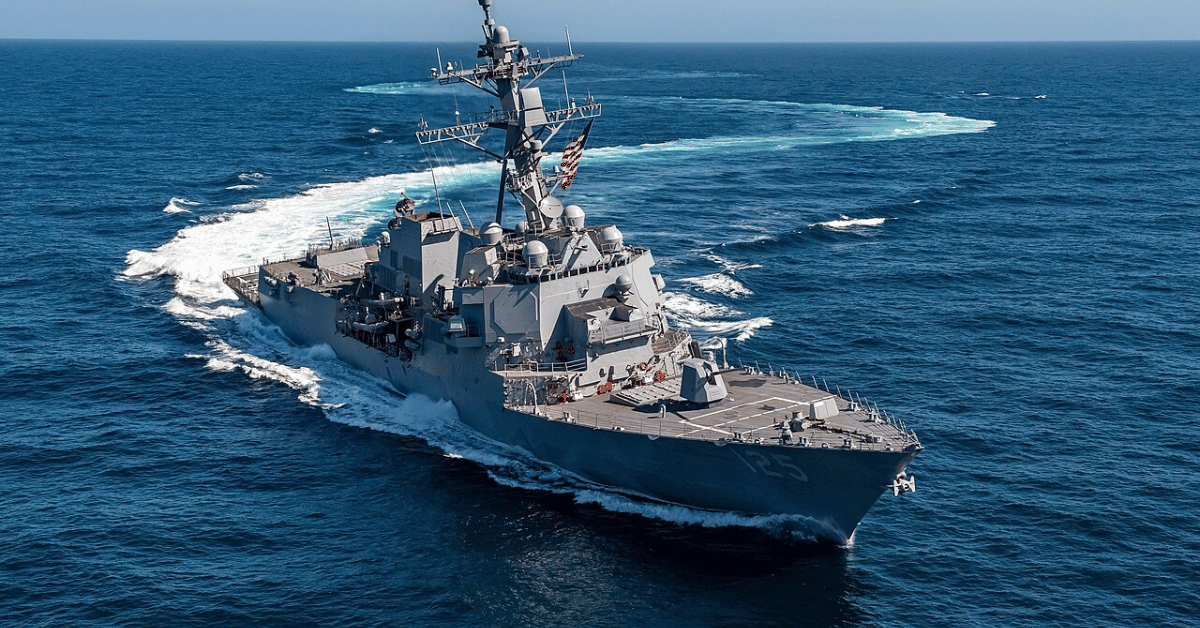
Autonomous drone navigation validates precision landing without GPS or radar
Precision landing without GPS or radar is no longer theoretical. The US Navy has validated autonomous drone navigation that uses onboard cameras and advanced software to land on moving ships. This is calibrated, real-time ocean intelligence in action. For context on why such precision matters in contested waters, read our coverage of the recent Strait of Hormuz posture analysis. Understanding drives protection, and this capability strengthens maritime security without relying on vulnerable satellite signals.
Pathways to Ocean Science: Untold Stories of Unconventional Beginnings
The most consistent request after our last post was career advice, so let's start with the real pathways. Not the polished CV. The unconventional beginnings, the random conference conversations that turned into jobs, the skills from completely different fields that became superpowers in the lab. We want the weirder stories. Understanding drives protection, and that understanding often starts far from a traditional marine science degree. For deeper context on ocean intelligence infrastructure, see our piece on a 10,000-ton survey ship extending capabilities to 5,000-meter depths.
Aligning Blue Finance Governance for China-ASEAN Ocean Climate Action
Blue finance must be understood as a governance mechanism, not merely a funding stream. This study builds a multi-agent framework to address the primary constraint on China-ASEAN cooperation: the lack of operational coordination among taxonomies, data systems, and verification protocols. Capital is not the bottleneck. Governance is. For deeper context on measurable ocean intelligence, see our related coverage on calibrating port resilience against cyclone-driven economic loss.
Bridging the gaps in marine science through community-driven discovery
Bridging gaps in marine science requires more than isolated research, it demands a community that connects empirical discovery with real-world application. What brought you here? Whether you're drawn to peer-reviewed studies, field operations, or policy discussions, the question is what we can build together that existing forums don't offer. Drop a comment. Our piece on "Pathways to Ocean Science: Untold Stories of Unconventional Beginnings" explores one consistent request: career pathways. That's a start, but the ocean intelligence ecosystem needs more.
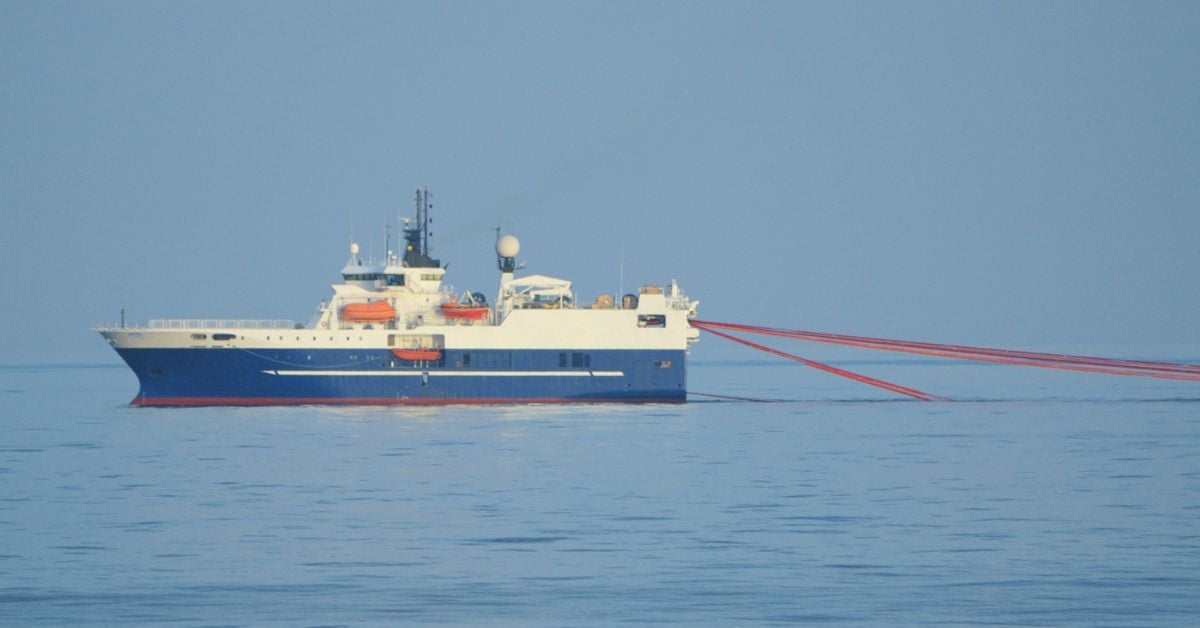
A 10,000-ton survey ship extends ocean intelligence to 5,000-meter depths
A 10,000-ton survey ship with a 5,000-meter drilling tool represents a new chapter in ocean intelligence. Chinese engineers have designed this 11,023-ton vessel to extend our empirical reach into the deep. It is a calibrated, measurable step toward understanding the abyss. For context on how we validate marine life as a climate indicator, see our related coverage of "Validating Northern Krill as a Calibrated Source of Ocean Protein."
A validated method for reinforcing Arctic sea ice with macroalgae-based rebar
Combining active Arctic sea-ice pumping with a pre-rinsed, desalted macroalgae gel matrix to 3D-print high-tensile, multi-layered "rebar" ice is a compelling open-source proposal from Stuart Peacock. This validated method targets the brittleness that plagues conventional pumped ice, using seaweed's alginic acid and cellulose to absorb bending stress from ocean swells. The laminated composite resists flexural forces and summer melt. For those exploring materials science or polar engineering, our related piece "Where Artifacts Anchor Life: Maritime Archaeology Meets Reef Ecology" offers another perspective on ocean systems.
Charting a Career in Ocean Science Beyond Academia and Research
Ocean science careers extend far beyond the lab or lecture hall, and that is a fact worth validating. A BSc opens doors to roles in environmental consulting, policy analysis, and the private sector, fields where empirical data on climate indicators drives real-world decisions. Skills in data calibration, integrated monitoring, and peer-reviewed analysis are measurable assets. For deeper context on how climate data informs global action, see our piece on China's electric vehicle acceleration for measurable climate indicators.
Where Artifacts Anchor Life: Maritime Archaeology Meets Reef Ecology
Where Artifacts Anchor Life asks a question many of us in the sciences have faced: whether to deepen expertise or broaden foundations. A maritime archaeology program with oceanography and marine biology electives is a validated, integrated path, not a detour. You already have empirical research experience and peer-reviewed work. That foundation is measurable. Adding targeted coursework in reef ecology will likely qualify you for further graduate study without starting over.
Online ocean science degrees with real-world labs at Bermuda Institute
A fully funded bachelor's in ocean futures, coastal and marine science through ASU Online and Starbucks' SCAP program, is not a money grab. It is a validated, measurable path to real expertise. The Bermuda Institute of Ocean Science internship offers integrated, hands-on lab experience, and the degree itself carries no "online" label. From orbit to ocean floor, this is how we build ocean intelligence.
A Shared Data Ecosystem to Deepen Global Ocean Understanding
Understanding drives protection. On World Oceans Day, a new e-book makes the case for a shared data ecosystem, one that unites researchers, government agencies, students, and technology around a single goal: deeper ocean intelligence. This is not about isolated studies; it is about an integrated data ecosystem where calibrated, real-time observations become climate indicators we can act on. For those tracking the human and environmental pressures reshaping marine science, this collaborative framework is a practical step forward.
Validating the global ocean mixed layer with a profile-based climatology
A new study in AGU Publications validates the global ocean mixed layer using a profile-based climatology, offering empirical rigor to a critical climate indicator. Understanding this boundary between surface and deep waters is measurable, and this work strengthens the integrated data ecosystem we rely on. For deeper context on how shared data deepens global ocean understanding, our e-book "A Shared Data Ecosystem to Deepen Global Ocean Understanding" explores that collaborative framework.
Biodiversity and human pressure reshape marine ecosystem science
Marine ecosystem ecology now stands at a crossroads where biodiversity data and human pressures converge. Understanding how marine life supports ecosystem functioning remains central, but the urgency of climate-driven transformations demands we anticipate change, not just document it. Resilience, the capacity to persist through disturbance, has become a scientific priority under intensifying cumulative pressures. Major challenges include ecological non-stationarity and expanding data volumes. Our related piece, "Validated data and selective gear drive sustainable crab harvesting," demonstrates how empirical approaches already guide sustainable practice.
A renewed research platform, charting a broader course for marine science
A renewed research platform charting a broader course for marine science deserves more than a dormant community. This captain-turned-moderator understands that rigorous conversations about monitoring technology, coastal policy, and Earth systems matter as much as the charismatic megafauna. The rules hold. The subject demands better. We see the same commitment in "Validated data and selective gear drive sustainable crab harvesting", empirical approaches that make fisheries work. Drop anchor here. The tide is turning.
Validated data and selective gear drive sustainable crab harvesting
Selective gear and validated data are the twin anchors of sustainable crab harvesting. This review of 173 studies confirms that intelligent fisheries depend on an integrated marine-engineering workflow, not isolated algorithms. Machine vision can identify, measure, and grade individuals, but its management value requires calibrated field deployment and traceable metadata. Future research must prioritize standardized datasets and life-cycle assessment. For broader context on ocean monitoring, see our coverage of the Global Drifter Network.
From sunlight to abyss: a visual journey through every ocean depth zone
Understanding drives protection. This animated journey from sunlit surface to abyss makes ocean depth zones tangible for everyone, tracking how light fades, pressure intensifies, and life adapts at each layer. The stylized, AI-generated illustrations are deliberately not underwater footage or a scale-accurate simulation. For oceanographers: the most important caveat for beginners is that boundaries between zones are gradual, not abrupt. For deeper context, our related piece on accelerating climate signals shows why visualizing these layers matters now.
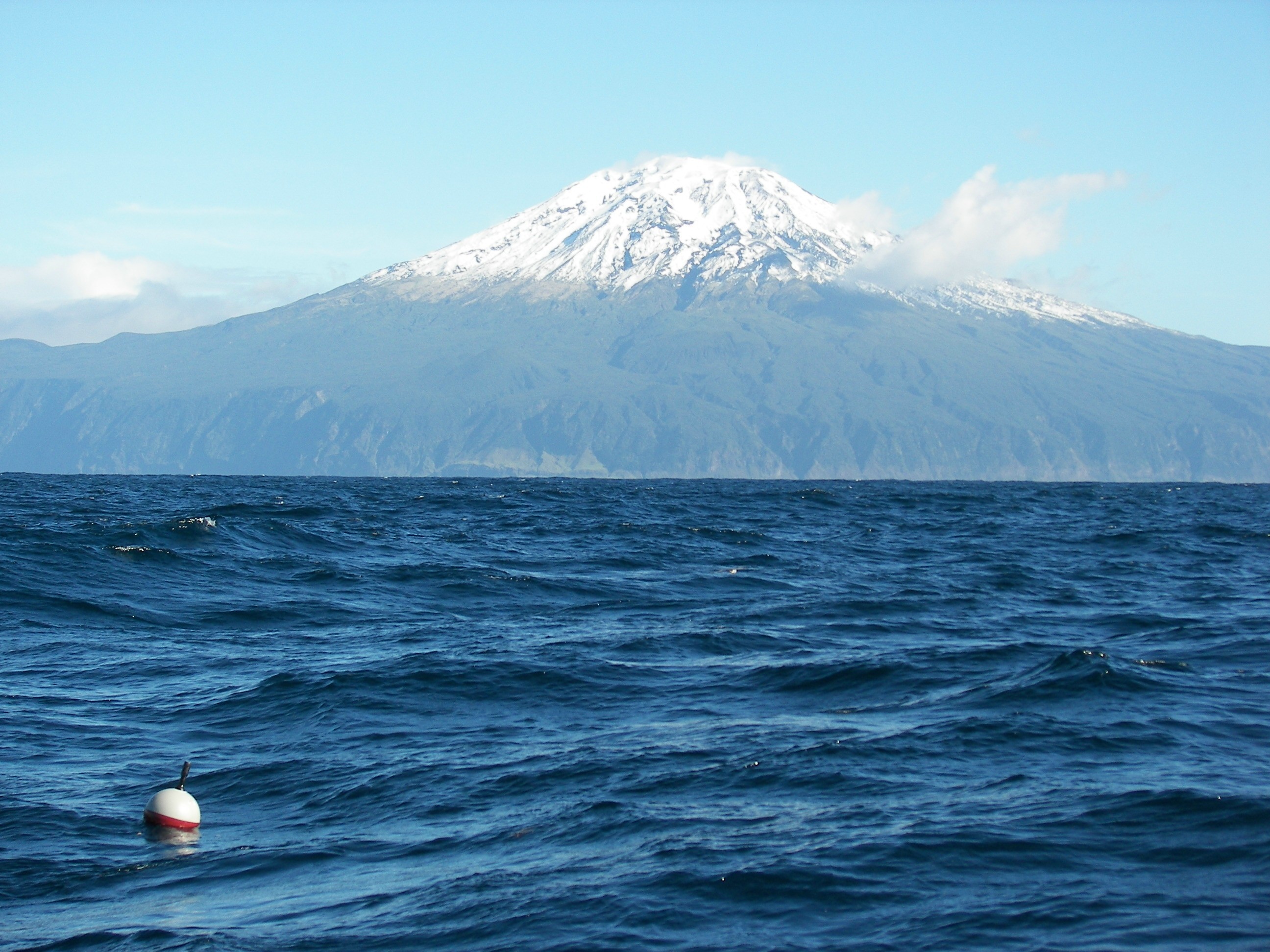
Global Drifter Network Delivers Real-Time Ocean Data to Sharpen Forecasts and Coastal Safety
Every twelve hours, a network of thousands of drifting buoys reports ocean temperature, currents, and barometric pressure from the most remote waters on Earth. NOAA's Global Drifter Program turns that distributed data into a single, calibrated view of the planet's climate system. These instruments verify weather models, sharpen satellite observations, and reveal inter-annual signals like ENSO. Understanding drives protection. For a deeper look at how shared ocean data standards support such systems, see our coverage of integrating fragmented bathymetric data.
Integrating fragmented bathymetric data through shared standards and FAIR practices
Vertical-datum heterogeneity remains the barrier least tractable to specification alone. A new review maps hydrographic standards onto the fifteen FAIR sub-principles, revealing that bathymetric data already meet demanding reusability conditions through mandatory depth-and-uncertainty encoding. Yet findability is largely unaddressed: identifiers from IHO S-100 are unique within an exchange set but not globally resolvable. Interoperability works at the encoding level but not semantically. The binding constraint is not missing standards, it is the absence of machine-resolvable linkage between them.
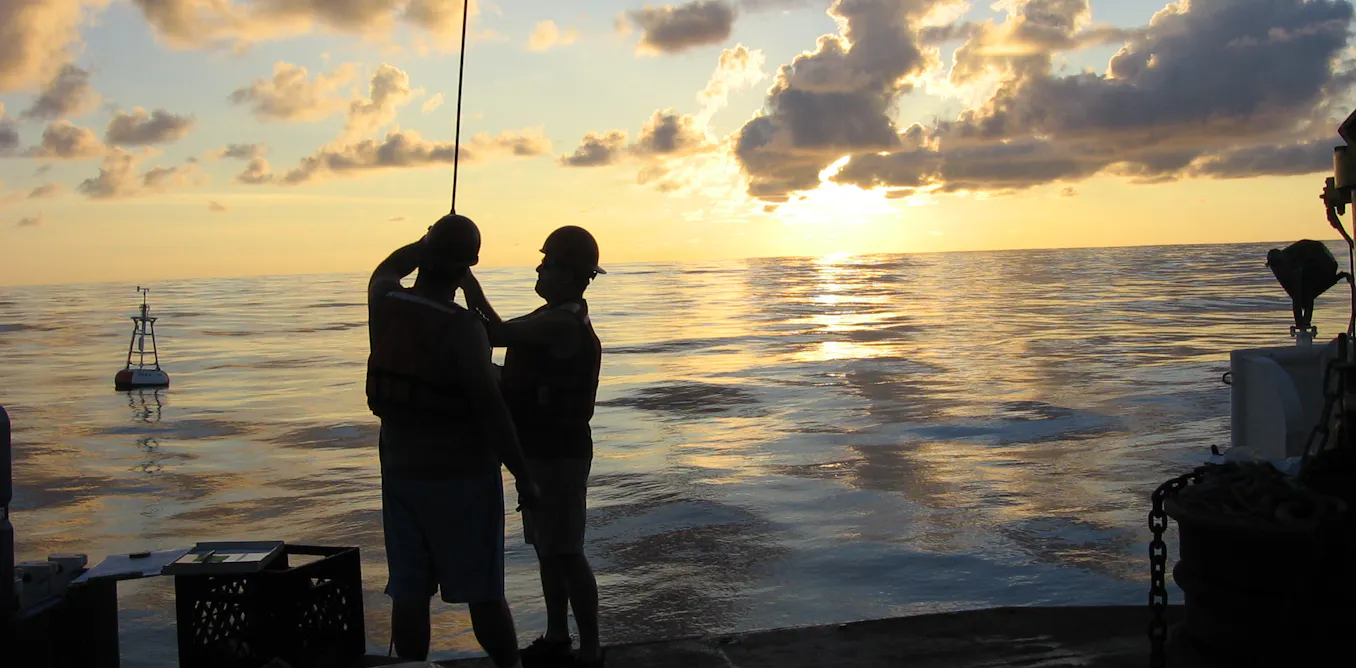
Ocean's early warnings grow urgent as climate signals accelerate
The North Pacific's surface has warmed four times faster than the global average, a signal we can no longer ignore. Ocean intelligence now shows climate indicators moving beyond modeled projections. These are not abstract trends; they are measurable, real-time shifts in a system we depend on. Understanding drives protection. Our related piece on ECCO‑Darwin's first multi‑decadal global ocean CO₂ flux estimates offers another calibrated look at how fast this change is actually happening.