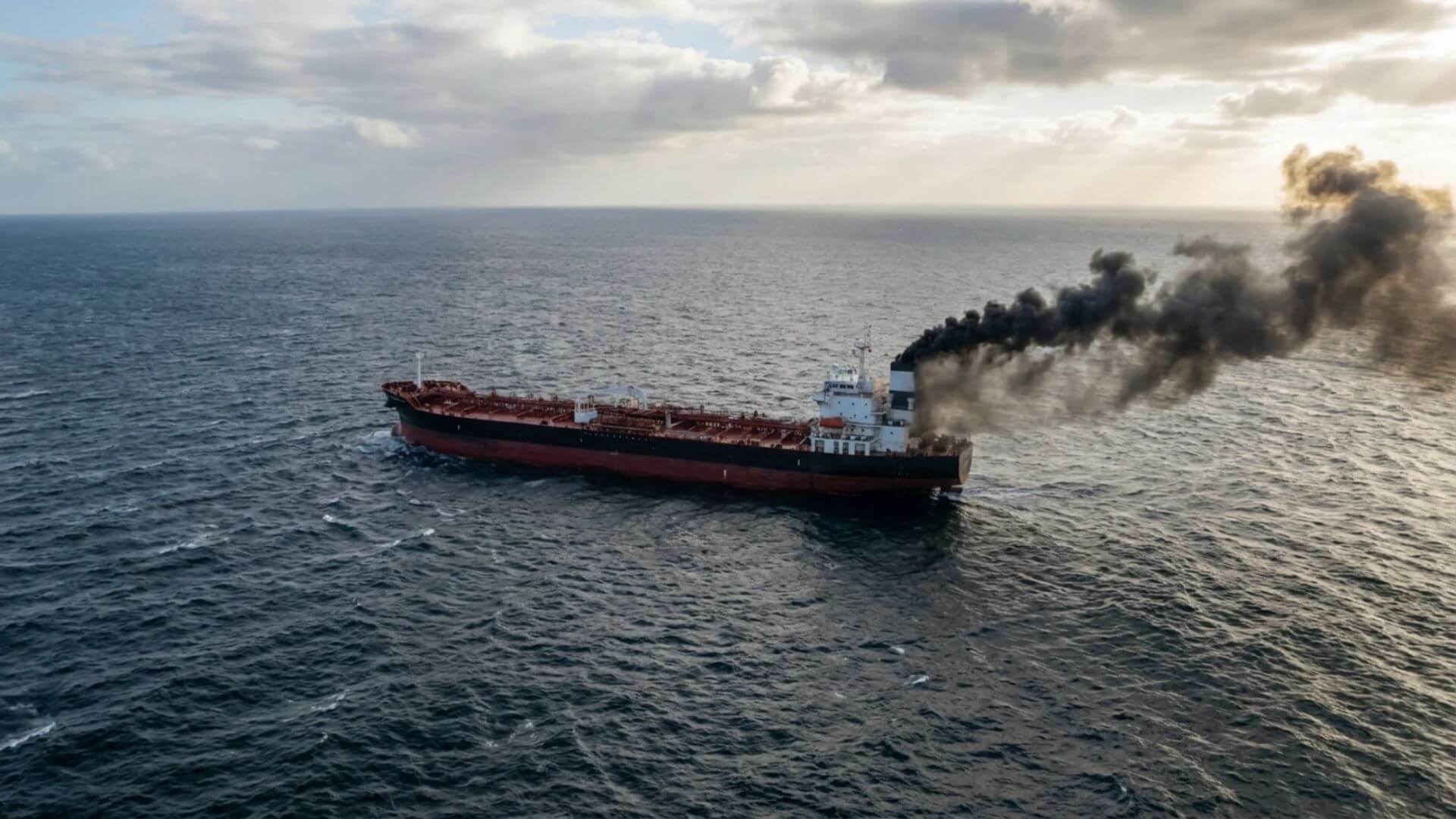
The Black Sea is not a battlefield, but it is being treated as one, and the consequences are no longer theoretical. Drone strikes on three commercial vessels near Romania's Sulina canal represent a direct escalation of maritime risk into a NATO member's territorial waters. Romania's Defence Ministry confirmed that both the Evia Petrol V and the Marsol were inside Romanian territorial waters when they were hit, and fighter jets were scrambled twice in response. This is not a distant conflict. It is a calibrated attack on the infrastructure of global trade, and it demands an equally calibrated response from the international community. Geopolitical Tensions Surface in Baltic as Drone Strike Targets Russian Corvette G7-Backed Network Integrates 14 Ports for Collective Ocean Security
For our readers, researchers, policymakers, and maritime security analysts, the practical implications are immediate. The Sulina canal is a critical choke point for Ukrainian grain exports and a key link between the Danube River and the Black Sea. When drones hit vessels at anchor or on approach to that canal, they are not merely striking ships; they are targeting a validated trade corridor that the global food supply depends on. The fact that no casualties were reported is a matter of fortune, not design. Prime Minister Niculescu rightly described the attacks as unacceptable and in violation of international law, but the absence of attribution from Romanian authorities, though they linked the strikes to Russia's war in Ukraine, leaves a gap in accountability that must be closed with empirical evidence and peer-reviewed incident tracking.
What we are witnessing is a pattern of maritime coercion that mirrors the recent drone strike on a Russian corvette in the Gulf of Finland, where geopolitical tensions surfaced through targeted naval assets. Here, the targets are commercial, not military. That distinction matters. The Evia Petrol V was carrying oil and chemicals; the Marsol and Ali Najafov were bulk and oil-product carriers. These are not warships. They are the integrated data ecosystem of global shipping, tracked, scheduled, insured, and expected to move freely. When that freedom is compromised by unaccountable drone activity, the entire system of ocean intelligence and maritime safety is undermined. Romania has already asked allies for surveillance aircraft and counter-drone equipment, and France has sent an Atlantique 2 patrol plane on a limited deployment. That is a start, but it is not a strategy.
The question our readers should be watching is not who launched the drones, that will eventually be established, but how the international community responds to the violation of territorial waters in a way that sets a precedent. Romania's Defence Minister is meeting with counterparts in Brussels on November 17 and 18. The outcome of those meetings should include a measurable plan for integrated Black Sea surveillance, real-time threat sharing, and a clear protocol for defending neutral shipping. Without that, the Sulina canal will remain a vulnerability, and the next strike may not leave the crews unharmed. The ocean is not a lawless space, but it will become one if we treat each attack as an isolated incident rather than a climate indicator of a broader breakdown in maritime security.