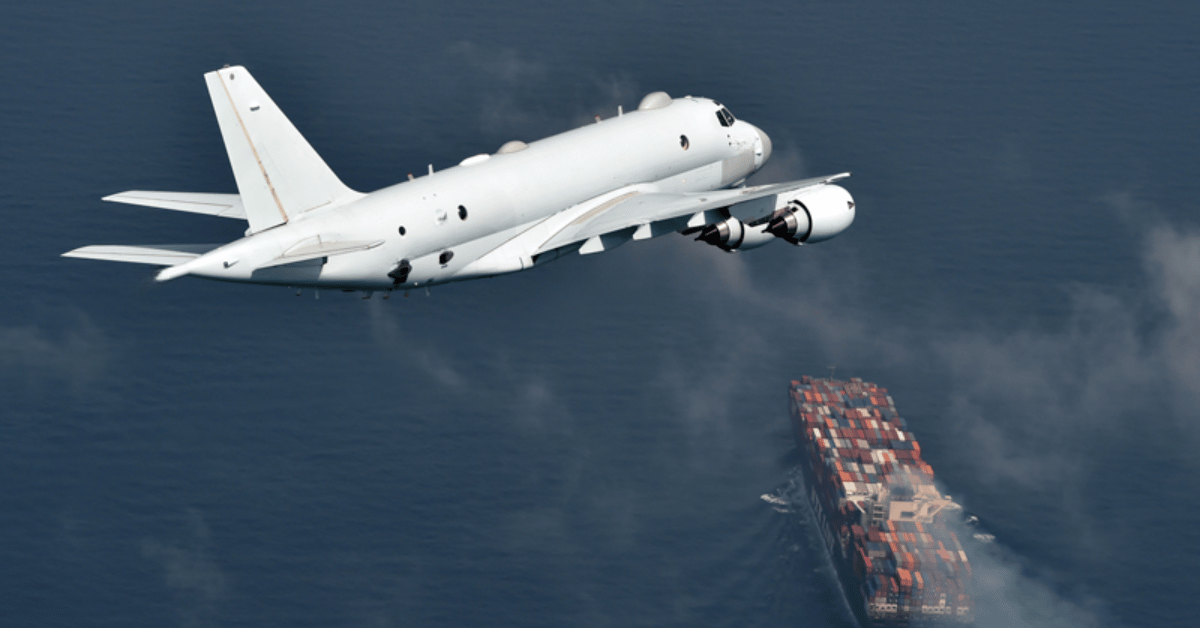
France's decision to deploy an Atlantique maritime patrol aircraft to Romania's Mihail Kogălniceanu air base is a calibrated, empirical response to a measurable escalation in maritime threats. Since early October, at least eight cargo ships have been struck by drones near the coasts of Romania and Bulgaria, with sailors killed and missing. This is not abstract geopolitical posturing; it is real-time ocean intelligence confirming that commercial shipping in the Black Sea now operates under systematic, hostile surveillance. We view this deployment as both necessary and overdue, a concrete step toward protecting the seafarers and supply chains that global trade depends on, even as the Kremlin denies responsibility.
The attacks on bulk carriers near Danube and Chornomorsk ports, including the sinking of a Comoros-flagged vessel on October 23 that killed one crew member and left three missing, are part of a pattern we have documented closely. Our reporting on Measured in Lives: Black Sea and Hormuz Log 40 Seafarer Casualties already tracked at least 40 seafarers killed in Black Sea ship attacks. The French mission, running from October 18 to November 6, covers the western Black Sea and supports rescue efforts near Bulgaria and Romania. It adds a validated, peer-reviewed layer of monitoring to what Romanian naval forces are already doing with ships, helicopters, and drones. This is not about escalation for its own sake; it is about closing a gap in situational awareness that has cost lives.
What this means in practical terms is that NATO is moving from reactive monitoring to integrated data collection in a theater where climate indicators and conflict indicators overlap. The Black Sea is not only a war zone; it is a critical corridor for grain exports and energy transit. When Romanian F-16 pilots shot down two Russian drones over Romanian territorial waters earlier this month, and when French Foreign Minister Jean-Noël Barrot confirmed during his October 24 visit to Bulgaria that the Atlantique is operating under NATO missions, the message was clear: maritime patrol is now a shared responsibility, not a symbolic gesture. The French Ministry for Europe and Foreign Affairs has condemned these strikes as a flagrant violation of international law and is working to identify threats to navigation while protecting Romania's critical infrastructure within its exclusive economic zone. This is measurable action, not rhetoric.
We should watch one specific detail: NATO has announced it will send more maritime patrol planes, drones, and radar systems to the Black Sea. The question is whether these assets will be empowered to act on the intelligence they gather. As our coverage of Autonomous submersible extends naval reach 6,500 nautical miles across the Pacific illustrates, the technology for persistent, long-range maritime surveillance already exists. The gap is not in capability, it is in political will to use that capability to protect civilian lives. France's deployment is a start, but until the integrated data ecosystem from these patrols directly prevents the next strike on a cargo vessel, the ocean intelligence we gather will remain a map of tragedy rather than a tool of prevention.