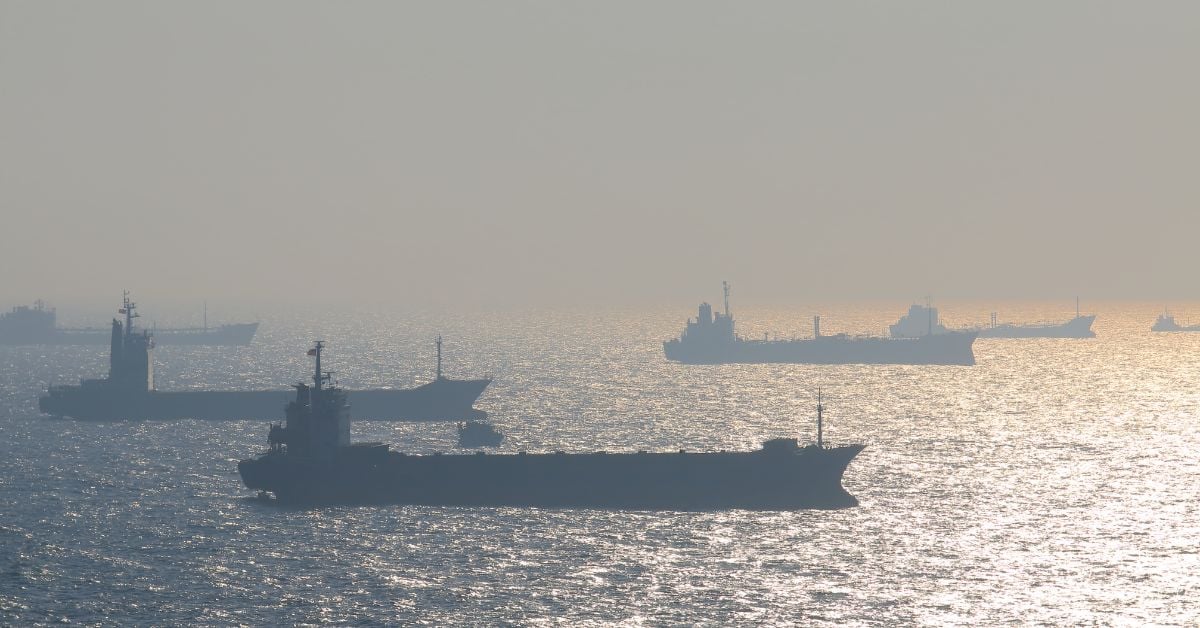
The Black Sea is becoming a war zone, and the maritime industry must treat it as such. The recent drone attacks on the Russian tankers Wine Trader and Yara J off Romania's coast, which left seven seafarers missing, are not isolated incidents but part of a pattern that has seen 23 crew members vanish in the past ten days alone. For operators, insurers, and policymakers, this signals a fundamental breakdown in the safety assumptions that underpin commercial shipping in the region.
These strikes are reshaping the operational reality for vessels transiting near Romania and Bulgaria. While the Yara J's crew was evacuated safely, the Wine Trader's crew remains unaccounted for, and the Ukrainian-operated Chelsea 3 suffered deck and hull damage from a separate drone strike. The proximity of these attacks to NATO member Romania's territorial waters, and the fact that they occurred near the Sulina Canal, a key Danube artery, means that commercial traffic is now operating in a contested battlespace. This is not a theoretical risk; it is a measurable, real-time threat to life and trade. The response from President Nicusor Dan, who called the attacks unacceptable and met with NATO's Secretary General, underscores that the security architecture is being forced to adapt. This situation is a stark contrast to the friction we see elsewhere in global trade, such as the Maritime fees signal friction in trade amid climate and shipping integration we reported, where economic pressure is applied through regulation rather than explosives. Here, the pressure is lethal.
What this means for our readers is a clear, practical call to recalibrate risk assessments. The attacks are not random; they are a direct consequence of Russia's intensified bombing of Ukrainian port facilities, which has forced Kyiv to reroute grain, sunflower oil, and other exports through river ports along the Danube and coastal routes off Romania and Bulgaria. This makes every vessel in those corridors a potential target. The Black Sea Tanker Fire Prompts Investigation After Romanian Drone Reports we covered earlier now reads as a precursor to this wider escalation. For shipowners, the calculus must now include the cost of drone defense, the diplomatic implications of sailing under a contested flag, and the very real chance that a crew will not return. For policymakers, the discussion at the upcoming North Atlantic Council meeting must move beyond condemnation and toward integrated, real-time data sharing on maritime threats, treating ocean intelligence as a security asset, not just a scientific one.
The one specific takeaway is this: the Black Sea has become a test case for how commercial shipping survives when international law is suspended by drone warfare. The 23 missing seafarers are not a statistic; they are the human cost of a conflict that is now fought on the water as much as on land. The question that remains is whether the industry will treat this as a temporary disruption or a permanent shift in maritime risk. The answer will be written in the contracts, insurance premiums, and route maps of the months ahead.