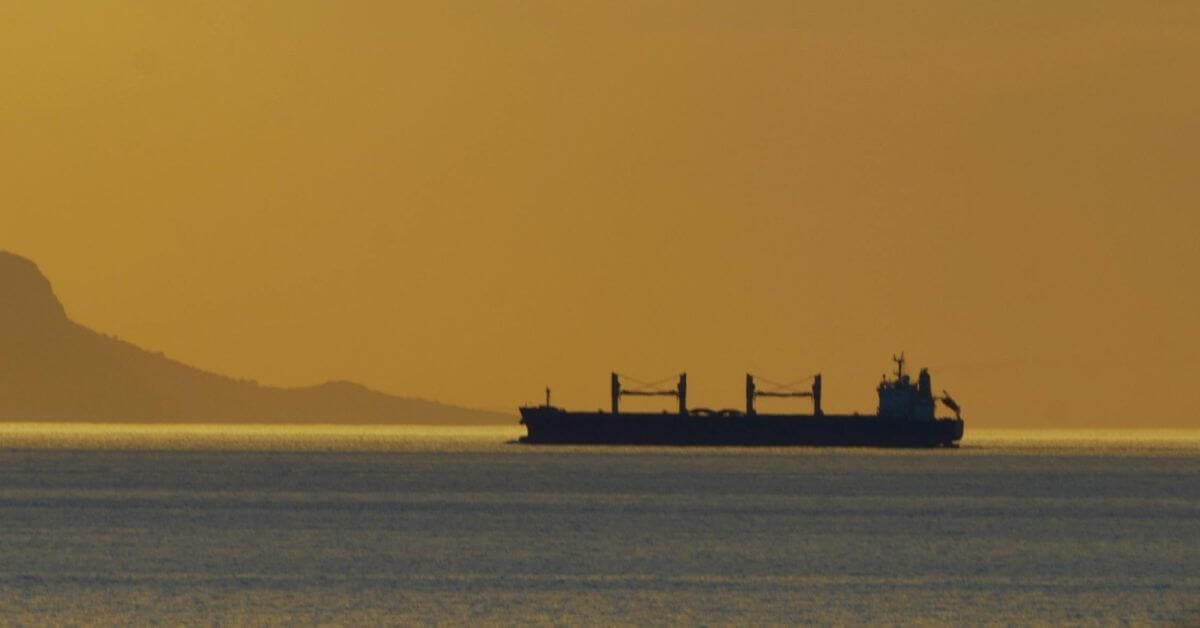
The sinking of the corn freighter Royad Mammadov in the Black Sea is not a maritime accident; it is a direct consequence of war's reach into civilian trade routes. Two crew members are dead, 11 were pulled from the water, and a vessel carrying food for global markets now rests on the seabed inside Romania's exclusive economic zone. We should say plainly what the facts support: this is an attack on commerce, on neutral waters, and on the seafarers who keep grain moving under conditions that grow more lethal by the month.
The details matter here. The ship was Turkish-owned, sailing from Ukraine's Port of Izmail to Ravenna, Italy, with Indian and Azerbaijani nationals aboard. Ukrainian President Zelenskyy attributes the strike to Russian drones in neutral waters; Romanian authorities confirm deaths but stop short of assigning blame. That gap between accusation and verification is itself a problem for every operator in the region. When the cause of a sinking cannot be independently confirmed within hours, insurance underwriters, charterers, and flag states are left to price risk on incomplete data. This is precisely the kind of uncertainty that our coverage of maritime disruption has tracked elsewhere, from the Baltic Cargo Route Disrupted as Gulf of Finland Vessel Detained to the Enforcement action halts fuel shipment bound for Cuba in Gulf transit. In each case, the immediate incident is less significant than the systemic effect on shipping lanes that the world depends on.
Consider the numbers already on the record. Turkey's Chamber of Maritime Commerce reports 226 civilian and commercial vessels attacked in the Black Sea since the war began, most of them this year. Maritime risk firm Ambrey found that war-related objects in the sea have more than doubled in six months, with at least a third carrying live payloads. That is not a spike; it is a persistent hazard layer that no crew can fully navigate around. The Royad Mammadov was not an outlier. It was the predictable outcome of a conflict that has normalized the targeting of unarmed freighters. The 150 vessels idle in Gulf of Finland as Baltic maritime traffic bottlenecks show how quickly choke points form when states act unilaterally. Here, the choke point is not congestion but danger itself.
What should readers take from this? First, the grain trade is not collateral damage; it is the target. Strikes on vessels carrying food from Ukraine serve a strategic purpose, and the international response has not yet raised the cost of that strategy. Second, the lack of a confirmed drone attribution from Romanian authorities within the first day is not a bureaucratic delay. It is a legal vacuum. For insurers, a sinking classified as war risk versus marine peril changes payouts, premiums, and the willingness of crews to sign on. Third, watch the Romanian response. A Romanian F-16 already destroyed a marine drone near an offshore gas project in August, and a Ukrainian maritime drone exploded in Constanta in June. Romania is on the front line of this debris field. Its next move, whether diplomatic or operational, will signal whether neutral states can still protect their waters or merely document their violations. The captain's fate remains unresolved, and that uncertainty is the most concrete detail to monitor. Every hour without a full crew manifest and casualty list is another hour that shipping risk models cannot calibrate. Understanding drives protection, but only if the data arrives in time.