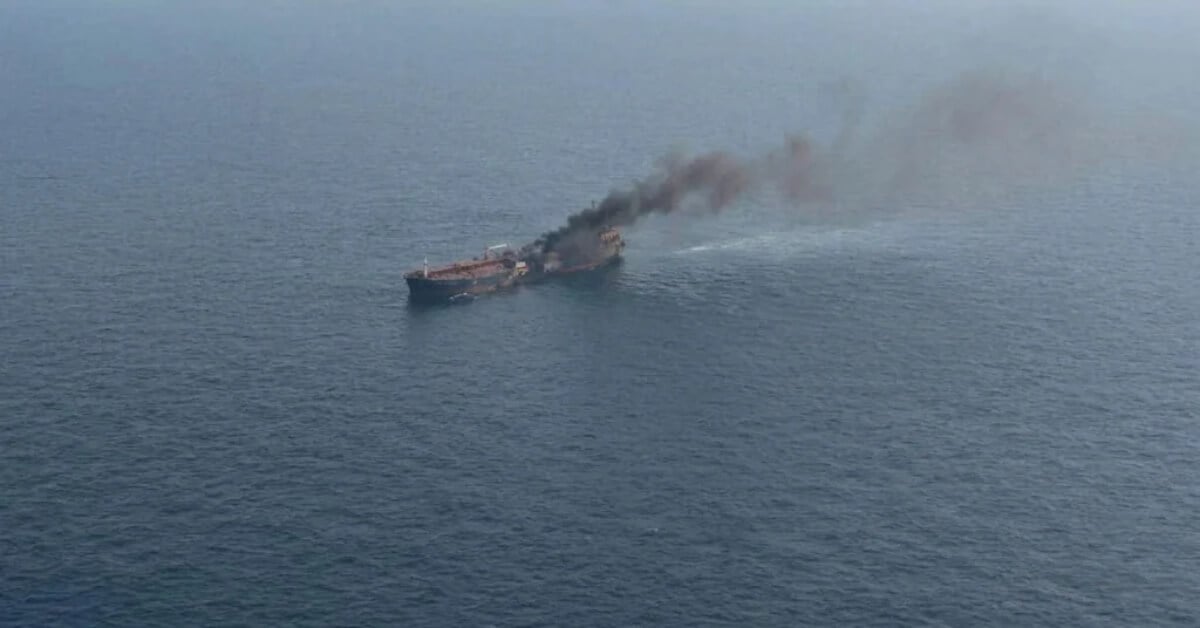
The Strait of Hormuz is not a theoretical chokepoint for global energy security, it is a place where seafarers vanish and families wait for news that may never come. The disappearance of Jordanian crew member Mohammad Hussam Al Din Al Otaibi after the November 17 attack on an Adnoc L&S tanker should sharpen every conversation about maritime risk into a practical question: what data do we have, and what are we doing with it? Jordan's coordination with the UAE and Oman to locate him is necessary, but it is reactive. The industry needs the kind of Satellite tracking flags first Iranian crude transfer past naval patrols since July intelligence that can detect anomalous vessel behavior before a projectile is fired, not after a crew is forced into the water.
This is not an isolated incident. The same week, the Panama-flagged *Tara Gas* came under attack, leaving one Indian seafarer unaccounted for. Adnoc L&S itself reported another vessel damaged in UAE waters just days earlier, and in July two of its crude tankers were struck, killing one crew member. Iran has claimed responsibility for a series of such attacks, often blaming operators for hitting sea mines, but attribution is only one part of the equation. The empirical pattern is clear: commercial shipping in this corridor is being targeted with increasing frequency, and the human cost is mounting. The 11 injured crew from the latest attack are the validated measure of a security failure that no amount of maritime policy rhetoric can obscure.
Our opinion is direct: search-and-rescue operations are a humanitarian obligation, but they are not a substitute for prevention. The international community must integrate real-time tracking, calibrated threat assessments, and coordinated naval patrols into a single operational picture. The India updates maritime registry to allow older vessels under measured policy shift raises its own questions about fleet resilience, but the immediate problem is not vessel age, it is that a tanker can be hit by an unknown projectile 13 nautical miles north of Khasab and the best response is a multinational search for one man in the sea. That is not ocean intelligence; it is crisis management dressed up as security.
The specific consequence to watch is whether the Strait of Hormuz becomes a zone where insurers refuse to underwrite transits without armed escort, or where crews refuse to sail. Al Otaibi's father was told by Adnoc that the crew were forced to abandon ship and jump. That detail is the real climate indicator for maritime security: when the protocol for an attack is "jump," the system has already failed. The question for our readers, whether they are policymakers, researchers, or operators, is what empirical data they will demand next. A missing seafarer is not a statistic. It is a signal that the integrated data ecosystem we claim to build is not yet protecting the people who make global trade possible.