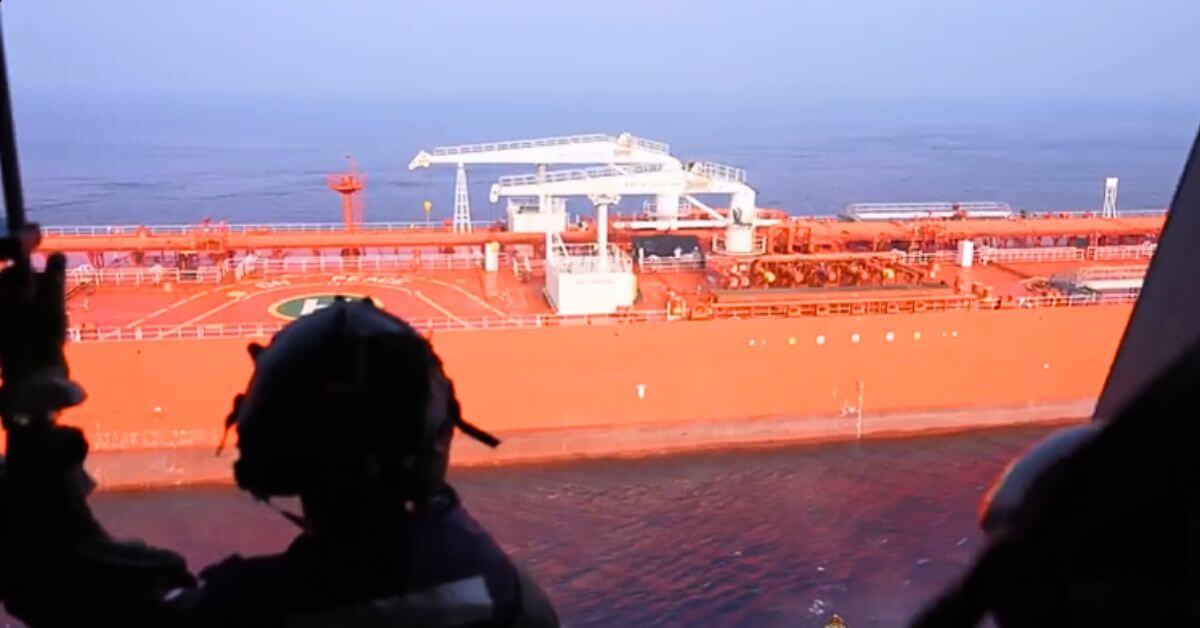
The Strait of Hormuz is not a battlefield, yet commercial seafarers are paying for a war they did not start. The attack on the Panama-flagged tanker *On Peace*, which injured 12 of its 19 crew members, 11 of them Indian nationals, is the latest in a pattern that demands a coordinated, measurable response from the maritime community. This is not an isolated incident; it is a systemic failure to protect the people who keep global energy flowing.
India has rightly condemned the attack and called for an immediate end to the targeting of commercial shipping, but condemnation alone does not stop projectiles. The *On Peace* was hit roughly nine nautical miles off Oman's coast, a location that should have been safe. It joins at least six other tanker-related incidents in the past week alone, including strikes on the LNG carrier *Maran Gas Mystras* and the LPG carrier *Vela Gas*. These vessels are not military assets; they are civilian infrastructure moving crude oil and gas through a waterway that still carries roughly 18.3 million barrels per day of Middle East crude exports. The empirical data from Kpler shows that oil shipments have returned to pre-war levels, yet the cost of that transit is now measured in human lives. As we noted in our coverage of India Proposes Measured Maritime Truce to Protect Black Sea Shipping, a similar dynamic is playing out in the Black Sea: commercial vessels are being treated as legitimate targets, and the seafarer is the one caught in the crossfire. The same logic applies here, and the same urgency is required.
What makes this moment particularly dangerous is the absence of any group claiming responsibility. Without attribution, there is no clear party to deter, no channel for de-escalation, and no way to calibrate a protective response. The Persian Gulf Strait Authority (PGSA) has listed the *On Peace* among 81 vessels it claims have violated Iran's protocols for passage through the Strait, threatening future restrictions including fines, detention, or confiscation. Whether the projectile that struck the tanker came from a state actor, a proxy force, or an opportunistic militia remains unknown, but the effect is the same: seafarers are being injured and killed in waters that should be governed by clear, enforceable rules of navigation. The Indian government reported in July that at least 10 Indian seafarers have been killed since the war began in late February. The *On Peace* attack follows the death of Indian sailor Suraj Yadav on the *MV Cape Dao* in September and the killing of Rohan Kumar on the *MT Mombasa* in July. The National Union of Seafarers of India has called on governments, maritime authorities, and shipowners to act. The question is what concrete, measurable steps will follow.
The takeaway is this: the maritime industry cannot rely on regional powers to protect commercial shipping in the Strait of Hormuz. The data shows that attacks are accelerating while crude oil flows remain steady, meaning the risk is being absorbed entirely by the crew. Shipowners operating in the region must integrate real-time threat intelligence into their routing decisions, and flag states must enforce stricter safety protocols for vessels transiting these waters. The *On Peace* is a 115,000-dwt LR2 tanker built in 2021, a modern vessel with modern systems, yet its crew had no defense against an unknown projectile. The next attack may not leave survivors to evacuate.