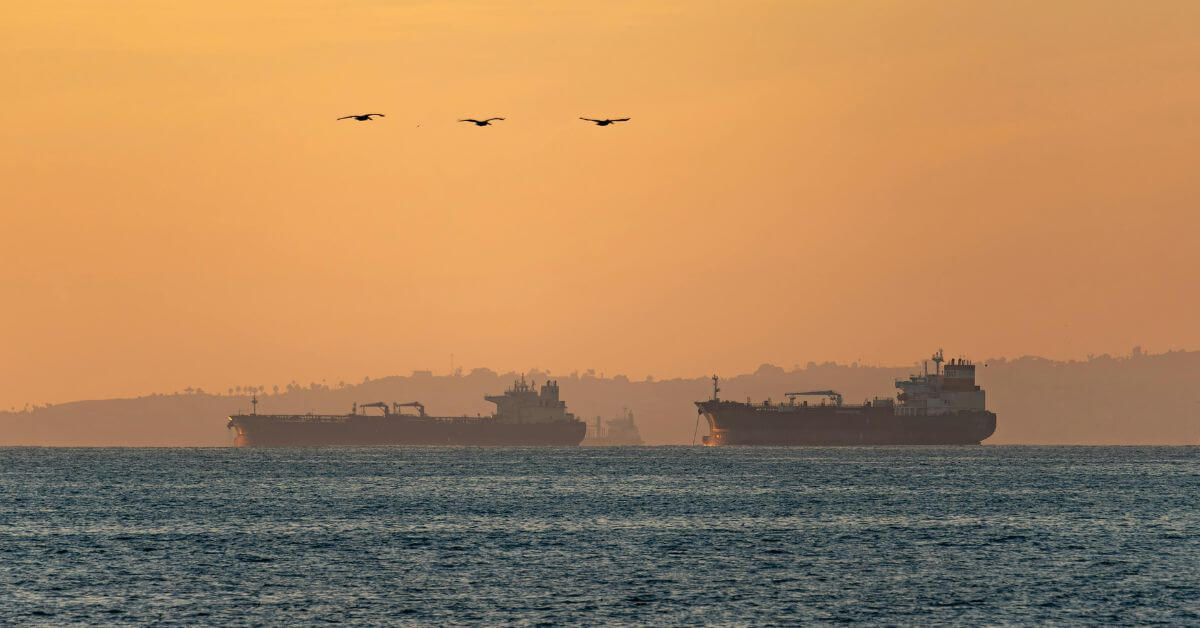
The blockade on Iranian crude is showing its first measurable crack, and the data tells a story more precise than any political statement. A tanker loaded Iranian oil through a ship-to-ship transfer in the Persian Gulf on November 19, and if it clears the US naval perimeter, it will be the first seaborne export since July. That matters less for the barrel count than for what it reveals about the system's edges: enforcement gaps, economic pressure, and the quiet calculus of risk that now defines Gulf shipping. The Strait of Hormuz tanker incidents add new risk to global oil markets have already shown how quickly friction in this corridor translates into price signals; this transfer is the next data point in that same sequence.
The details of the operation are what make it significant. The unnamed tanker is not under US Treasury sanctions, entered the region without drawing attention, and conducted the transfer while transponders were off. That combination is not improvisation; it is a calibrated workaround. Compare that with the separate case involving the sanctioned Suezmax Olym and the medium-range Hao Fan near Kharg Island, where the roughly 200,000 barrels transferred were too small for a viable export voyage. That was a test, or a demonstration. The November 19 transfer is the actual attempt. The US military's November 18 notice extending the blockade to ships receiving cargoes at sea suggests Washington anticipated exactly this tactic, yet the transfer still happened. The question is whether the departing tanker will hold its course or turn back under pressure.
For readers tracking ocean intelligence, this is not a geopolitical sidebar; it is a live case study in how maritime behavior adapts to sanctions. Iran loaded no crude or condensate in September, the first full month without such loadings since 1979. That was the measurable baseline of the blockade's initial impact. Now we are watching the counter-move. The Revolutionary Guards' unofficial claim that dozens of tankers are preparing to sail for China, alongside a warning of war if US forces attack those vessels, should be read as signaling rather than confirmed fact. But the Carrier Presence Shifts as Middle East Naval Posture Reduces to Two Vessels report gives the military context: fewer carriers in the region means more surface area to patrol, and more room for a single determined tanker to slip through.
What we should watch next is not the political rhetoric but the tanker's transponder data once it leaves the Gulf. If it turns toward China without interception, the blockade shifts from an absolute measure to a probabilistic one, and every future transfer will be priced accordingly. If it is redirected or disabled, the cost of testing the perimeter rises for everyone. The new vessel Echo expands offshore construction capacity for ocean data infrastructure is a reminder that the ocean's surface is increasingly monitored, mapped, and contested, but monitoring only matters when it changes decisions. The specific decision to watch is whether this tanker's cargo reaches a buyer, because that outcome, not the blockade's announcement, will set the precedent for the next attempt.