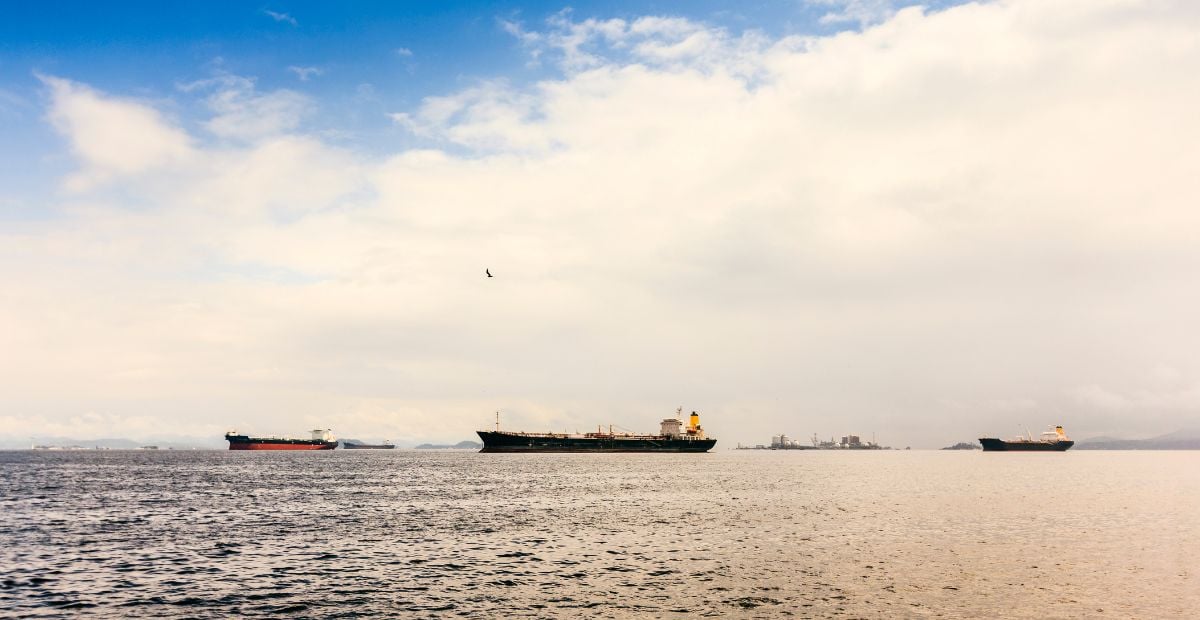
The attack on the MT Petro Dolphin and MT Valthera near the Strait of Hormuz is not an isolated incident; it is a measurable escalation in a maritime corridor that carries roughly a fifth of global oil consumption. Two Indian seafarers are missing, and their fate remains unknown despite ongoing search operations led by the Omani coast guard. The Ministry of External Affairs has called for immediate de-escalation, but a diplomatic statement does not restore safety for the crews still transiting these waters. For the shipping industry and the nations that depend on it, the practical question is no longer whether the region is risky, but how risk is being assessed and communicated in real time.
These strikes follow a drone attack on the MT Gem No. 2 at Sharjah Anchorage on October 9, where all 22 Indian nationals aboard were confirmed safe. The pattern is clear: commercial vessels are being targeted with increasing frequency, and the distinction between military and civilian maritime assets is eroding. This is not a theoretical concern. As we reported in Drone and fire attacks target three tankers near Strait of Hormuz, the incidents span multiple anchorages and vessel types, suggesting a coordinated approach rather than random acts. Meanwhile, the broader disruption to maritime logistics extends beyond the Gulf, as seen in Strikes on Ukrainian ports disrupt data infrastructure and maritime logistics, where port infrastructure and data centres have become legitimate targets in conflict zones. The lesson is uncomfortable but empirical: commercial shipping is now a frontline asset, and its vulnerability is a global supply-chain issue, not a regional one.
What does this mean for the seafarer and the operator? The immediate priority is the search for the two missing crew members from the MT Petro Dolphin, and the Indian Embassy in Muscat is coordinating with ship management companies and Omani authorities. But beyond the rescue effort, the industry must confront a data gap. We know the projectiles were drones and an unknown source, yet the tracking of such threats remains fragmented. The Stranded Iranian Vessels Off Sri Lanka Test Supply Limits and Sanctions Calculus shows how quickly vessels can become isolated when geopolitical pressures converge on logistics. In the Strait of Hormuz, the same convergence is happening at higher speed, and the response has been reactive rather than predictive.
The takeaway is direct: the safety of Indian seafarers, and all seafarers, depends on integrating threat data into voyage planning, not just issuing statements after an attack. Real-time incident reporting, validated by maritime authorities, must become standard for any vessel entering the region. The search for the two missing men is the immediate human cost, but the long-term cost will be measured in rerouted fleets, higher insurance premiums, and a persistent uncertainty that no diplomatic communiqué can fully resolve. Watch for how quickly the International Maritime Organization responds with updated transit guidance; that timeline will tell us whether the industry has learned the lesson or is waiting for the next strike.