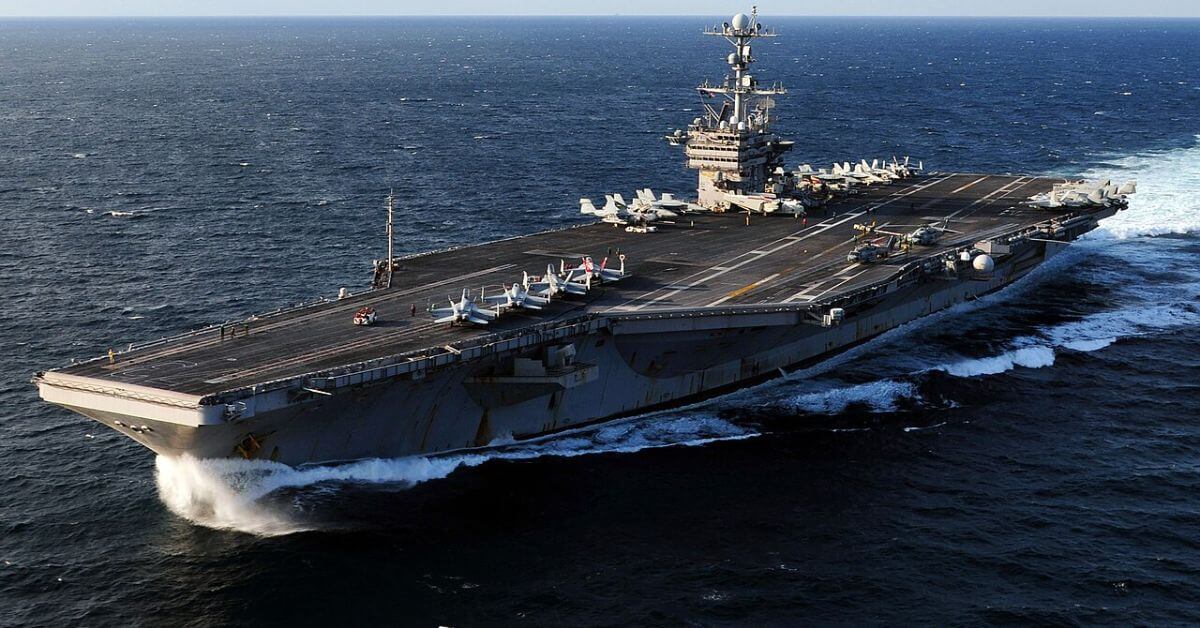
The departure of USS *George Washington* from the Middle East after just three months is a measured recalibration, not a withdrawal of commitment. It signals that the U.S. Navy is balancing strategic presence against the very real human and operational costs of extended deployments. We see this as a necessary, data-driven adjustment in a region where naval posture has direct consequences for global trade and security.
When the *George Washington* was pulled from the western Pacific in August, it left the Indo-Pacific without a carrier, a gap that the Quad nations align maritime patrol operations for 2027 exercise is designed to help fill through coordinated surveillance. Now, the carrier returns to the 7th Fleet, restoring a critical presence in waters where Chinese activity is intensifying. Meanwhile, the Middle East retains two carriers, USS *George H.W. Bush* and USS *Theodore Roosevelt*, alongside more than a dozen escorts enforcing a blockade on shipping to and from Iran. This is not a reduction in capability but a redistribution of assets. The *Bush* may see a year-long deployment, while the destroyers USS *Michael Murphy* and USS *Spruance* each spent over 346 days at sea. The latter crew faced threats from Iran's embassy in South Africa upon return, a detail we covered in Threats Issued Against Navy Officers Amid Escalating Maritime Tensions, underscoring that every rotation carries geopolitical friction.
For our readers, policymakers tracking force allocation, researchers modeling naval logistics, and enthusiasts following readiness metrics, the concrete takeaway is this: the Navy is testing the limits of its carrier fleet's endurance. The *Abraham Lincoln* set a record of 240 uninterrupted days at sea. The *Bush* may approach a full year. These are not abstract benchmarks; they are empirical data points on ship and crew fatigue. Families have raised concerns about living conditions, and those concerns are validated by the lengths of these deployments. The Navy's decision to rotate the *George Washington* back to the Pacific suggests it recognizes that two carriers off Iran can sustain the blockade, while a third is better employed where the strategic competition is most acute.
What we are watching now is the intersection of operational necessity and human sustainability. The overlapping presence of three carriers earlier this month was a fleeting demonstration of surge capacity. The question is whether the Navy can maintain a two-carrier presence in the Middle East through 2025 without breaking its crews or its deployment schedules. The answer will be written in the deployment lengths of the *Bush* and the *Roosevelt*, and in the condition of the sailors who return.