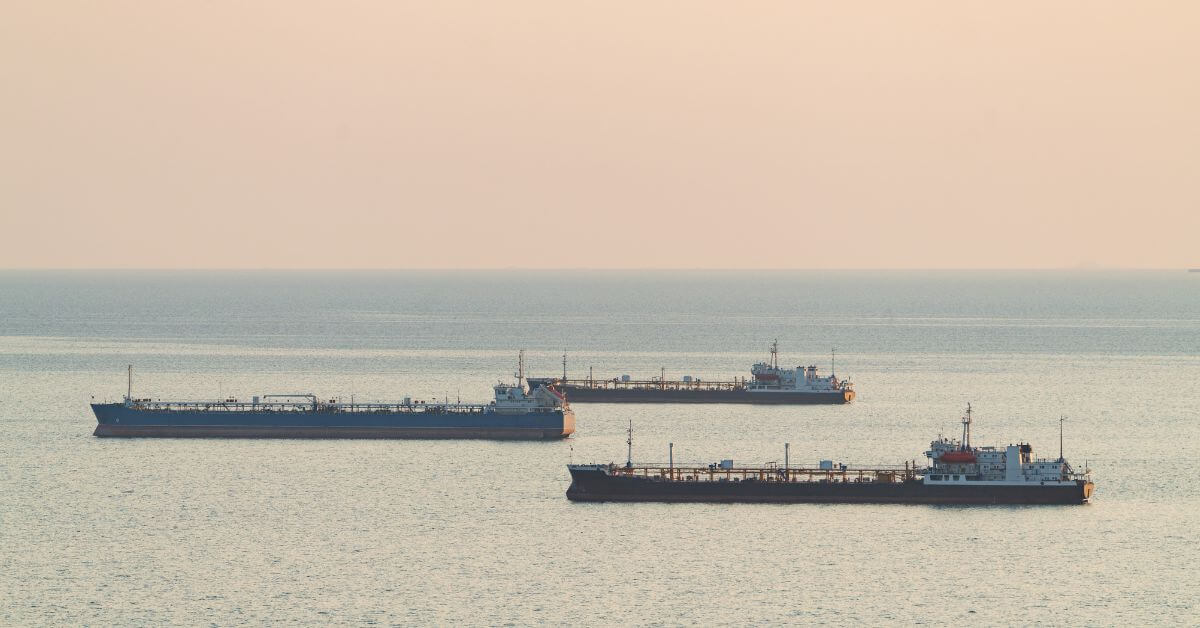
Six million barrels of Iranian crude oil, valued at roughly $600 million, are now crossing the Atlantic under United States authority after three tankers were seized. The cargo, originally subject to sanctions, is being redirected by the U.S. government in a move that raises immediate questions about maritime law, enforcement jurisdiction, and the practical limits of ocean governance. This is not a simple story of property transfer. It is a live test of how international norms around seizure, transit, and environmental risk are applied when state interests collide. Readers who follow our coverage of the Second US underwater drone reported seized in Strait of Hormuz will recognize the pattern: the Strait of Hormuz remains a flashpoint where hardware and sovereignty are contested in real time. Meanwhile, the Gulf of Oman STS Transfers Max Out Amid Rising Saudi Oil Exports reminds us that the same waters are already operating at capacity for ship-to-ship transfers, adding logistical pressure to an already volatile corridor.
Our take is straightforward: this incident is less about the oil itself and more about what it reveals about the fragility of the systems we rely on to track and govern maritime assets. Six million barrels moving across an ocean under disputed authority is not a routine shipment. It is a large-scale, real-world demonstration that the rules of the sea are only as strong as the willingness of states to enforce them, and that enforcement itself introduces new risks. For researchers and policymakers who depend on validated, empirical data about vessel movements and cargo ownership, this case underscores how quickly the line between legal trade and state seizure can blur. The practical takeaway for our readers is this: if you are modeling ocean traffic, oil spill risk, or geopolitical tension, you must now account for the possibility that a vessel's declared flag, origin, and cargo status can be overridden by executive action mid-voyage.
What would we tell a reader who asked us about this? First, watch the environmental contingency. The MEDSLIK-II upgrade sharpens oil spill modeling from surface release data is a timely tool here, any large-volume crude transit under contested command raises the stakes for spill preparedness, especially if the tankers encounter resistance or mechanical issues in heavily trafficked lanes. Second, consider the precedent. If the U.S. can seize and redirect Iranian crude on the high seas, what stops other nations from doing the same under their own legal justifications? The integrated data ecosystem that tracks global oil flows depends on stable assumptions about ownership and route. Those assumptions are now less reliable.
The specific detail to watch is the final destination of these barrels and the legal framework the U.S. uses to justify their sale or transfer. If the cargo is auctioned or redirected to allied markets, it will set a measurable precedent for how seized resources are reintegrated into global trade. If it is held in legal limbo, it becomes a floating test case for maritime property law. Either way, this is not a closed story. The ocean does not forget a six-million-barrel movement, and neither should the systems built to understand it.