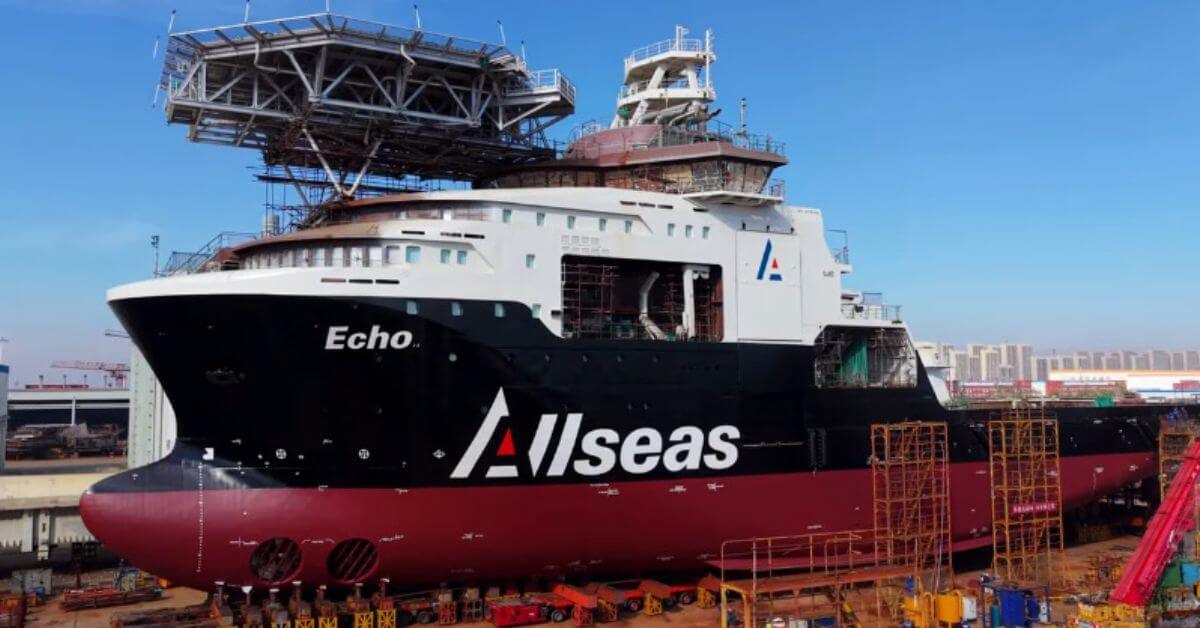
The arrival of Echo is a practical step forward for ocean data infrastructure, and we see it as a signal that the industry is finally calibrating its hardware for a more integrated future. This new 100-metre offshore construction vessel from Allseas, now launched at Wuchang Shipbuilding in China, is not merely a replacement asset. It represents a deliberate investment in the kind of flexible, multi-mission capability that the global ocean-observing network requires. For researchers and policymakers who depend on reliable data from the seafloor, this vessel's specifications matter directly: a 150-tonne active heave-compensated crane, a hangar for two work-class ROVs, and a hybrid propulsion system with a 1,500-kWh battery bank. These are not marketing features but calibrated tools for installing, maintaining, and recovering the physical infrastructure that underpins our ocean intelligence. The trend toward more adaptable construction vessels parallels developments in maritime sensing, such as the integration of indigenous radar systems seen in South Korea's Pyeongtaek frigate integrates indigenous radar for maritime intelligence, where national investment in homegrown capability strengthens self-reliance in data collection.
What makes Echo noteworthy is its design philosophy. The vessel is methanol-ready, built for future fuels, and equipped with a DP2 dynamic positioning system that allows precise station-keeping during subsea intervention. Its 1,100-square-metre cargo deck and accommodation for 110 personnel give it the endurance and capacity to support extended offshore campaigns. This is the kind of integrated platform that can bridge the gap between surface operations and deep-sea observation, a critical link in the chain that connects satellite measurements to benthic sensors. The timing aligns with broader shifts in maritime energy efficiency, as evidenced by the patent leadership documented in Patents for underwater data centres show China leading in energy-efficient innovation, where China holds 80% of global patents for underwater data centres. The same industrial capacity that builds vessels like Echo also drives the energy-efficient infrastructure needed to process ocean data where it is collected.
The practical consequence for our readers is a measurable increase in the industry's ability to deploy and sustain the physical backbone of ocean observation. Echo and its sister ship Pulse, both following the SALT 308 OCV design, are scheduled for delivery in September and December 2026 respectively. Allseas expects them to absorb lighter offshore construction and decommissioning work, freeing larger vessels for heavier scopes. This fleet optimisation means that the global capacity for subsea cable installation, sensor array deployment, and ROV-based inspection is expanding at a time when demand for empirical ocean data is accelerating. The specific detail to watch is how the hybrid propulsion system performs in real operational cycles, as its battery storage and methanol readiness will serve as a real-world test case for decarbonising offshore support vessels. That data, once validated, will inform the next generation of ocean construction assets.