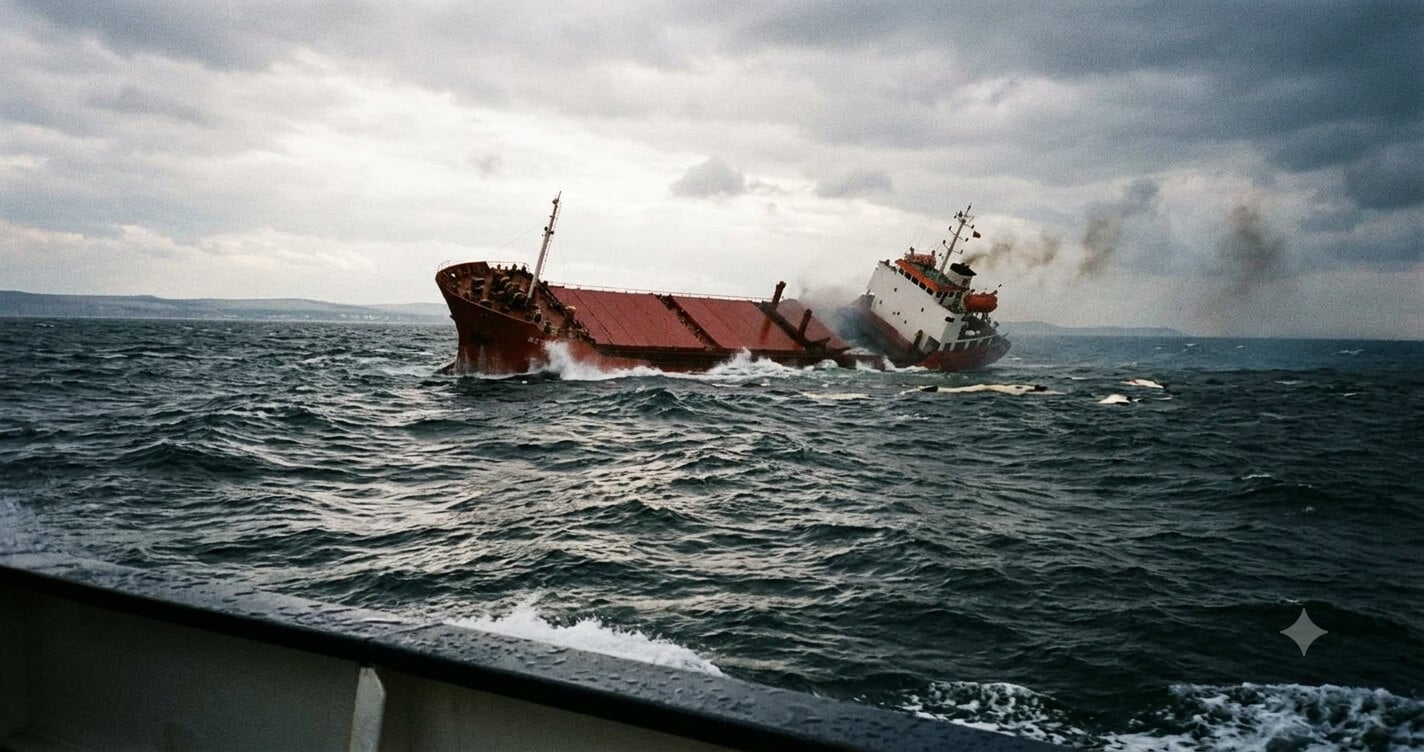
A cargo ship carrying 3,000 metric tons of wheat does not capsize in a vacuum. When the Somali-flagged Betul 8 went down off the Bulgarian coast on November 16 following a suspected drone strike, it became the latest data point in a pattern that demands calibrated, empirical attention. The twelve seafarers rescued and flown to Chaika Air Base survived with no serious injuries, only cold exposure. That is a fortunate outcome, but it should not obscure what this incident confirms: commercial shipping in the Black Sea is now operating under a persistent, measurable threat that extends beyond the immediate combat zones.
This event follows closely on the heels of the Black Sea drone strikes hit three commercial vessels near Romanian canal reported earlier that same week. The Betul 8 was traveling from Romania to Egypt when it entered Bulgaria's exclusive economic zone and issued a distress call reporting that it was sinking. The Black Sea Mine Countermeasures Group, deploying vessels from Bulgaria, Romania, and Turkey, coordinated the rescue. The crew's claim that sea drones attacked their vessel has not been verified, but the proximity to the earlier strikes on three ships near the Sulina canal gives the claim weight. We cannot treat these as isolated events. They are integrated signals in a deteriorating maritime security environment.
The broader context is even more troubling. On November 14, three oil tankers exploded after hitting naval mines east of Hormuz, sailing with their navigation systems turned off. We covered the Naval Mine Ignites Tanker in Strait of Hormuz as it happened, and the 2 Million Barrels of Oil Lost as Supertanker Sinks After Mine Strike in Hormuz Strait that followed. Two distinct maritime chokepoints, the Black Sea and the Strait of Hormuz, experienced coordinated attacks on commercial shipping within forty-eight hours. That is not coincidence. It is a longitudinal indicator that the weaponization of commercial traffic corridors is accelerating, and the methods are diversifying: naval mines, sea drones, and the disabling of navigation systems all represent different vectors of the same risk.
Our take is direct: the ocean intelligence community must treat these incidents as empirical evidence of a structural shift, not a temporary spike. The data is measurable. The climate of maritime conflict is changing in real time, and the vessels that carry the world's grain and oil are the sensors. For researchers and policymakers tracking global trade resilience, the question is no longer whether these attacks will continue. It is whether the integrated data ecosystems we rely on, from AIS tracking to satellite imagery to mine countermeasure reports, are calibrated to detect the next strike before the distress call. The Betul 8's crew made it to Chaika Air Base. The next crew may not.