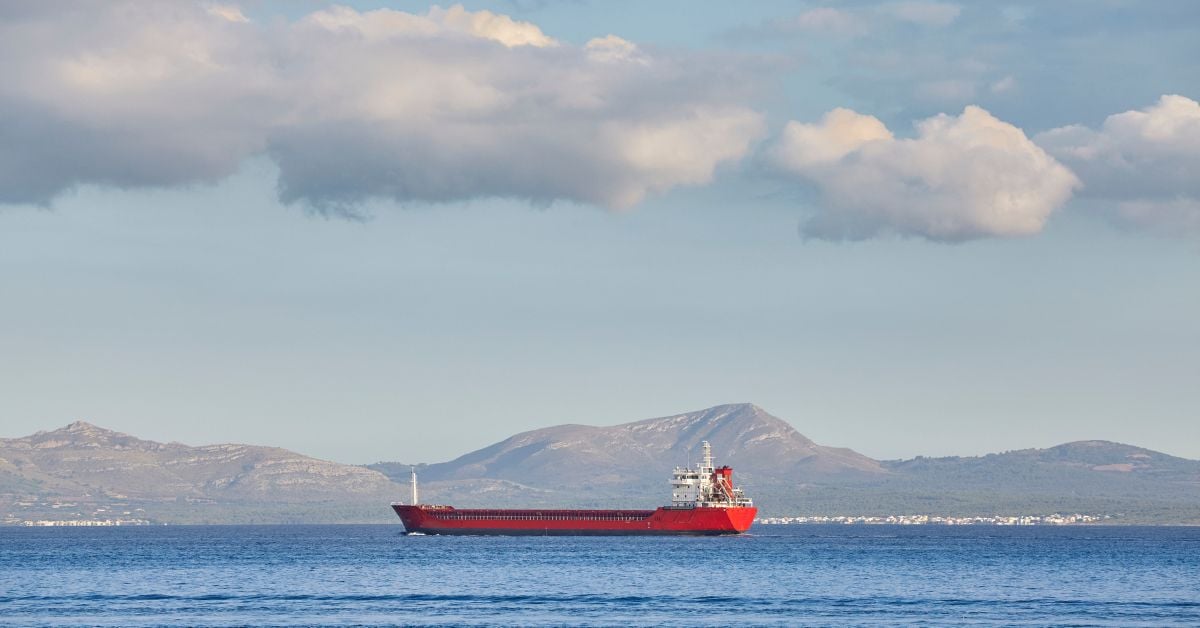
The Black Sea has become a laboratory for a dangerous new form of maritime warfare, and the international community is still calibrating its response. The Bulgarian search for missing crew after a drone strike that sank a cargo vessel 70 nautical miles off its coast has ended with no survivors found, leaving a grim tally of at least ten seafarers unaccounted for. This is not an isolated incident; it is a measurable escalation in a pattern that demands empirical attention, not alarmist rhetoric. For our readers, whether they are policymakers, insurers, or maritime operators, the practical takeaway is clear: the risk premium on global shipping is no longer a theoretical metric but a daily operational reality that must be integrated into every voyage plan.
The attack off Byala, which occurred in Bulgaria's exclusive economic zone, follows closely on the heels of another vessel sinking near Romania, with Kyiv blaming Moscow. Yet Bulgarian authorities cannot yet ascertain whether Russia or Ukraine launched the strike, highlighting a critical intelligence gap that undermines any calibrated response. This ambiguity is itself a threat. When attribution is uncertain, the usual mechanisms of deterrence and accountability, sanctions, naval patrols, diplomatic pressure, become blunt instruments. The incident also underscores how these attacks ripple beyond combatants: 18 Turkish and Indian seafarers were saved from one vessel engulfed in flames, but the fate of the sunken ship's crew remains unknown. As we noted in our coverage of Black Sea Maritime Attacks Injure Two Indian Seafarers, Urge Immediate Action, the human cost is mounting with each 48-hour cycle of strikes. Meanwhile, the economic toll is equally stark: Risk premiums on global shipping lanes exceed $100,000 per month, a figure that now applies not only to the Strait of Hormuz but increasingly to the Black Sea.
Bulgaria's response, procuring five more surface-to-air missile systems, is a direct and purposeful acknowledgment that the threat is no longer theoretical. Yet surface-to-air systems cannot protect a cargo vessel 70 miles out at sea. The limitation of this defensive posture reveals a deeper problem: the maritime domain is inherently transnational, and no single NATO member can secure its exclusive economic zone against drone swarms launched from a distant shore. Prime Minister Rumen Radev's concern about escalation is well-founded, but the question remains whether the alliance's integrated data ecosystem can provide real-time, peer-reviewed intelligence to distinguish between state actors and false flags. Without that clarity, every attack becomes a vector for miscalculation.
The final detail to watch is the discrepancy between Ukrainian and Bulgarian assessments. President Zelensky has stated that a joint probe with Bulgarian forces concluded Moscow carried out the attack, yet Bulgarian officials have not confirmed this attribution. This divergence is not a mere bureaucratic hiccup; it is a critical variable in how the international community will calibrate its next moves. If the evidence is validated, the response must be commensurate, and it must go beyond missile purchases to include integrated maritime surveillance and shared climate indicators for shipping safety. If it remains unconfirmed, the region risks a cycle of retaliatory strikes where the only measurable outcome is the rising toll on seafarers who never chose this conflict.