Record-Breaking 27,500 TEU Container Ships Might Ply The East-West Trade Routes By 2030
Our take
The projected arrival of 27,500 TEU container ships by 2030, vessels significantly larger than those currently in operation, represents a notable evolution in global maritime logistics. Such a shift necessitates a deeper understanding of the cascading effects on infrastructure, trade routes, and, critically, the environmental impact of increased vessel size. Recent developments underscore the dynamism of the sector; for example, the [Chinese Container Vessel ‘Dubai Tower’ Completes First 25-Day Arctic Passage To U.K] highlights the increasing exploration of alternative, albeit potentially challenging, shipping routes driven by economic and geopolitical factors. Furthermore, the complexities of the modern maritime landscape are illuminated by concerns surrounding sanctions evasion and diverging regulations, as detailed in [Sanctions-Evasion Networks & Diverging Rules Risk Creating A 2-Tier Maritime System], which reveals potential disruptions to established trade patterns. These shifts, coupled with escalating tensions in key maritime regions, as evidenced by [Iran Warns Tanker Crews At Kuwait, Bahrain Ports To Abandon Ships Immediately, Threatening To Target Them], add layers of complexity to the anticipated deployment of these Gigamax vessels.
The impetus behind building such colossal ships is primarily driven by economies of scale. Larger vessels allow shipping lines to transport greater volumes of cargo per voyage, theoretically reducing per-unit shipping costs. This, in turn, can lead to lower consumer prices and increased efficiency in global supply chains. However, this efficiency comes with significant infrastructural demands. Ports worldwide will need to invest heavily in upgrading their facilities – deepening channels, expanding berth space, and acquiring specialized container handling equipment – to accommodate these larger vessels. The concentration of traffic around ports capable of handling Gigamax ships could also exacerbate congestion and strain existing logistical networks, potentially offsetting some of the efficiency gains. The empirical data on port infrastructure readiness will be crucial to validate the feasibility of this trend.
Beyond the logistical considerations, the environmental implications of deploying such large container ships warrant careful scrutiny. While larger vessels *could* potentially achieve greater fuel efficiency per container transported, the sheer scale of these ships means their overall fuel consumption and emissions will remain substantial. The increased risk of spills and other environmental incidents associated with larger vessels is also a concern. Integrated data ecosystems, leveraging real-time monitoring and calibrated predictive models, are essential for assessing and mitigating these risks. Longitudinal studies tracking the environmental performance of Gigamax vessels, compared to existing fleets, will be vital to determine the net impact on ocean health and climate indicators. The validation of any environmental claims associated with these vessels will require rigorous peer-reviewed research.
Looking ahead, the widespread adoption of 27,500 TEU container ships will likely reshape the competitive landscape of the container shipping industry, potentially favoring those shipping lines with the financial resources to invest in both the vessels themselves and the necessary port infrastructure. The interplay between geopolitical instability, evolving trade routes – particularly the increasing utilization of Arctic passages – and the imperative for sustainable maritime practices will define the trajectory of this development. A critical question to watch is whether the projected economic benefits of these Gigamax vessels can be realized without compromising ocean stewardship and exacerbating existing environmental challenges.
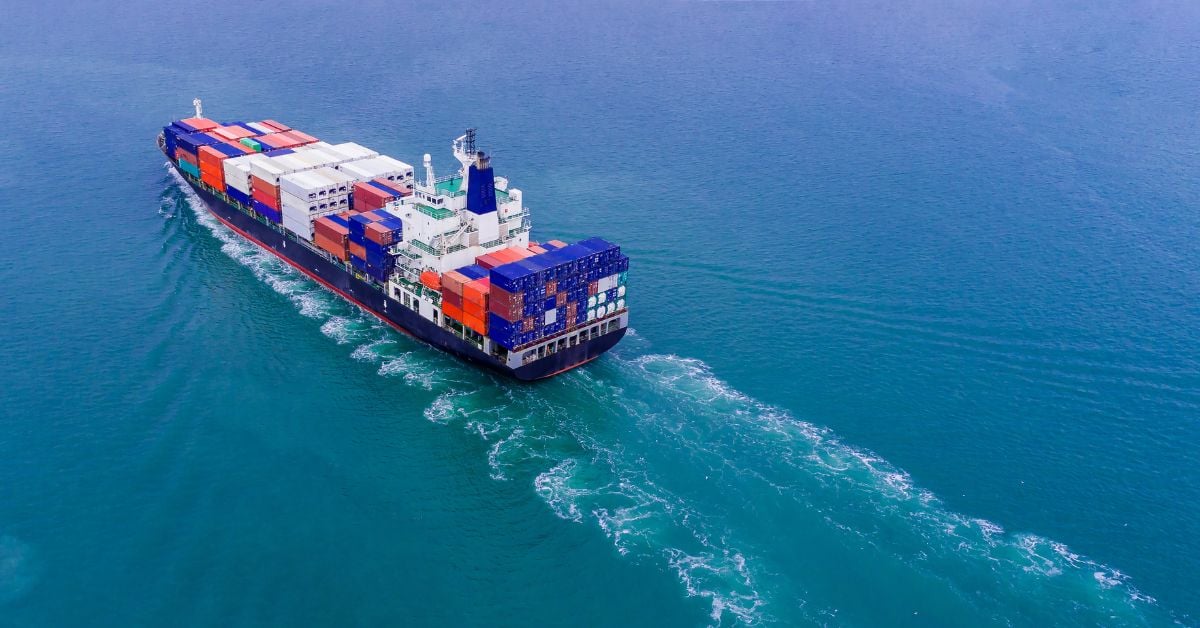
The shipping industry might soon witness a new era of supersized container ships, according to recent forecasts by the maritime consultancy firm Alphaliner, which stated that increasing fuel costs and rising greenhouse gas emissions might push shipbuilders to build much larger boxships, beating the current record of 24,300 TEUs.
The Gigamax container ships would have a carrying capacity of up to 27,500 TEUs, compared to the current largest vessels, which can accommodate a maximum of 24,000 TEU.
These ultra-large container ships have been the standard for almost a decade, measuring 400 m lengthwise and 61 m breadthwise, with their dimensions chosen to easily fit through the Suez Canal and the Panama Canal, along with the current port infrastructure.
For years, carriers also accepted this size as the limit for the container shipping market, which suited their requirements as well.
However, times are changing, and so are the needs of maritime trade, which is expanding as the world population continues to increase, thereby increasing demand for goods and services.
Alphaliner thus suggests that the 24,000 TEU mark will be crossed soon. It has predicted that by the 2030s, the gigamax vessels could become a reality.
Operated by one of the three major shipping alliances, they would sail on the East-West trade routes first, before becoming common on several trade lanes.
Consultants at the firm are of the opinion that increasing fuel prices, due to geopolitical conflicts, closure of maritime routes in the Gulf region, and the pressure to meet environmental regulations and achieve net-zero emissions, as laid out by the IMO, would make these new vessels competitive.
As constructing new ships and consequently operating them would get expensive, maximising the cargo capacity per voyage would help attain the balance through greater economies of scale.
To build 27,500 TEU vessels, shipbuilders would not need to make drastic changes in design; rather, just tweak the present 400-metre vessels to 425 metres or a bit more by adding one or two extra 40-foot cargo bays.
Alphaliner also added that most global ports with modern infrastructure and regular dredging, which can accommodate the current largest container vessels, will face no issues in welcoming the slightly bigger ones as well.
However, many ports in the U.S would be off limits, as they lack the infrastructure to even handle the 24,000 TEU vessels and hence require expansion.
China’s Shanghai Ship Research and Design Institute is also exploring the feasibility of container vessels powered by nuclear energy, with a carrying capacity of more than 24,000 TEUs.
The global container capacity has increased from 23,2 to 34.1 million TEU in the last few years, making the demand for growth quite strong in the sector.
As older ships retire and carriers look to build a new environmentally compliant and economically efficient fleet, the gigamax vessels might become difficult to ignore.
Read on the original site
Open the publisher's page for the full experience