Iran Says New Anti-Ship Missile Was Tested Over US Navy Warship As Strait Of Hormuz Tensions Rise
Our take
The recent announcement from Iran regarding the testing of a new anti-ship missile, reportedly over a U.S. Navy warship in the Strait of Hormuz, represents a significant escalation in regional tensions and warrants careful analysis within the broader context of maritime security and global trade. This action follows claims by Iran's Islamic Revolutionary Guard Corps (IRGC) of missile launches targeting U.S. naval vessels, adding another layer of complexity to an already volatile situation. The Strait of Hormuz, a critical chokepoint for global energy transport, sees approximately a third of the world's oil pass through it daily, making any disruption profoundly impactful. Recent events, like the [Qatar LNG Tanker Sails Through Strait Of Hormuz For First Time Since July], highlight the continued reliance on this waterway and the potential consequences of instability. Furthermore, the ongoing challenges at the [Panama Canal Squeezes Daily Capacity To 29 Ships, Threatening Global Supply Chains] demonstrate the vulnerability of global logistics to regional disruptions, underscoring the strategic importance of maintaining secure maritime routes.
The timing of this missile test is particularly noteworthy, occurring amidst ongoing diplomatic efforts concerning Iran’s nuclear program and broader regional influence. Iran’s actions can be interpreted as a demonstration of military capability and a message to both the United States and regional partners regarding its resolve. While the specifics of the test remain subject to verification, the reported proximity to a U.S. warship raises immediate concerns about operational risk and the potential for miscalculation. The U.S. Navy's presence in the region, including efforts like those undertaken by [U.S Navy SEAL’s Spent 4-Months Conducting Covert Nighttime Missions To Clear Mines From Strait Of Hormuz], is intended to ensure freedom of navigation and deter hostile actions, but these actions by Iran challenge that stability. The potential for escalation is real, and a misstep could trigger a wider conflict with significant global repercussions. A calibrated response from the U.S. and its allies will be crucial, balancing the need to deter further aggression with the avoidance of actions that could exacerbate the situation.
The broader implications extend beyond immediate security concerns. This incident underscores the fragility of maritime supply chains and the disproportionate impact that disruptions in critical waterways can have on the global economy. The increasing frequency of incidents in the Persian Gulf, including seizures of commercial vessels and drone attacks, highlights a pattern of behavior designed to exert pressure and destabilize the region. The development of advanced anti-ship missile technology by Iran further complicates the strategic landscape, potentially eroding the traditional naval advantages held by regional powers and the United States. Assessing the accuracy and range of this new missile, along with its integration into Iran's broader defense strategy, will be essential for understanding the evolving balance of power in the region. Data-driven analysis of maritime traffic patterns, missile defense capabilities, and naval deployments will be vital for informed decision-making.
Looking ahead, the situation in the Strait of Hormuz demands sustained vigilance and proactive diplomacy. The risk of accidental or intentional escalation remains high, and the potential for further disruptions to global trade is a significant concern. The efficacy of existing maritime security protocols and the development of new strategies to mitigate risk will be paramount. A key question to watch is whether this incident will prompt a renewed push for de-escalation and dialogue, or whether it will further entrench existing tensions, leading to a more precarious security environment in the Persian Gulf and beyond. The integrated data ecosystem available through platforms like ours can provide real-time climate indicators and maritime traffic analysis to aid in informed risk assessment and mitigation.
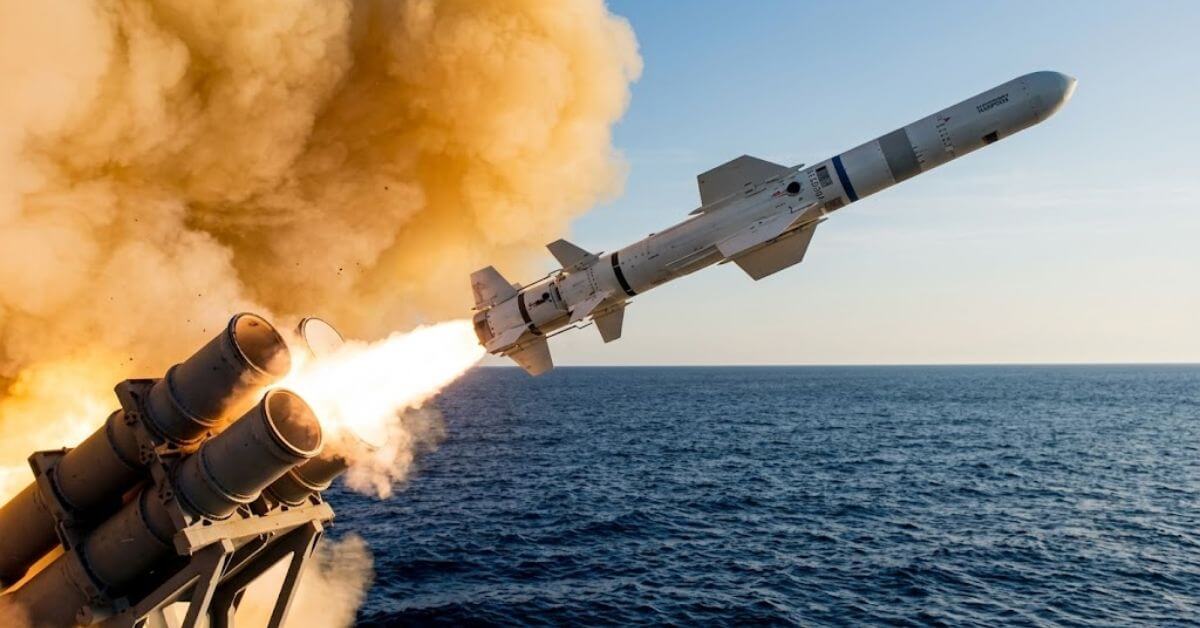
Iran says it has tested a new anti-ship missile near a U.S. Navy warship in the Persian Gulf.
Mohsen Rezaei, secretary of Iran’s Supreme National Security Council, made the claim during a televised interview on Sunday night, Fars News reported.
Rezaei said Iran had used the new weapon for the first time against an American warship. He called it a “special missile” and said U.S. vessels left the area after the incident.
The statement followed an announcement by Iran’s Islamic Revolutionary Guard Corps that its Aerospace Force had launched several ballistic missiles at a U.S. aircraft carrier and an American destroyer.
Iran said both ships were involved in the blockade and had moved away after the attack.
The U.S. military gave a different account. U.S. Central Command said its ships had faced an attack involving “hostile missiles”.
It said the incoming missiles were stopped and that the vessels suffered no damage. U.S. forces then carried out strikes in response.
Rezaei said CENTCOM’s statement amounted to an admission that the attacks had taken place. He said the incident showed that the U.S. naval blockade could be challenged.
He added the waterway remains closed and rejected the U.S. claim that ships and oil tankers are moving through it.
Rezaei also said some vessels trying to cross the strait without their navigation systems on had been attacked.
According to Rezaei, Iranian forces have so far chosen not to sink those ships because of concerns about the environment.
The strait was open to commercial shipping before the war. It is an important route for oil, natural gas and fertilizer shipments.
Iran is still restricting much of the traffic through the waterway with threats and attacks on ships.
Washington is using a naval blockade of Iranian ports as part of its pressure on Tehran. U.S. President Donald Trump has also recently threatened Iran with what he called an “economic war”.
The U.S. attacked three Iranian oil tankers on Saturday. The U.S. military said the vessels were put out of action.
Before that, Iran’s IRGC had launched ballistic missiles at two U.S. warships, according to CENTCOM.
Iran warns South Korea
Iran has also warned South Korea against taking part in U.S. military activity in the region.
Iranian Foreign Ministry spokesman Esmaeil Baghaei said any additional military presence or operational role by another country in the Persian Gulf or Strait of Hormuz would be treated by Iran as direct support for the side carrying out the attacks.
South Korean media reported on Friday that Seoul was preparing, under pressure from Trump, to send a ship and several reconnaissance aircraft to the Strait of Hormuz.
There has been no official confirmation of those reports.
South Korea’s Defence Ministry and Foreign Ministry said separately on Monday that they were discussing with the international community how they could help restore free movement through the strait.
They said no final decision had been taken.
References: middleeasteye, dpa
Read on the original site
Open the publisher's page for the full experience