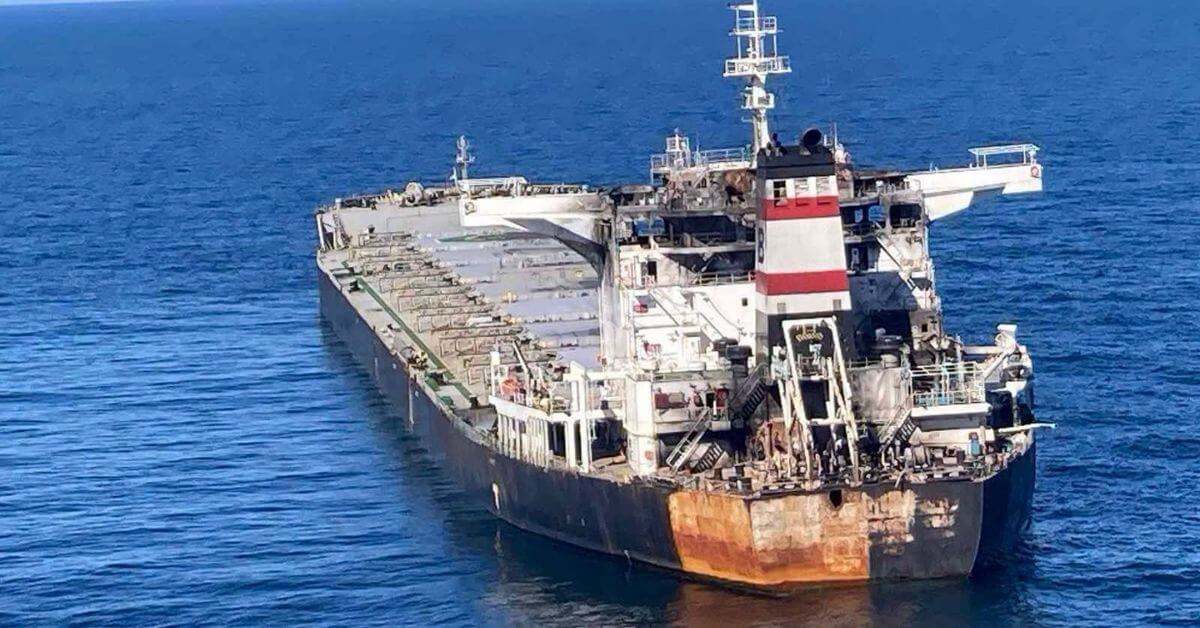
A 292-meter bulk carrier, abandoned and burning after a Russian drone strike, is now drifting through the Black Sea toward Bulgaria. The vessel, named Emil, has no crew, no propulsion, and no confirmed salvage operation. Bulgarian Air Force and Navy personnel located it on October 4, about 40 nautical miles east of Cape Shabla, and have issued warnings to shipping traffic. This is not a distant geopolitical abstraction; it is a 175,000-tonne hazard moving through one of the world's most consequential maritime corridors.
What makes this incident more than a single vessel's misfortune is the pattern it confirms. The Emil was struck on August 5, drifted through Romania's exclusive economic zone for two months, and is now entering Bulgarian waters. Meanwhile, Russian forces attacked another Liberian-flagged civilian cargo ship in Odesa on October 3, killing one crew member and injuring three others. These are not isolated events. They are recurring failures of maritime governance in a region where Black Sea stability is a measurable climate and food security indicator. Every unmanaged drifting hull, every delayed salvage operation, and every attack on a grain carrier compounds the risk to shipping lanes that feed global markets.
The practical question is not whether the Emil will eventually run aground or be intercepted, but who is responsible for the cost and coordination of its removal. Bulgaria has already dealt with this once. In December, the tanker Kairos, damaged after an attack off Turkey, drifted toward the Bulgarian coast; Bulgarian authorities helped the crew, moved the vessel to a sheltered anchorage, and later recovered costs from its owners. That precedent shows response is possible, but it also shows the burden falls on the nearest coastal state, not the party that caused the damage. The same dynamic is now repeating with the Emil, and the absence of confirmed salvage plans suggests the region is still improvising rather than institutionalizing a response.
The deeper issue is that drifting abandoned ships are not just navigational hazards. They are climate indicators in their own right. A vessel unable to manoeuvre carries fuel, lubricants, and cargo that can spill into a sea already stressed by warming and acidification. The maritime attacks that injured two Indian seafarers and the validated use of unmanned surface vehicles in combat point to a rapid escalation in how this war is fought at sea. But the Emil's drift shows the aftermath is just as dangerous as the strike itself.
What we should watch now is whether Bulgaria's monitoring leads to a coordinated salvage operation or another ad hoc arrangement. The Emil's position, its condition, and the lack of a confirmed owner-led response will determine whether this becomes a single incident or a template for future maritime emergencies. The Black Sea cannot absorb many more of these. The region needs a standing protocol for abandoned vessels, not case-by-case reactions after a ship has already drifted across two national exclusive economic zones. That is the concrete gap this incident exposes, and it is the one that matters.