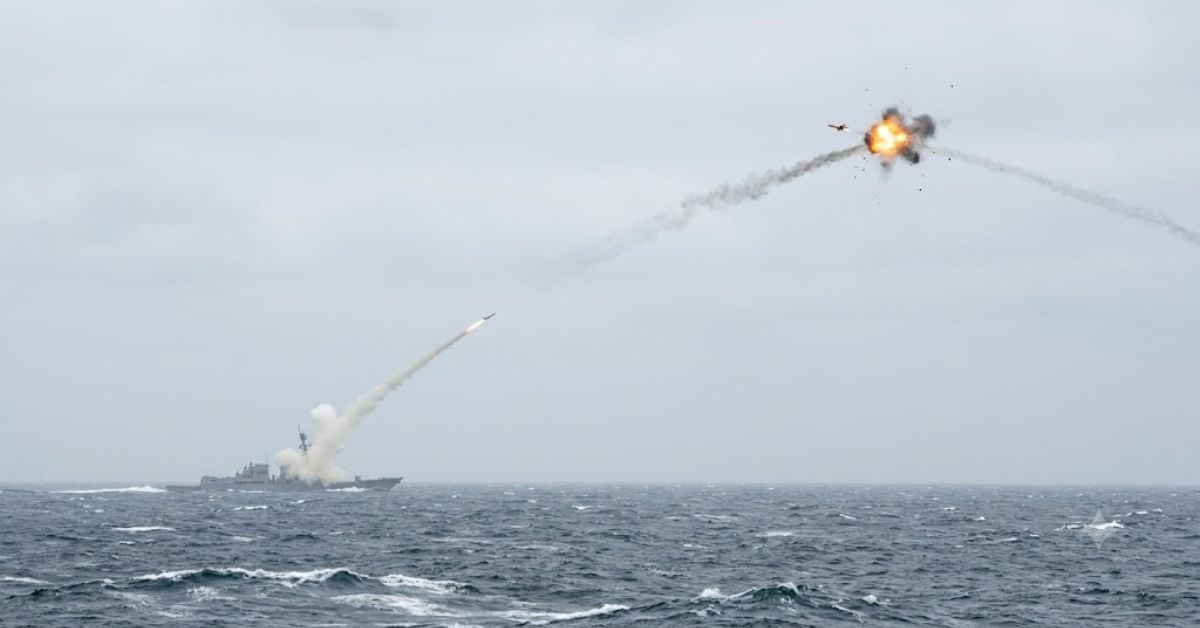
A mesh-networked unmanned surface vessel just shot down an aerial drone in validated combat, and that fact should reframe how we think about maritime warfare. The Ukrainian Navy's Sargan-3000 USV engaged a Russian Shahed-type drone using its remote weapon station while operating through a mesh network, a layered, real-time data exchange that keeps autonomous platforms coordinated even when individual links are disrupted. This is not a laboratory demonstration or a concept video. It is an empirically observed, peer-review-adjacent operational event with a confirmed kill, and it carries practical consequences for navies, coastal defense planners, and the global maritime security community.
The Sargan-3000, which entered service in April, already holds a separate historical first: last month it engaged and destroyed a Russian USV in the Black Sea, marking the first uncrewed-vessel-on-uncrewed-vessel engagement in naval history. That earlier action was notable, but the aerial engagement adds a new layer of validated capability. The platform operates at speeds up to 55 knots, carries payloads of 450 kilograms, and has a 1,600-kilometer radius, meaning it can loiter, hunt, and engage across the entire western Black Sea without a human on board. When you combine that with a mesh network that shares targeting data across multiple nodes, you effectively create a distributed kill chain that is harder to jam, harder to spoof, and harder to disable with a single strike. These developments come as Bulgaria concludes search for missing crew after drone strike in its waters, underscoring that the threats these systems are designed to counter are not hypothetical. Meanwhile, Black Sea Maritime Attacks Injure Two Indian Seafarers, Urge Immediate Action reminds us that the human cost of uncrewed warfare is already being paid in real injuries and lost lives.
What this means for our readers is straightforward: the barrier to entry for autonomous combat capability just dropped. A USV that can shoot down drones and hunt other USVs is no longer a speculative future system, it is a deployed, combat-validated tool. For researchers tracking maritime security trends, this provides longitudinal data on how quickly uncrewed platforms are evolving from reconnaissance assets into shooters. For policymakers, it raises urgent questions about escalation dynamics. If a mesh-networked USV can autonomously identify and engage an aerial target without a human in the loop at the moment of decision, who is accountable for that shot? The Seoul Disputes Ukrainian Data on Fuel Shipments to Russia story shows how even material supply chains are now part of the same contested maritime picture, and an autonomous vessel that can patrol for days without resupply changes the calculus for enforcing sanctions or protecting shipping lanes.
The specific takeaway here is that the Sargan-3000's mesh network is the real story, not just the gun. A single USV firing a machine gun is impressive but not revolutionary. A mesh of USVs sharing sensor data and distributing firing solutions across a battlespace is a structural change in how naval engagements can be fought. The open question to watch: how will conventional navies adapt their electronic warfare and counter-UAS tactics when the shooter is a cheap, expendable surface drone that can coordinate with others beyond line of sight? That answer will shape procurement decisions for the next decade.