The Strait of Hormuz is not a region that tolerates ambiguity, and the coordinated attacks on three tankers over a single weekend confirm that maritime security in these waters has fractured into a multi-front hazard. Drone strikes, naval mines, and projectile hits are no longer hypothetical risks; they are the operational reality for any commercial vessel transiting this chokepoint. For our readers, researchers, analysts, and decision-makers who rely on empirical data to assess global trade stability, these events demand a recalibration of how we measure risk in the Arabian Gulf and Gulf of Oman. This is not a localized flare-up; it is a pattern of escalation that links directly to the broader breakdown of maritime governance, as seen in the Stranded Iranian Vessels Off Sri Lanka Test Supply Limits and Sanctions Calculus and the Drone strike targets Panama-flagged tanker with 22 Indian crew at Sharjah anchorage.
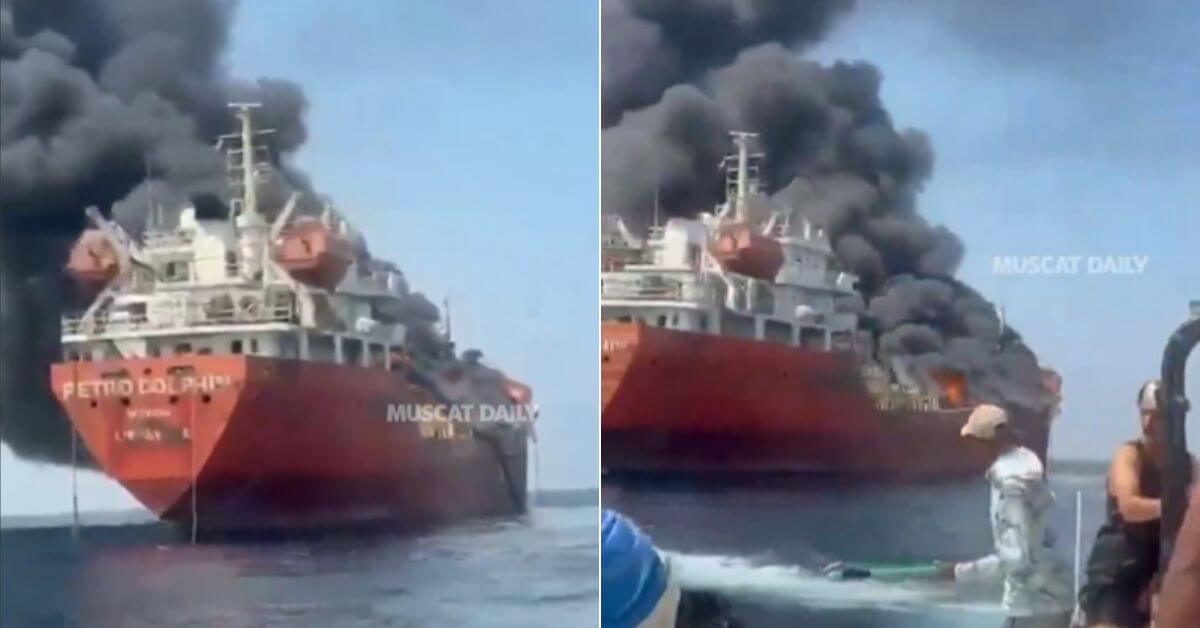
What stands out is the layered nature of the threats. The Nicaragua-flagged *MT Petro Dolphin* was hit by an uncrewed aerial vehicle near Sohar, Oman, leaving two Indian seafarers missing. Separately, the *Angola Prosperity* and *Valthera* were struck by unknown projectiles while transiting the Strait. The Islamic Revolutionary Guard Corps then claimed a supertanker hit one of its naval mines. Meanwhile, U.S. Central Command disabled the *Ocean Molica* for attempting to break the naval blockade of Iranian ports. These are four distinct incidents in a single corridor, each with a different attribution, non-state drone operators, IRGC naval assets, and U.S. precision munitions, yet they share a common outcome: commercial shipping has become a target. The practical takeaway is that no single authority controls this space. Shipping companies cannot rely on a single security framework; they must integrate real-time intelligence from multiple sources, UKMTO advisories, CENTCOM broadcasts, and independent maritime security firms, to make transit decisions.
The human cost is immediate and measurable. Two Indian seafarers remain missing after the Sohar drone strike. Twenty-two Asian citizens were rescued from a burning tanker in the Arabian Gulf. Nine Indian crew members from the *MT Petro Dolphin* are safe, but the union's video of thick smoke pouring from the vessel is a visual reminder that behind every tonnage statistic is a crew. The Forward Seamen's Union of India is now monitoring the situation, but the absence of a coordinated regional rescue mechanism is a structural gap. When vessels operate in waters where a drone strike, a mine explosion, and a U.S. precision strike can occur within the same 48-hour window, the margin for error is zero. The IRGC's warning that unauthorized ships would face "definitive" punishment, issued two days before the attacks, was not bluster, it was a calibrated signal that the blockade enforcement has moved from warnings to kinetic action.
One specific detail to watch is the claim that the supertanker struck an Iranian naval mine. If independently verified, this would mark the first confirmed use of naval mines in this escalation cycle. Mines are indiscriminate and persistent; they do not distinguish between sanctioned vessels and innocent transits. The UKMTO's report of unidentified VHF messages ordering ships to leave anchorages near Ras Al Khaimah suggests that the threat is expanding beyond the Strait itself into UAE waters. For our audience, the open question is whether this cluster of attacks represents a coordinated campaign or the chaotic convergence of multiple actors pursuing separate objectives. The answer will determine whether the risk is systemic or episodic, and that distinction is the difference between a temporary reroute and a permanent shift in global shipping patterns.