data analysis
30 stories filed under data analysis on World Data Ocean. The newest of them: “Measuring China's role in validated extreme poverty decline”, “Charting a Career in Ocean Science Beyond Academia and Research”, and “Phenological data confirms warming springs drive earlier cherry blossoms in Japan”. Between 1990 and 2015, the world saw a remarkable decline in extreme poverty, with China contributing nearly three-quarters of that progress. Ocean science careers extend far beyond the lab or lecture hall, and that is a fact worth validating. A Global Hub for Ocean Intelligence 4 World Data Ocean is a centralized digital platform where researchers, scientists, and ocean enthusiasts converge to… The list below is every data analysis story on World Data Ocean, newest first.
Measuring China's role in validated extreme poverty decline
Between 1990 and 2015, the world saw a remarkable decline in extreme poverty, with China contributing nearly three-quarters of that progress. This raises a critical question: was the global decline only due to China? Our analysis shows that even without China, the rest of the world still achieved measurable, though slower, poverty reduction. Understanding this distinction is essential for calibrating effective policy. For deeper context, see our related story on China's income data showing near-threshold high-income status.
Charting a Career in Ocean Science Beyond Academia and Research
Ocean science careers extend far beyond the lab or lecture hall, and that is a fact worth validating. A BSc opens doors to roles in environmental consulting, policy analysis, and the private sector, fields where empirical data on climate indicators drives real-world decisions. Skills in data calibration, integrated monitoring, and peer-reviewed analysis are measurable assets. For deeper context on how climate data informs global action, see our piece on China's electric vehicle acceleration for measurable climate indicators.
Phenological data confirms warming springs drive earlier cherry blossoms in Japan
Japan's cherry blossoms are arriving earlier, and the evidence is clear: phenological data confirms that warming spring temperatures are driving this shift. This is not anecdotal, it's a measurable, empirical signal of climate change playing out in real time. Understanding these patterns is essential for predicting broader ecological impacts. For deeper context on how long-term data reveals structural change, see our related article, "A calibrated shift: global employment data confirms the rise of the service sector."
Decades of calibrated agricultural data show cereal yields outpacing global population growth
Decades of calibrated agricultural data confirm a measurable truth: global cereal yields have outpaced population growth for half a century. This is not a story of scarcity, but of empirical progress. Understanding this longitudinal trend is essential for shaping food policy. For deeper context on how trust shapes data ecosystems, see our related piece, "Global trust levels reveal measurable differences across integrated data ecosystems."
Global trust levels reveal measurable differences across integrated data ecosystems
Trust varies measurably across the world's integrated data ecosystems. When asked whether most people can be trusted, responses diverge sharply by country, a calibrated, empirical signal of social cohesion that demands our attention. Understanding these patterns is essential for building collaborative global frameworks. For deeper context, see our related analysis of how US healthcare spending per capita leads G7 nations without leading outcomes, another case where measurable data challenges assumptions.
Global tobacco use patterns reveal a persistent gender gap across populations
Men are more likely to use tobacco than women in nearly every population on Earth, a persistent gender gap that demands closer scrutiny. This pattern is not a statistical blip; it reflects deep-rooted behavioral and social factors that vary across cultures. Understanding these empirical trends is essential for designing effective, targeted interventions. For a related look at how data reshapes scientific understanding, our piece on how AI compute doubles every six months, reshaping empirical research offers a parallel view of accelerating knowledge.
Measuring the share of women who reach reproductive end without children
A significant and measurable share of women now reach the end of their childbearing years without having children. This longitudinal shift demands empirical attention, not alarm. Understanding the precise, validated proportion is essential for calibrating our models of demographic change and societal health. We see this as a critical climate indicator, as population dynamics are deeply integrated with resource use. For deeper context on how we track biological outcomes, see our related work on the measurable share of births shaped by assisted reproductive technologies.
Global mortality patterns reveal regions where deaths outpace births
Regions where deaths outpace births are becoming measurable indicators of demographic and economic strain. These mortality patterns, validated by longitudinal data, reveal a global shift that demands integrated understanding. The same empirical rigor that tracks Britain's validated decline in smoking, once widespread, now uncommon, applies here. From orbit to ocean floor, we follow the data. These are not abstract statistics; they are climate indicators of human systems, demanding calibrated, purposeful attention.
Measurable progress in aviation security shows hijackings in sustained decline
Measurable progress in aviation security shows hijackings in sustained decline. Once a recurring threat, airline hijackings are now rare, validated by empirical data that underscores the power of calibrated, integrated security systems. This is not luck; it is the result of global collaboration and real-time intelligence. Understanding drives protection. For a parallel in measured global challenges, see our related coverage on global displacement and uneven national responsibility.
Calibrating ocean intelligence to navigate a warming world
Calibrating ocean intelligence requires more than collecting data, it demands integration. Our warming world is outpacing fragmented observation systems. Validated, real-time measurements from orbit to ocean floor must become an integrated data ecosystem, not isolated snapshots. This is measurable, empirical work. Understanding drives protection. For deeper coverage, explore our related piece, "From orbit to ocean floor: integrated data reshapes our view of the sea," which examines how this unified approach is transforming marine science.
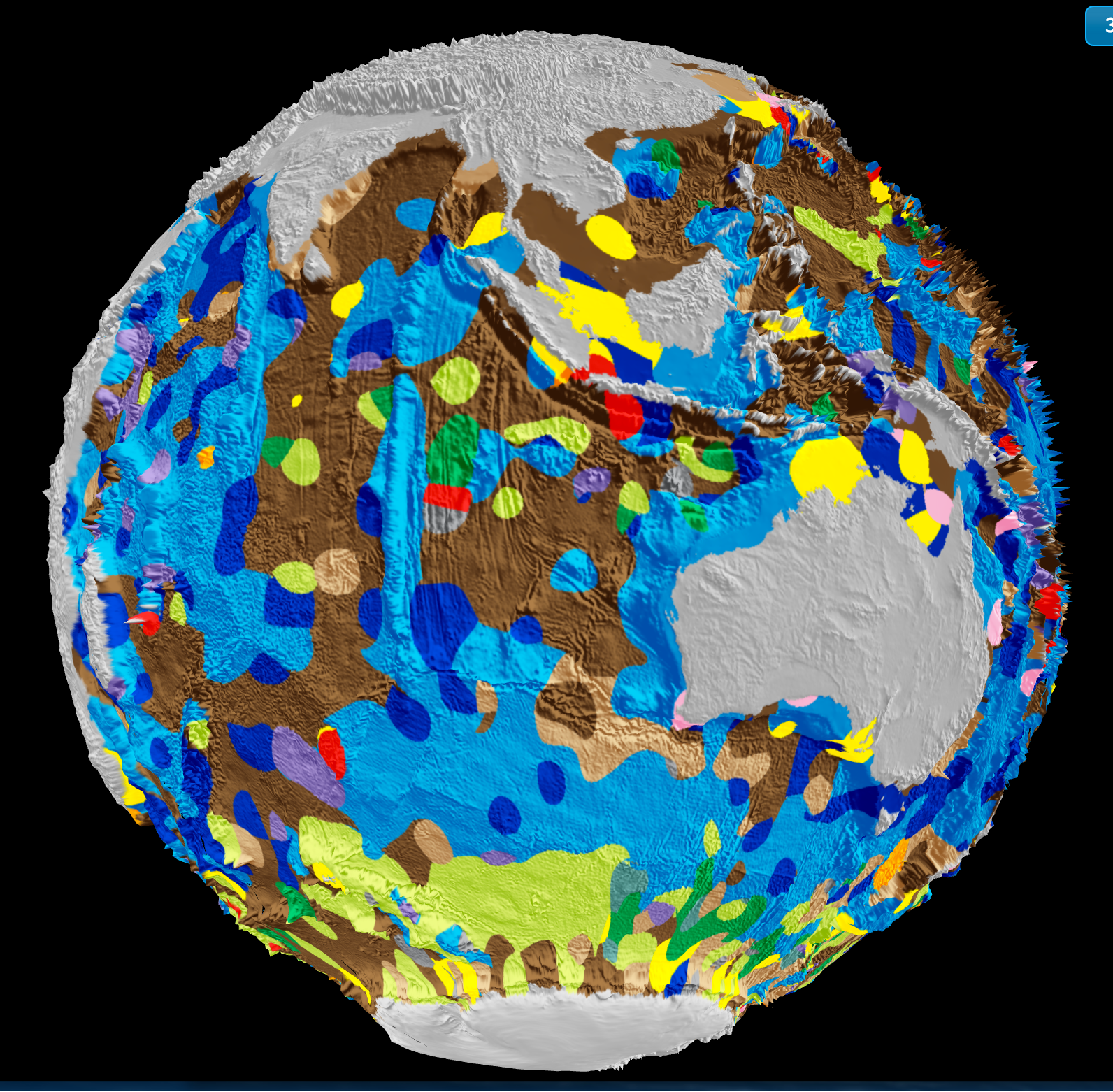
From orbit to ocean floor: big data maps the seafloor with precision
A University of Sydney-led team has integrated satellite altimetry with shipboard sonar data to produce a calibrated, high-resolution map of the global seafloor. This isn't just a sharper image, it's a validated baseline for measuring change. Understanding drives protection. When we can track sediment transport, tectonic activity, and benthic habitat shifts with empirical precision, ocean stewardship becomes measurable. For deeper context on how ocean intelligence reveals system-wide change, see our coverage of the century-long current slowdown.

Seismic records measure a strengthening pulse beneath warming oceans
A strengthening pulse beneath warming oceans is now measurable through seismic records. These readings confirm that ocean waves are gaining force as the planet warms, a direct, empirical signal of climate change. We do not need to imagine the impact; the data speaks. This is not speculation. It is calibrated observation. For deeper context on why such monitoring matters, see our coverage of the proposed US cuts that risk losing this calibrated ocean intelligence. Understanding drives protection.

AI models and integrated data track shoreline debris at scale
Every piece of plastic on a beach tells a story, and now AI is reading that story at scale. By integrating real-time data streams with machine learning, we can track shoreline debris across vast coastlines, transforming scattered observations into validated, actionable ocean intelligence. This isn't just cleanup; it's empirical calibration of a global problem. For deeper context on how integrated data ecosystems make this possible, explore our coverage of Apeiron Labs' recent Series A to scale their ocean data platform.
Applied Science in Action: A Data Ocean Community Perspective
The applied science shared in this community post turns raw data into decisions with measurable impact. EmmArr29 shows how a data ocean perspective moves beyond theory, grounding ocean intelligence in real-world action. This is the integrated data ecosystem at work, where peer-reviewed evidence meets practical application. The piece complements our related coverage, including "Navigating a Marine Studies BA," by reinforcing that empirical pathways matter. Understanding drives protection, and this contribution proves that point with calibrated clarity.
Accelerating Ocean Model Development: Leveraging AI for Research and Thesis Work
A master's thesis in deep-ocean biogeochemical modeling is an ambitious goal, and the timeline demands precision. The first two months are best spent not on code, but on building a foundation. Calibrated learning matters more than speed. Prioritize the Regional Ocean Modeling System's core dynamics and data assimilation techniques. For a model of this scope, peer-reviewed literature on parameterizations is your starting point.
Bridging Data Science and Oceanography: Pathways for Aspiring Researchers
Understanding the ocean has never been more attainable for those entering the field without a traditional background. Your question reflects a common starting point, and the path is more open than you might think. Focus on building quantitative skills, particularly in statistics and programming with Python or R, as these are the currency of modern oceanographic research. Pair that with a genuine curiosity for how data translates into climate indicators.
Bridging the Gap: Oceanography Certificates to Enhance Your Chemistry Background
A bachelor's in chemistry is a strong foundation for oceanography, where the same quantitative rigor applies to seawater chemistry and climate indicators. For a year between degrees, a certificate in data analysis or GIS would complement your lab skills, as these are practical tools used in marine research. Given your diving plans, consider a seminar on ocean observation. Our related article, "Bridging Data Gaps: Integrating Citizen Science for Ocean Intelligence," offers a useful perspective on how field data is gathered.
Bridging Geography and Oceanography: A Path to Marine Science Research
A Geography undergrad with QGIS skills and a pull toward oceanography is holding a map to a door that's already slightly open. The gap between land-based spatial thinking and marine science is real, but it is not a wall, it's a bridge. Your GIS background is a validated entry point, not a consolation prize. Start with marine-focused QGIS tutorials and coastal data sets; pair them with open-access oceanography courses to build the science vocabulary.

Ocean Warming Amplifies Seismic Activity Through Increased Wave Energy
Seismic records now show something worth pausing on: ocean waves are gaining strength as the planet warms, and that energy is registering deep in the Earth's crust. This is not a distant concern; it is a measurable, peer-reviewed signal that links climate indicators directly to ground motion. The data is clear, and it demands we take the connection between warming oceans and seismic activity seriously.
Global Educators Access Ocean Research Through TRACX Program
The TRACX Program at Columbia University gives educators worldwide a direct route into ocean science research, turning classroom walls into windows on the deep sea. That matters. Teachers who engage with real-time, peer-reviewed data can bring climate indicators and ocean intelligence back to students who might otherwise never see the coast. It is a practical step toward shared responsibility. For those exploring career pathways, our related piece on international master's programs offers a useful complement. This is how knowledge moves: from lab to lesson plan.
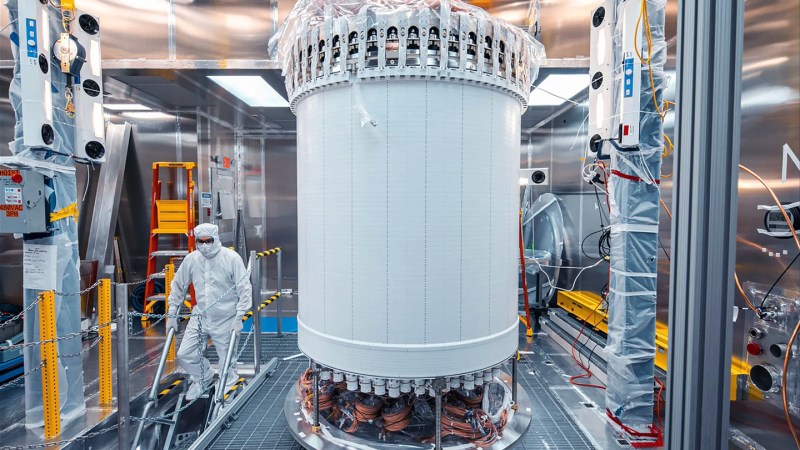
Potential Dark Matter Signal Detected: Longitudinal Data Needed for Validation
The detection of a potential WIMP signal by the LZ experiment is a compelling prompt, yet it remains just that: a signal awaiting confirmation. The path to validation relies on longitudinal data, a principle familiar to those who study complex systems. This measured approach, prioritizing empirical calibration over premature conclusions, defines credible scientific progress. For context on how sustained observation drives discovery, see our related coverage in "Applied Science in Action: A Data Ocean Community Perspective.
Ocean Salinity Shifts: A Longitudinal Analysis, 1955-1998
Between 1955 and 1998, the World Ocean's salinity did not drift randomly; it shifted in measurable, persistent patterns. Boyer's longitudinal analysis, published in *Geophysical Research Letters*, offers empirical weight to what we suspect about a warming planet: the water cycle is accelerating, and the ocean is keeping the score. This isn't abstract data; it is a calibrated indicator of change. For context on how we now monitor these systems, our coverage of integrated subsea cables shows the infrastructure carrying such intelligence across the Indian Ocean.
Reconstructing Earth's Past Climate Through Empirical Data Analysis.
Earth's distant past is not a blank slate; it is written in layers of sediment, ice, and shell. Reconstructing Earth's Past Climate Through Empirical Data Analysis, mapped by Carbon Brief, shows how these 'proxy' records translate into measurable climate indicators. This is not speculation; it is calibrated, peer-reviewed science. Understanding these deep-time signals sharpens our view of present-day change. For a related thread on how ancient signals can be misread, see our coverage of magma and microbial activity potentially rewriting a 2-billion-year-old carbon signal.
Beyond the Waves: Oceanographers Share Their Experiences and Insights
Choosing a career path without knowing what the daily reality entails is a valid concern, and it is exactly the kind of transparency that strengthens the field. Oceanography is not a single job; it is a spectrum of disciplines, and the honest answers you are seeking from practitioners are invaluable. For a deeper look at how we gather such data, our article "Bridging Data Gaps: Integrating Citizen Science for Ocean Intelligence" explores collaborative observation methods.