Chinese Container Vessel ‘Dubai Tower’ Completes First 25-Day Arctic Passage To U.K
Our take
The recent completion of the Northern Sea Route by the ‘Dubai Tower’ container vessel in just 25 days marks a significant, albeit complex, development in global maritime trade. This voyage, considerably faster than traditional routes through the Suez Canal, underscores the accelerating impact of Arctic ice melt driven by climate change. The shrinking Arctic ice cap is not merely an environmental concern; it’s reshaping global logistics and geopolitics. As we’ve previously reported, Norway Helps 69 Russians Stranded In Arctic After Ship Arrest On Ukraine’s Request, demonstrating the increasing operational complexity and potential for geopolitical friction in this newly accessible region. The reduced transit time presents a compelling economic incentive for shipping companies, potentially leading to a shift in established trade routes and impacting infrastructure investments along existing corridors. Furthermore, understanding the nuances of vessel types and operations, as detailed in What Is A Barge, Its Types, Functions & Advantages?, is critical when assessing the feasibility and safety of utilizing the Northern Sea Route for various cargo types.
However, the narrative of a straightforward economic boon requires careful calibration. While the reduced distance is attractive, the Northern Sea Route presents unique challenges. Ice conditions, despite the overall decline, remain unpredictable and necessitate specialized ice-class vessels and experienced crews. Navigational hazards, including shallow waters and limited port infrastructure, also contribute to operational complexities and potential delays. The environmental implications are substantial. Increased shipping traffic elevates the risk of oil spills and introduces invasive species to fragile Arctic ecosystems. Furthermore, black carbon emissions from ships contribute to accelerated ice melt, creating a feedback loop that further opens the route but exacerbates climate change. The ongoing conflict in the region adds another layer of risk, as highlighted by Ukraine Strikes Russian Black Sea Fleet Missile Carrier ‘Admiral Essen’ In Novorossiysk, demonstrating the vulnerability of maritime infrastructure to geopolitical instability. A purely economic calculus must factor in these substantial risks and associated mitigation costs.
The Chinese government's support for this voyage, and its broader interest in developing the Northern Sea Route, reflects a strategic ambition to secure alternative trade routes and project influence in the Arctic. China views the region as a crucial link in its Belt and Road Initiative and is investing in infrastructure and partnerships to facilitate its use. This development has implications for global power dynamics and could intensify competition for resources and control over the Arctic. Validated data on ice thickness, current patterns, and weather conditions are paramount for ensuring safe and efficient navigation. Real-time monitoring systems and integrated data ecosystems, leveraging satellite imagery and oceanographic sensors, are essential tools for risk assessment and route optimization. Longitudinal studies examining the long-term impacts of increased shipping on Arctic ecosystems are also needed to inform sustainable development strategies. The integrated approach to data collection and analysis, leveraging empirical evidence, is critical for informed decision-making.
Ultimately, the ‘Dubai Tower’ voyage is a compelling indicator of the accelerating changes occurring in the Arctic and their ripple effects across the global maritime landscape. While the Northern Sea Route offers potential economic benefits, it also presents significant environmental, geopolitical, and operational challenges. The question moving forward is not simply whether this route *can* be utilized, but whether it *should* be, and under what conditions. Careful calibration of risk, robust environmental safeguards, and collaborative governance mechanisms are essential to ensure that the pursuit of efficiency does not come at the expense of the Arctic’s fragile environment and long-term stability. Will the international community develop a coordinated, science-driven framework to manage the increasing human activity in the Arctic, or will we witness a fragmented and potentially unsustainable race for access and resources?
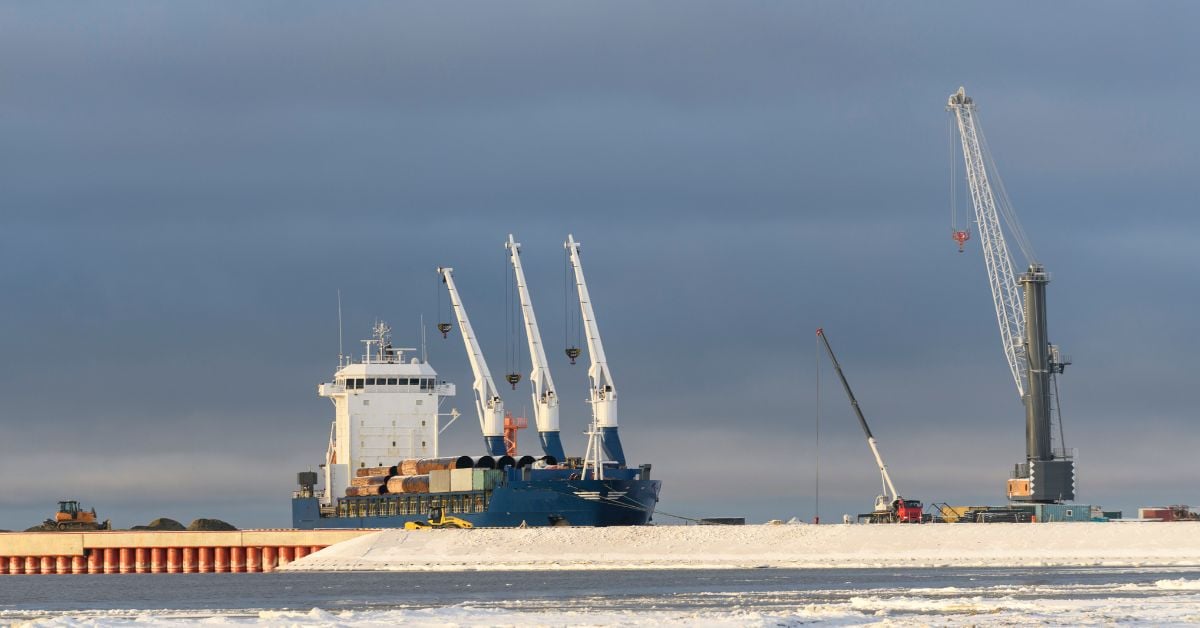
A Chinese container vessel completed a risky voyage by crossing the Arctic’s Northern Sea Route in just 25 days.
The Dubai Tower reached the United Kingdom’s Teesport, laden with batteries, components to make solar panels and other energy storage devices packed in 1500 shipping containers.
It had departed from China’s Ningbo-Zhoushan Port and covered the trip in half the time, since the passage, dubbed Polar Silk Road by the Chinese, cuts sailing time by offering a shortcut between the Asian and European continents, compared to the longer, conventional route through the Suez Canal and the Strait of Malacca.
The Northern Sea Route, till now, has been dominated by Russia, whose icebreaker assistance is required by commercial vessels trying to cross the icy waters running from the Kara Sea to the Bering Strait.
This journey was the first in a series of 8 sailings planned on this route by the operator Sea Legend, running from August to September.
Apart from China, South Korea and even the U.S are keen to establish their maritime presence in the Arctic region, as global warming and rising temperatures are opening up trade routes in the far north, though it will take decades for them to become operational throughout the year. As of now, shipping remains limited to a few summer months.
Though the route offers a shortcut and cuts fuel requirements, it is largely seasonal, dependent on Russian icebreaker assistance, requires permits and comes with other risks, making it increasingly difficult to replace the conventional Asia-to-Europe trade route any time soon.
China had mentioned the Arctic in its 2018 strategy and spent decades in establishing itself as a stakeholder in the region’s affairs.
Sanctions imposed on Russia and China by the West, especially the U.S has brought the countries closer, though Moscow remains critical of the increasing Chinese footprint in the Arctic.
Initially, Russia was against giving China observer status in the Arctic Council, a group made of 8 countries to safeguard the pristine region.
Read on the original site
Open the publisher's page for the full experience