global warming
global warming at World Data Ocean is a file of 28 stories. The newest of them: “Antarctica's sea ice decline signals a measurable shift in polar dynamics”, “Redwoods' photosynthesis slows under heat, imperiling a key carbon sink”, and “Phenological data confirms warming springs drive earlier cherry blossoms in Japan”. Antarctica's sea ice reached its third-lowest winter maximum on record in 2026, extending a measurable decline that follows years of surprising growth. Under heat-wave conditions, coast redwoods slow their photosynthesis, a measurable response that puts one of Earth's most efficient carbon sinks at risk. A Global Hub for Ocean Intelligence 4 World Data Ocean is a centralized digital platform where researchers, scientists, and ocean enthusiasts converge to… The list below is every global warming story on World Data Ocean, newest first.
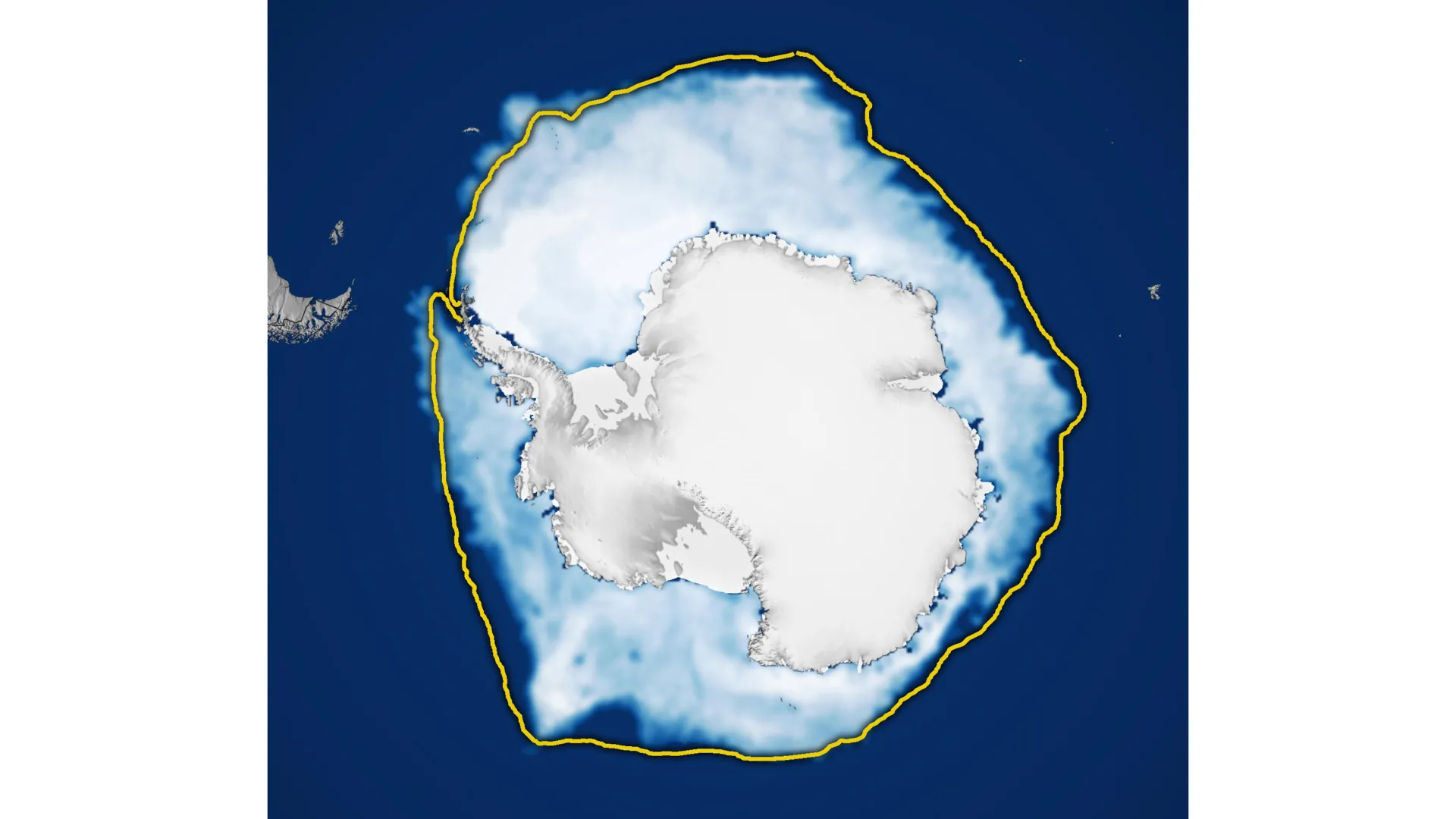
Antarctica's sea ice decline signals a measurable shift in polar dynamics
Antarctica's sea ice reached its third-lowest winter maximum on record in 2026, extending a measurable decline that follows years of surprising growth. This reversal demands rigorous investigation: are we witnessing a fundamental shift in polar dynamics? Understanding drives protection, and empirical data from satellites like Sentinel-3C, which delivered calibrated first views of a changing ocean shortly after launch, will be essential for tracking what comes next.

Redwoods' photosynthesis slows under heat, imperiling a key carbon sink
Under heat-wave conditions, coast redwoods slow their photosynthesis, a measurable response that puts one of Earth's most efficient carbon sinks at risk. This is empirical evidence that even iconic, resilient ecosystems face limits. Validated longitudinal data is essential here, not alarm. For a broader view of cumulative climate pressures, see our coverage of coastal benthic ecosystems. Understanding these integrated signals drives protection.
Phenological data confirms warming springs drive earlier cherry blossoms in Japan
Japan's cherry blossoms are arriving earlier, and the evidence is clear: phenological data confirms that warming spring temperatures are driving this shift. This is not anecdotal, it's a measurable, empirical signal of climate change playing out in real time. Understanding these patterns is essential for predicting broader ecological impacts. For deeper context on how long-term data reveals structural change, see our related article, "A calibrated shift: global employment data confirms the rise of the service sector."

Seismic data reveals warming oceans are intensifying global wave energy
Seismic data is giving us a measurable, real-time look at how warming oceans are intensifying global wave energy. Richard Aster, a geophysics professor at Colorado State University, presents empirical evidence that connects rising ocean temperatures directly to increasing wave power. This is not speculation; it is a validated, peer-reviewed finding that underscores the urgency of ocean stewardship. For deeper context, readers may explore "A Shared Data Ecosystem to Deepen Global Ocean Understanding."

Atmospheric CO₂ reaches record highs in 2024, validated by global data
Atmospheric CO₂ reached record highs in 2024, validated by global data from the World Meteorological Organization. This is not an anomaly, it is a calibrated signal of accelerating change. Each measurable increase reinforces what the geological archive already tells us: the planet responds to pressure. Understanding drives protection. For deeper context on Earth's thresholds, see our coverage of "Five mass extinctions recorded in Earth's geological archive." The data is clear. The question is what we do with it.
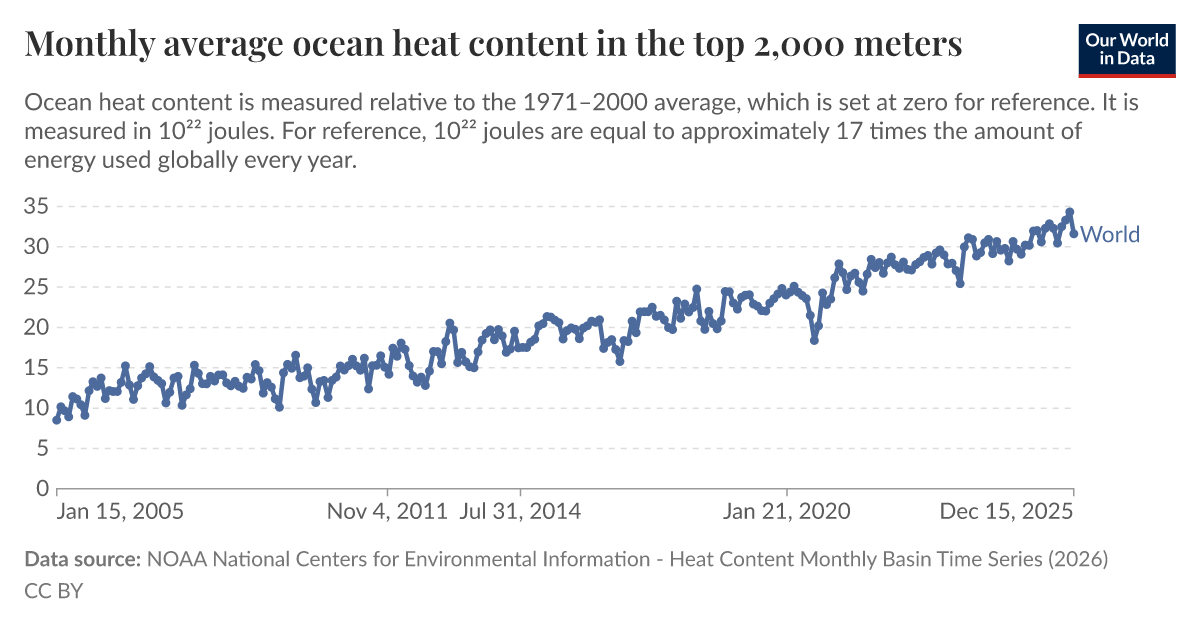
Measuring the Ocean's Warming Pulse at 2,000 Meters
Two thousand meters down, the ocean is warming measurably and without pause. Monthly average heat content in the top 2,000 meters provides one of the most empirically grounded climate indicators available, validated, peer-reviewed, and increasingly urgent. This isn't a distant signal; it is a calibrated pulse we can track in real time. Understanding drives protection. For deeper context on how global experts are building the data framework to monitor these changes, see "Global experts unite to steer Ocean Decade's data and knowledge framework."
Calibrating ocean intelligence to navigate a warming world
Calibrating ocean intelligence requires more than collecting data, it demands integration. Our warming world is outpacing fragmented observation systems. Validated, real-time measurements from orbit to ocean floor must become an integrated data ecosystem, not isolated snapshots. This is measurable, empirical work. Understanding drives protection. For deeper coverage, explore our related piece, "From orbit to ocean floor: integrated data reshapes our view of the sea," which examines how this unified approach is transforming marine science.
Ocean Color Shift Reveals Measurable Climate Indicators Worldwide
A measurable shift in ocean color, detected across decades of satellite data, now offers a new, empirical window into global climate change. These are not subtle variations; they are validated indicators of biological and chemical transformation at planetary scale. Understanding drives protection. For deeper context, our coverage of "Decades of Atlantic circulation data reveal measurable climate indicators" complements this finding, reinforcing how integrated ocean intelligence reveals the pulse of a changing Earth.
Empirical ocean data powers the measurable path to energy transition
The ocean's role in the energy transition is not theoretical, it is empirical. Measurable ocean data powers the path forward, validating climate indicators and calibrating our decisions. The World Economic Forum makes this clear: data is the foundation. For those tracking the science beneath the surface, our coverage of the Ocean Carbon and Acidification Data System offers a peer-reviewed look at how validated, integrated data ecosystems turn ocean intelligence into actionable climate insight. Understanding drives protection.
El Niño and La Niña no longer define cool and warm years
El Niño and La Niña no longer define cool and warm years. "Cool" years are now hotter than the "warm" years of the past. This is not speculation; it is a measured, empirical recalibration of our climate baseline. The shift is validated by decades of peer-reviewed data. The ocean economy is booming, but as UNCTAD's integrated climate indicators show, its longevity depends on understanding these changes. The urgency is clear, and the data demands action.

Seismic records measure a strengthening pulse beneath warming oceans
A strengthening pulse beneath warming oceans is now measurable through seismic records. These readings confirm that ocean waves are gaining force as the planet warms, a direct, empirical signal of climate change. We do not need to imagine the impact; the data speaks. This is not speculation. It is calibrated observation. For deeper context on why such monitoring matters, see our coverage of the proposed US cuts that risk losing this calibrated ocean intelligence. Understanding drives protection.

Calibrated data, not altered truth: refining the global temperature record
Calibrated data is not altered truth. When the global temperature record is refined through validated, peer-reviewed methods, we gain a more accurate understanding of our climate. These adjustments, grounded in empirical science, correct for known biases, they do not manufacture a narrative. This is how we build trust in the measurements that guide us. For deeper context on the forces driving these changes, our coverage of record atmospheric CO₂ levels in 2024 offers a parallel view.

Tracking Climate Signals in the Deep Ocean Heat Record
The ocean is warming, and the signal is unmistakable. Monthly average ocean heat content in the top 2,000 meters offers a clear, empirical record of how much energy our planet is absorbing. These measurements are more than data points; they are a validated climate indicator, revealing a steady, measurable trend. Understanding this record is essential, and we connect it to related research like our piece on Agulhas Leakage and intensifying compound ocean extremes, deepening the context for informed action.
Southern Ocean’s Carbon Absorption Capacity Faces Uncertainty Under Climate Scenarios
The Southern Ocean has long acted as Earth's quiet carbon sink, but new research in *Science Advances* suggests its capacity to absorb emissions is not guaranteed under shifting climate scenarios. This uncertainty carries measurable weight for global climate modeling. We cannot assume stability where the system itself is changing. Understanding these dynamics is essential, not optional. For broader context on how ocean systems respond to pressure, our related coverage of Atlantic Circulation Weakens: Global Climate Reshaping Predicted offers a useful parallel.
2025 Temperature Anomalies: Tracking Global Climate Indicators.
The 2025 temperature anomaly data from Our World in Data offers a measurable look at how far the climate has shifted. These annual figures are more than numbers; they are calibrated indicators of a planet in motion. We track them because understanding drives protection. The record ice gain in East Antarctica, detailed in our related coverage, reminds us that regional extremes can temporarily mask global trends. For now, the anomalies demand our attention, not alarm.

Arctic Passage Time Cut: Container Ship Charts New Route.
A Chinese container vessel has completed the Northern Sea Route in just 25 days, validating the Arctic's potential as a viable commercial passage. This is not an experiment; it is a measurable step in global shipping's realignment. The voyage demonstrates how climate indicators and integrated data ecosystems are reshaping trade logistics. For deeper context on shifting maritime corridors, see our coverage of "Russia Calibrates Export Revenue for Northern Sea Route Icebreaker Fleet." Understanding these routes drives smarter stewardship of our ocean intelligence.

Submarine Caves Offer Octocorals Climate Refuge from Warming Oceans
A submarine cave in the Mediterranean has become an unexpected sanctuary for gorgonian octocorals facing warming seas. Colonies inside the cave show 17 times lower mortality and far higher reproductive success than those exposed to surface conditions. This is measurable evidence that climatic microrefugia can buffer slow-growing species from thermal and light stress. Protecting these hidden refuges may be as urgent as monitoring open-ocean climate indicators.

Rising Russian Submarine Activity Demands Enhanced NATO Ocean Intelligence.
A former NATO Commander has flagged the expansion of Russian submarine capabilities as a direct challenge to Atlantic security. This is not a distant concern, it is a measurable shift in naval defence infrastructure demanding calibrated response. Enhanced ocean intelligence, integrating real-time data from seabed to surface, becomes essential. For context, our coverage of the Vostok Project's Arctic oil exports shows how Russia's maritime ambitions extend beyond military posture, linking economic and strategic pressures in the same integrated data ecosystem.
Ocean Warming Amplifies Seismic Activity Through Increased Wave Energy
Seismic records now show something worth pausing on: ocean waves are gaining strength as the planet warms, and that energy is registering deep in the Earth's crust. This is not a distant concern; it is a measurable, peer-reviewed signal that links climate indicators directly to ground motion. The data is clear, and it demands we take the connection between warming oceans and seismic activity seriously.
Deep Ocean Warming: Longitudinal Data Reveals a Concerning Trend.
The ocean's abyss was long considered a stable, slow-motion frontier, but new longitudinal data now shows the deepest layers are warming. This is not a distant anomaly; it is a measurable shift in a system we rely on for climate stability. We find this trend deeply concerning, yet it reinforces why sustained observation matters. As we track these changes, we must connect them to broader disruptions, much like our recent analysis of Atlantic Circulation Weakens, to fully grasp the scale of what is unfolding.
Atlantic Current Weakening: Empirical Data Reveals Accelerated Change.
The Atlantic Meridional Overturning Circulation is losing its grip, and the empirical record is unambiguous. New studies confirm this vital current system is weakening faster than projected, edging closer to a threshold that would redraw global climate patterns. This is not speculation; it is calibrated, peer-reviewed observation. We treat the data with the gravity it demands, because the measured shift is a direct signal of our collective impact.
Ocean Temperatures Reach Record High, Validating Climate Change Indicators.
August's ocean temperatures set a new record, and the data is unambiguous. This isn't a fleeting anomaly; it's a measurable signal that aligns with established climate indicators. We track these shifts because they carry consequences far beyond the surface. For those seeking to understand the mechanisms at play, our coverage of how magma and microbial activity may rewrite a 2-billion-year-old carbon signal offers a deeper, peer-reviewed perspective. The ocean is speaking in records; our role is to listen with calibrated, scientific rigor.

South Korea Charts Arctic Route, Balancing Commerce and Geopolitical Concerns
South Korea's first Arctic-bound ship to Europe is a calculated test, not a statement. The route's commercial viability hinges on ice-free seasons and cost efficiency, yet the geopolitical undertow is undeniable. Western backlash over Russian cooperation complicates what might otherwise be a straightforward logistics calculation. We see a nation weighing measurable gains against diplomatic friction, a balance requiring calibrated judgment. For deeper context on Moscow's Arctic ambitions, our related piece, "Russia Calibrates Export Revenue for Northern Sea Route Icebreaker Fleet," outlines the financial stakes.

Rapid Warming Threatens Atlantic Circulation’s Stability
The pace of warming may be the deciding factor for the Atlantic Meridional Overturning Circulation. New research indicates that rapid temperature rise, similar to today's trajectory, can push this massive system past a tipping point far earlier than gradual change would allow. The finding reframes our understanding of climate thresholds. For a broader perspective on how we track these shifts, our related piece, "Atlantic Circulation Weakens: Global Climate Reshaping Predicted," offers additional context.