What Is A Barge, Its Types, Functions & Advantages?
Our take
The seemingly simple concept of a barge—a floating vessel primarily used for cargo transport in inland waterways—holds surprising significance within the broader maritime landscape and, increasingly, the context of global supply chain resilience. While often overlooked in favor of more glamorous ocean-going vessels, barges represent a vital, cost-effective, and environmentally conscious mode of transport, particularly for bulk goods. Understanding their function and evolution is crucial as we grapple with optimizing logistical networks and addressing the challenges of climate change on waterways. Recent events highlight the interconnectedness of maritime operations; for example, the Busan Coast Guard Raids 5 Locations Including Shipping Company Over Tugboat Accident That Left 5 Crew Missing underscore the potential hazards even in routine operations, and the efficient movement of goods relies on the safety and functionality of supporting infrastructure, including tugboats assisting barges. This underscores the importance of robust safety protocols and reliable operational systems within the entire waterway ecosystem.
The article rightly points out the various types of barges, from deck barges to tank barges, each designed for specific cargo needs. However, its significance extends beyond mere typology. The resurgence of interest in barge transportation is driven by a confluence of factors: rising fuel costs, increased congestion at ports, and a growing emphasis on sustainable logistics. Barges offer a significantly lower carbon footprint compared to trucking or rail, particularly when considering the ‘last mile’ delivery within inland regions. They also represent a more stable and predictable mode of transport, less susceptible to road closures or rail disruptions. Considering the geopolitical complexities currently impacting global trade, the stability of inland waterways—and the vessels that navigate them—becomes even more critical. This is further demonstrated by events such as the Yemen Detains Sanctioned Tanker After Armed Guards Fire On Coast Guard Patrol Following Houthi Port Call, which illustrates how regional instability can disrupt maritime traffic and supply chains, emphasizing the need for diversified and resilient transport solutions.
The increasing adoption of technology within the barge industry is another key development. While the article focuses on the fundamental aspects of barge operation, the integration of real-time tracking, automated navigation systems, and sensor-based monitoring is transforming their efficiency and safety. Furthermore, advancements in materials science are leading to the development of lighter, stronger, and more durable barge construction, extending their lifespan and reducing maintenance costs. The potential for integrating these barges into smart port ecosystems, leveraging data analytics for optimized routing and scheduling, presents a significant opportunity for improving overall supply chain performance. The reliance on sonar and other detection methods, as explored in China Uses Warship Sounds To Improve Submarine Target Tracking, demonstrates the broader technological advancements that can indirectly benefit barge operations by improving navigational safety and situational awareness within complex waterway environments.
Looking ahead, the role of barges in facilitating the transition to a more sustainable and resilient global economy will only grow. As climate change impacts water levels and weather patterns, the ability to adapt waterway infrastructure and optimize barge operations will be paramount. We must consider the long-term implications of changing river depths and the need for more adaptable barge designs. Furthermore, the development of integrated data ecosystems—allowing for seamless communication and collaboration between barge operators, port authorities, and logistics providers—will be essential for maximizing efficiency and minimizing disruptions. The crucial question now is: how can we incentivize the further adoption of barge transport and ensure the necessary infrastructure investments to unlock its full potential as a cornerstone of sustainable global trade?
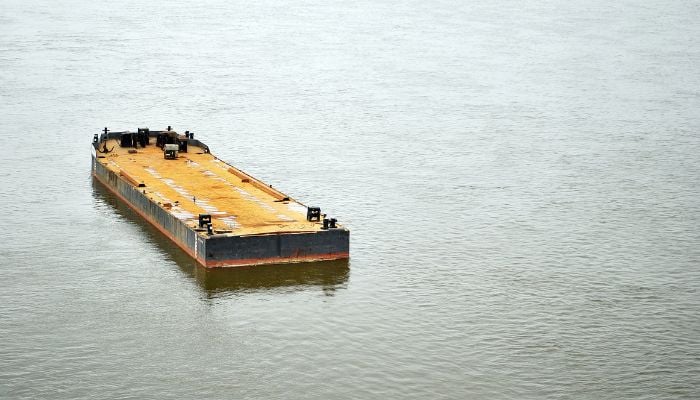
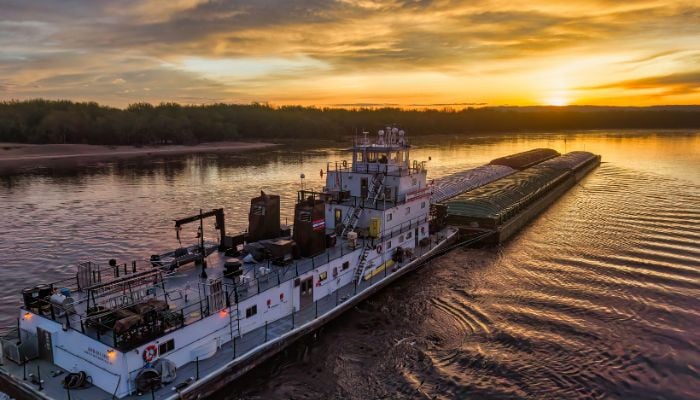
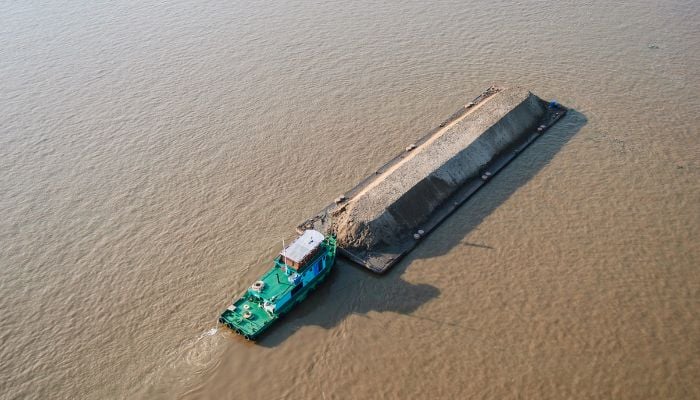
A Barge is one of the simplest floating vessels that can carry massive cargo volumes in a single trip. They are usually towed by a tugboat, as they lack a propulsion system. Barges sail in rivers, canals, and inland waterways, since they cannot ply in open waters due to their hull construction and design, which cannot withstand the harsh conditions of the open seas and oceans.
Barges are extremely cost-effective and useful for reaching ports and harbours which might be inaccessible to large cargo ships. They can also assist in heavy offshore construction and can easily operate in shallow waters. They consume less fuel per ton-mile, which makes them one of the most energy-efficient vessels in the world.
Their flat base and box-shaped structure with a sharp front help maximise space for accomodating cargo such as coal and fertilisers, and sand or even oil. They can even be configured according to the cargo to be transported and are of different types.
They usually lack a superstructure and most features found on other ships. They typically have low draft values and a limited range of operations. Moreover, they are slow since they carry heavy loads over relatively shorter distances.
Types of Barges
Barges are characterised by their function and the goods they carry. Mentioned below are the different types of barges.
Deck Barge
This type of barge has an open deck which can accommodate cargo without a covering. It is the most common barge used for shipping heavy machines and machinery parts over short distances.
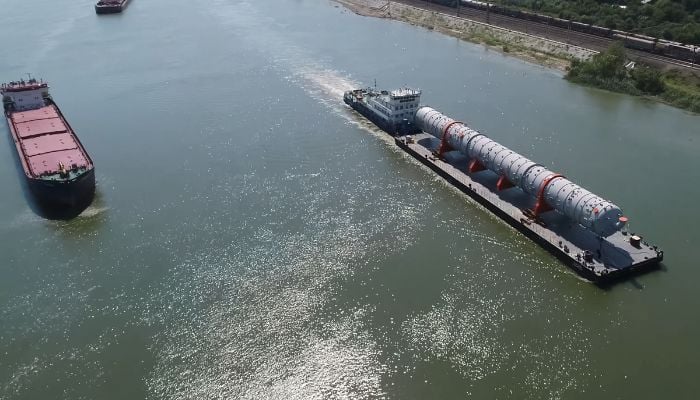
They have a wide, flat bottom, straight edges, and a typical rake in the bow and stern, known as a double-raked configuration. They are stiffened suitably by longitudinal and transverse members of scantlings based on size.
As the payload is to be rested on the deck, the deck plating is of higher scantlings and robustly strengthened with deep members. Most deck barges appear perfectly symmetric about the longitudinal and transverse axes of symmetry.
Crane barge
These are often used to carry heavy machinery and are employed in loading activities, which is why they possess propellers and an independent propulsion system, enabling them to sail without needing a tugboat to push them forward. They are used for the installation of offshore infrastructure, subsea pipe installation and even dredging activities.
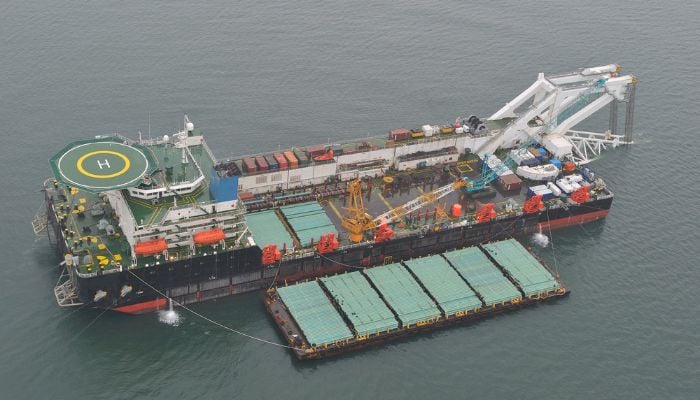
Crane barges have the least draft but are designed to maintain the minimum draft during worst-case loading scenarios, like when the crane is not only operating but also lifting heavy weights.
Inland Barge
As the name suggests, they operate in small rivers connecting two countries or regions dotted by industries or factories which regularly need raw materials. Hence, they ship bulk cargoes to destinations. They can differ in capacity, and their loads can also be adjusted.
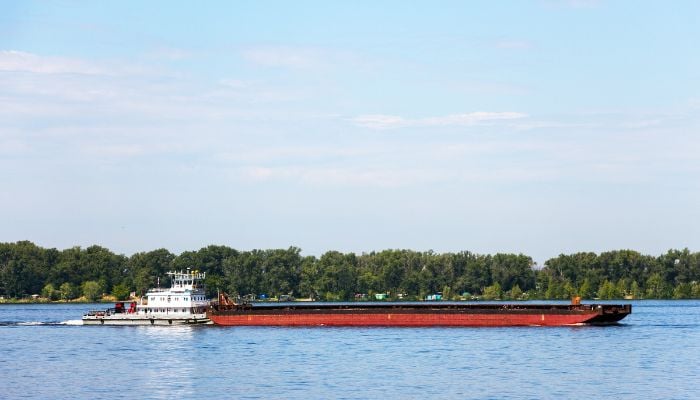
Hopper and Shale Barges
They are considered somewhat like bulk carriers in terms of utility but on a much smaller scale. Hopper and shale barges have a double-hull construction, and the compartments inside store items ranging from coal to stone chips, grains, ore and timber.
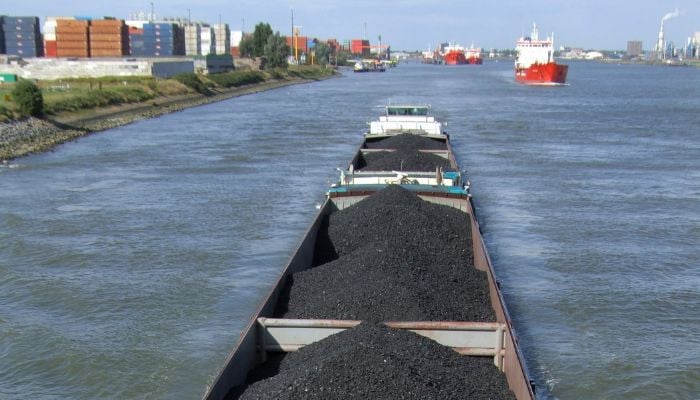
The holds are covered by hatch covers, and they may be single-raked or double-raked. Their internal arrangements are characterised by central, wing, and hopper-side tankage, like in tankers or bulkers.
Shale barges transport solid or liquid waste generated in offshore drilling activities to waste management plants on land. Hopper Barges usually carry bulk materials like coal or grain and often have split hulls.
Car-float Barge
This kind of barge has a flat base to accommodate vehicles, including cars and trucks, and ship them across regions connected by canals or rivers.
Container Barge
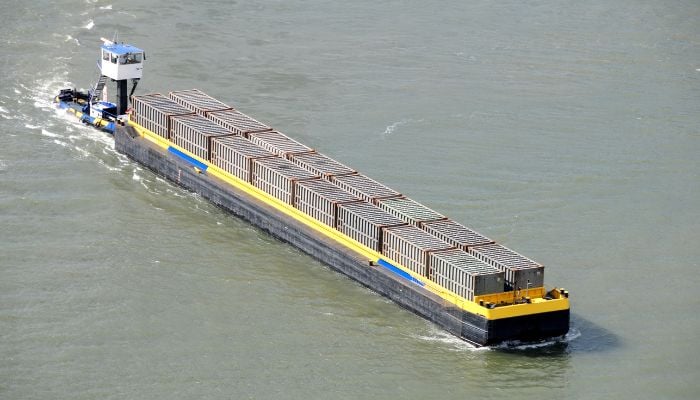
Containers are stacked on the deck of this barge, which is towed by a tugboat. It usually sails between busy coastal seaports and inland terminals, functioning as an alternative to trains and trucks. The container barge can accomodate 30 to 200 TEUs, depending on its size.
Spud Barge
This barge has spuds, which are basically long vertical pipes or columns made of steel, which are then lowered into the river or seabed to provide stability and prevent the barge from moving without the need for anchors or mooring lines.
These barges are used to load cargoes using cranes, for example, while installing offshore marine infrastructure.
Oil Barge
These barges ship crude oil and petroleum products from the drilling site to the onshore facilities. It is equipped with a pumping system and also has a quality control system.
Liquid Mud Barge
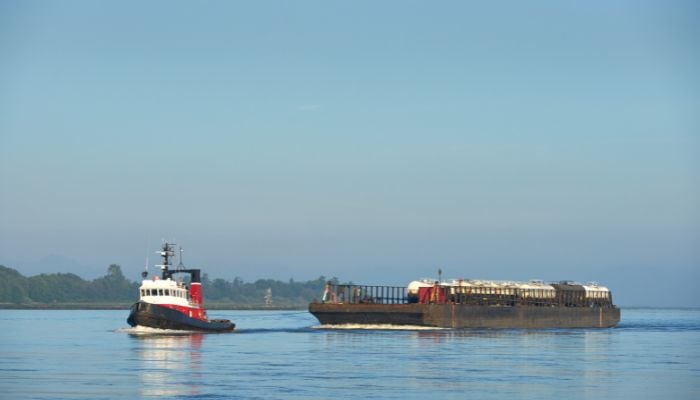
These vessels transport sludge from offshore oil drilling activities using a pump and pipeline system and have many compartments to accommodate it safely.
Wood Barge
This barge carries several types of wood and has a powerful floating mechanism to ensure stability when loaded. It usually operates in creeks or rivers.
Ocean Barge
Though most barges operate in rivers or inland waterways, ocean barges are made for offshore and coastal transport, which makes them costlier to build and maintain than their inland counterparts since they have to handle ocean currents, powerful winds and natural forces.
They are used to ship heavy equipment or project materials to ports with a shallow draft, which might not be accessible to larger ocean-going cargo vessels.
Sizes of Barges
Inland barges are around 195 feet long and 35 feet broad and can carry cargo up to 1500 to 2000 tonnes. However, ocean barges and other purpose-built ones might be bigger with more cargo-carrying capacity, since they are constructed for a specific purpose.
Knowing about the different types of barges and the cargo they carry is important when one plans a shipment. Additionally, the depth of the canal or river and the dimensions of the locks or port infrastructure should also be considered since it impacts the cargo delivery and efficiency.
Uses of Barges & Examples
Transportation of Bulk Cargo
Barges transport raw materials such as rice, wheat, minerals, chemicals, steel, iron, coal and heavy machines over canals, inland rivers and narrow waterways across America and Europe, even in Southeast Asian countries like Indonesia, without generating massive amounts of greenhouse gas emissions like other ships.
For example, on the Mississippi River System, a barge moves cargo which could otherwise need 1050 trucks or 216 rail cars, using less fuel compared to both modes of transport. On th River Rhine in Germany, barges move hundreds of millions of tonnes of cargo across Western Europe, removing thousands of trucks from highways.
Serving as Offshore Landing Platforms
Barges can also function as offshore landing platforms. For example, SpaceX’s Autonomous Spaceport Droneships were basically barges fitted with thrusters and other equipment that serve as landing platforms for boosters, saving the propellant required to fly back to land,
Offshore Construction Projects
Barges can prove useful in offshore wind farm or oil rig construction or installations by stationing equipment such as cranes, by acting as a movable storage space or even as floating work platforms. In North Sea and East Asian waters, heavy-deck and spud barges deliver turbine parts to offshore construction sites.
Floating Power Units
Barges can house power generation units and supply electricity to coastal areas which experience electricity shortages due to an emergency or natural disaster.
For instance, Turkiye’s Karpowership deploys power plants mounted on barges to regions in the Caribbean, South America and West Africa. These floating units are plugged into the existing electrical grids within weeks, thus doing away with the need to build power stations on land.
Ship-to-Ship Bunkering
Barges can also aid in refuelling ships at berth or even offshore. In ports like Rotterdam and Singapore, LNG bunkering barges can refuel dual-fuel container ships when cargo is being unloaded, eliminating the need for the vessel to dock at gas terminals, which also reduces turnaround times and boosts efficiency.
Advantages of Barge Shipping
The number one benefit of using barges is the cost savings, since barges move more cargo using less fuel compared to trucks or trains, saving as much as 12 billion dollars annually.
This also makes it one of the most sustainable means of maritime transportation, which generates fewer emissions per ton of cargo carried. Barges are of different types and therefore offer flexibility, as one can choose a barge depending on the cargo which needs to be shipped.
Differences Between a Barge and a Ship
Carrying capacity
Ocean-going ships, be it container vessels, general cargo ships, bulk carriers, or tankers, have massive cargo-carrying capacities compared to barges, which comparatively accommodate loads amounting to a few thousand tonnes.
Route Services
Sometimes a port can accommodate larger vessels; however, shipping companies do not have ships sailing on those routes for several reasons. In this case, barges are extremely helpful.
For instance, in China’s Pearl River Delta, which has ports like Zhongshan, Foshan, etc, cargo is exported by factories by barges to Hong Kong or Shenzhen, and from there it is loaded on massive ships.
Range
Large vessels have longer range and travel across the world; however, barges cover only short distances. The hulls of the former are built to withstand harsh conditions of the sea, while barges are flat-bottomed, which makes them suitable for sailing in shallow waters.
Port Restrictions
A few ports might not have water depths to accommodate large vessels; hence, barges might be used to transfer cargo.
You might also like to read-
Read on the original site
Open the publisher's page for the full experience