Ukraine Strikes Russian Black Sea Fleet Missile Carrier ‘Admiral Essen’ In Novorossiysk
Our take
The recent Ukrainian strike on the Russian Black Sea Fleet missile carrier *Admiral Essen* in Novorossiysk represents a significant escalation in the ongoing conflict and underscores the evolving dynamics of naval warfare in the Black Sea. This action, part of a broader Ukrainian operation targeting key infrastructure in the region, directly challenges Russia's control of its own maritime territory and demonstrates a growing capacity for Ukraine to project force beyond its immediate borders. The incident highlights the vulnerability of naval assets, even those seemingly well-protected within a major port, and necessitates a reevaluation of defensive strategies. The ability to successfully target a vessel of this size and importance is particularly noteworthy given Russia's robust air defenses and naval presence. It’s a development that echoes the evolving tactics seen in other theaters of conflict and reinforces the importance of advanced surveillance and targeting capabilities, as demonstrated by China’s recent efforts to improve submarine target tracking using warship sounds China Uses Warship Sounds To Improve Submarine Target Tracking.
The strategic implications extend beyond the immediate damage to the *Admiral Essen*. Novorossiysk is a crucial hub for Russian oil exports, and any disruption to operations in the port has cascading effects on the global energy market. This attack signals a Ukrainian intent to not only degrade Russia's military capabilities but also to exert economic pressure. The incident also reveals the increasing sophistication of Ukraine’s intelligence gathering and strike capabilities, potentially leveraging a network of sources and advanced weaponry. The broader context of sanctions and circumvention efforts further complicates the situation, with nations like Albania actively working to prevent Russian “shadow fleet” tankers from utilizing their ports Albania Blocks Russian Shadow Fleet Tanker From Entering Durres Port. The legal and contractual ramifications of these disruptions are also becoming apparent, as evidenced by the substantial damages claim Hanwha Ocean faces related to cancelled contracts for Arctic LNG 2 Hanwha Ocean Faces $1 Billion Damages Claim Over Cancelled Contracts For Russia’s Arctic LNG 2.
The Black Sea has long been a contested space, but the current conflict has fundamentally altered the landscape. Russia’s ability to project power and control maritime traffic has been demonstrably weakened, creating opportunities and risks for other actors in the region. The use of naval assets, particularly missile carriers, is increasingly vulnerable to asymmetric attacks, highlighting the need for robust defensive measures and adaptable operational strategies. The development underscores the interconnectedness of military, economic, and legal factors in modern maritime conflicts. Furthermore, the reliance on sophisticated technology, including real-time intelligence and precision-guided munitions, is paramount for achieving operational success. This isn't solely about the physical destruction of assets, but also about disrupting supply chains, undermining confidence, and influencing broader geopolitical dynamics.
Looking ahead, the question becomes whether Ukraine can sustain this level of pressure on Russia’s Black Sea Fleet, and what retaliatory measures Russia might take. The potential for further escalation, including attacks on civilian infrastructure or expanded targeting of naval assets, remains a significant concern. The long-term impact on maritime trade and energy security in the region is uncertain, but it is clear that the Black Sea will continue to be a focal point of geopolitical tension. It is critical to observe how Russia adapts its naval posture and whether this event will prompt a wider reassessment of maritime security strategies across the region and beyond, especially concerning the protection of critical infrastructure and the vulnerabilities of seemingly invulnerable assets.
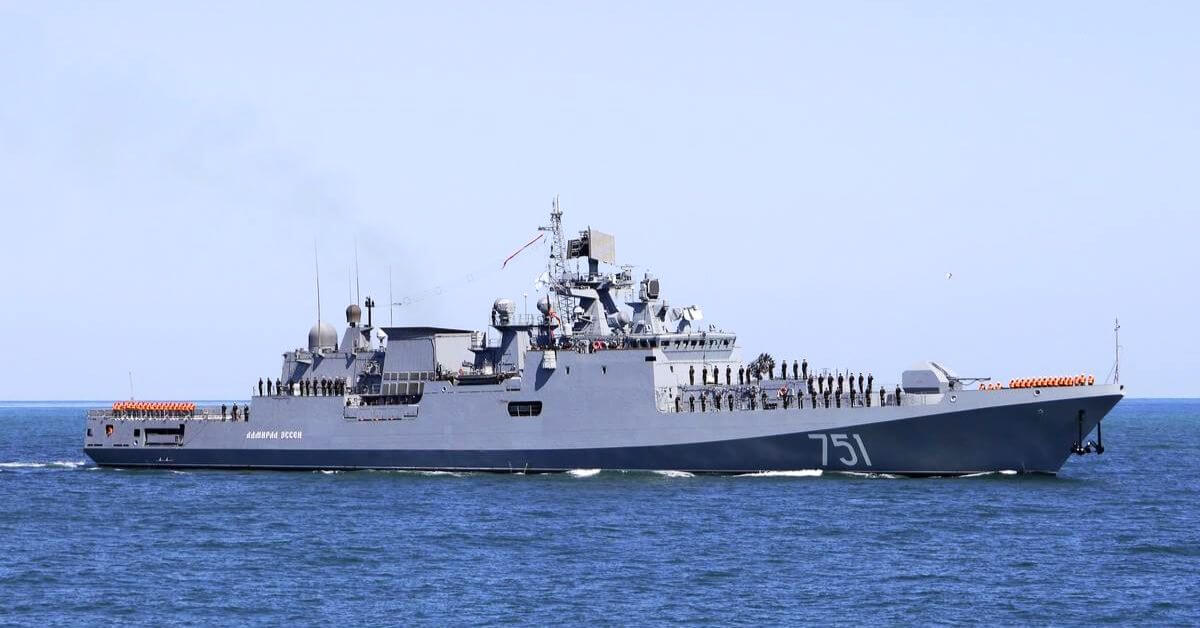
Ukraine’s military intelligence agency said its forces attacked the Russian Black Sea Fleet warship Admiral Essen during an overnight strike on the naval base in Novorossiysk.
The attack took place on the night of Sept. 8-9. Ukraine’s military intelligence agency, known as HUR, said the operation was carried out with other Ukrainian Defence Forces units.
Ukraine said its forces targeted infrastructure at the Russian naval base and hit the Admiral Essen frigate.
The attack caused a fire on the ship’s deck superstructure, according to Ukrainian intelligence. It did not say how badly the warship was damaged.
The Admiral Essen is a Project 11356, or Admiral Grigorovich-class frigate, operated by the Russian Navy.
It can carry Kalibr cruise missiles, which Russia has repeatedly used to strike targets across Ukraine, including civilian infrastructure.
The attack was part of a Ukrainian operation against targets in and around Novorossiysk, Russia’s largest Black Sea port in Krasnodar Krai.
Russian officials said debris from intercepted drones hit industrial facilities and residential buildings. Novorossiysk Mayor Andrey Kravchenko initially said there were no casualties.
Later, Krasnodar Krai Governor Veniamin Kondratyev said four people, including a child, had been killed and 29 others are injured.
He said three private houses, five apartment buildings, an Orthodox church and a kindergarten were also damaged.
Videos and images shared on Russian social media showed a fire at or near the port’s fuel oil terminal.
The Novorossiysk fuel oil terminal is part of Russia’s largest seaport and handles almost 20 million tonnes of fuel products every year.
Ukraine has repeatedly targeted the port and military assets based there since Russia launched its full-scale invasion of Ukraine in February 2022.
The latest attack came less than a month after another major Ukrainian strike on Novorossiysk on Aug. 12.
Ukraine said that attack hit several Russian warships, including the Admiral Makarov and Admiral Essen, both capable of carrying Kalibr missiles. The Buyan-M corvette and Vasily Bykov patrol ship were also reportedly hit.
Grain and oil facilities at the port were also hit in that attack. Operations at all three of Novorossiysk’s grain terminals were temporarily disrupted.
Separately, Ukrainian Unmanned Systems Forces Commander Robert “Madyar” Brovdi said the Sept. 9 operation also destroyed several Russian missile boats in the port.
He added that Ukrainian forces also destroyed a Su-33 fighter and a Mi-8 helicopter near Anapa, around 50 kilometres northwest of Novorossiysk. Two air-defence radar systems in the Gelendzhik area were also destroyed.
Brovdi further claimed that Ukrainian aerial and naval drones have struck more than 250 vessels belonging to Russia’s so-called shadow fleet since July 6.
References: kyivpost, defenceua
Read on the original site
Open the publisher's page for the full experience