Norway Helps 69 Russians Stranded In Arctic After Ship Arrest On Ukraine’s Request
Our take
The recent incident involving the seizure of a Russian vessel in Norway, leaving 69 crew members stranded, highlights the escalating complexities of maritime trade and geopolitics in the context of the ongoing conflict in Ukraine. The Norwegian court’s action, acting on a request from Ukrainian energy company Naftogaz, underscores the lengths to which Ukraine is willing to pursue legal avenues to enforce its claims and disrupt Russian economic activity. This situation is further complicated by the broader trend of nations actively scrutinizing and, in some cases, restricting access for vessels linked to Russia, as seen in Albania’s recent blocking of the tanker HANUMAN Albania Blocks Russian Shadow Fleet Tanker From Entering Durres Port and the significant financial repercussions faced by Hanwha Ocean over cancelled contracts related to the Arctic LNG 2 project Hanwha Ocean Faces $1 Billion Damages Claim Over Cancelled Contracts For Russia’s Arctic LNG 2. The Arctic, traditionally a region of increasing international cooperation and resource development, is now demonstrably becoming entangled in the wider geopolitical tensions.
The immediate humanitarian concern – ensuring the welfare of the stranded crew – has been addressed by Norway, demonstrating a commitment to upholding international maritime law and human rights. However, the underlying implications are far more significant. This incident serves as a clear indicator of how the conflict in Ukraine is rippling across global trade routes, impacting not just direct military engagements but also the intricate web of commercial relationships. The reliance on legal mechanisms like ship seizure, while technically permissible, creates significant uncertainty and risk for the maritime industry. The targeting of vessels involved in Arctic LNG 2, following the Ukrainian strike against the missile carrier 'Admiral Essen' Ukraine Strikes Russian Black Sea Fleet Missile Carrier ‘Admiral Essen’ In Novorossiysk, suggests a deliberate strategy to disrupt Russian energy exports and cripple related infrastructure projects. This represents a calculated escalation, moving beyond direct military confrontation to target the economic lifeblood of the Russian state.
The Arctic’s unique environmental sensitivity makes these disruptions particularly concerning. Increased maritime activity, often linked to resource extraction and shipping, already poses risks to the fragile Arctic ecosystem. The potential for increased tensions and enforcement actions introduces further instability, raising the possibility of accidental incidents or environmental damage. The region's rapidly changing climate, evidenced by accelerating ice melt and shifting ocean currents, further complicates the situation. Reliable ocean intelligence, derived from validated and integrated data, is crucial to mitigating these risks and ensuring responsible maritime operations, particularly as new shipping routes become accessible. The need for calibrated monitoring of climate indicators and longitudinal data collection is paramount to understanding the long-term consequences of these geopolitical shifts on the Arctic environment.
Looking ahead, the incident in Norway highlights a worrying trend: the weaponization of maritime trade and legal mechanisms in international disputes. The efficacy of such strategies remains to be seen, but the willingness of nations to employ them signals a new era of maritime risk and uncertainty. It is imperative that international bodies and maritime organizations develop clear guidelines and mechanisms to navigate these complexities, prioritizing the safety of seafarers, the protection of the marine environment, and the preservation of global trade stability. The question remains: how can the international community foster collaboration and de-escalate tensions in the Arctic region, preventing further entanglement in the broader geopolitical conflict and safeguarding the long-term health of this vital ecosystem?
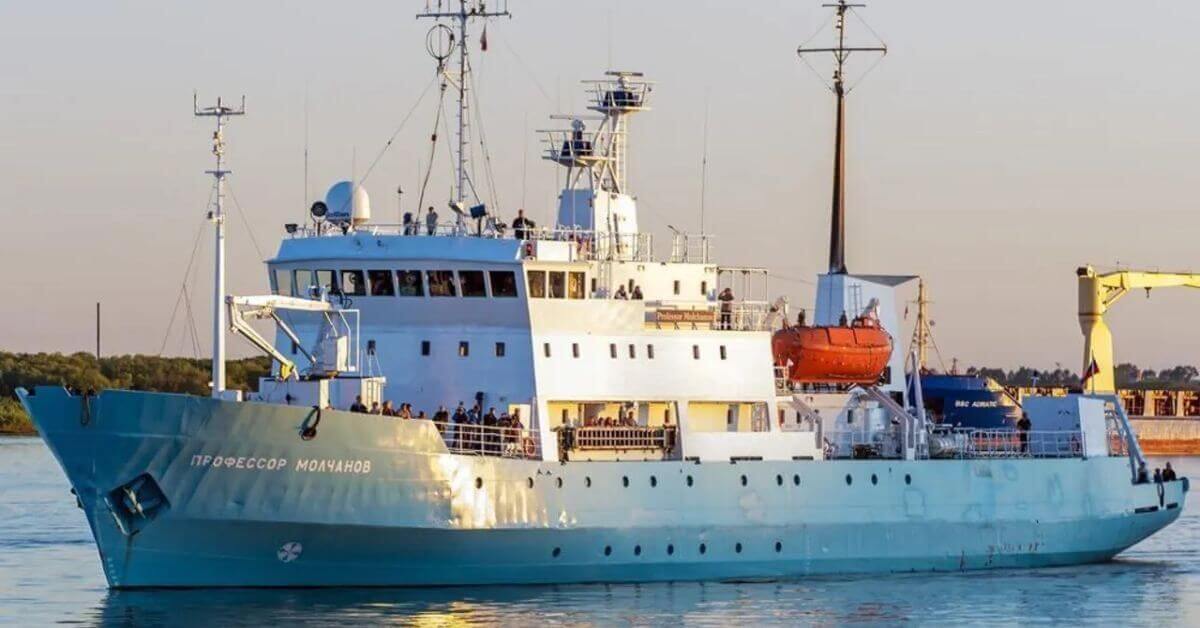
Norway has helped 69 Russian passengers and crew return home after they were stranded in Svalbard following the seizure of the cruise ship Professor Molchanov.
The stranded crew and passengers returned to Russia on Tuesday, Sept. 8, through the Norwegian town of Kirkenes, the governor of the Svalbard archipelago said.
A Norwegian court had ordered the seizure of the ship at the request of Ukrainian energy company Naftogaz.
The company is seeking to enforce a $4.22 billion compensation award over assets Russia took when it annexed Crimea in 2014.
Russia plans to appeal the arrest of the Professor Molchanov. The case has also led to new tensions between Moscow and Oslo, with the Russian Foreign Ministry summoning the Norwegian ambassador in Moscow last week to deliver a strong protest.
Norwegian authorities provided logistical help to get the 69 Russians home. Russian diplomats also helped with their return, Foreign Ministry spokeswoman Maria Zakharova said.
“As far as we know, practically everyone has already returned home,” Zakharova said on Wednesday.
But the dispute over the ship is not over, she said.
Moscow says the seizure goes against the 1920 Svalbard Treaty. The treaty gives Norway sovereignty over Svalbard but also gives citizens of countries that signed it, including Russia, the right to settle there without a visa. It also allows equal economic access to the archipelago.
Svalbard has been Norwegian territory since 1925. The Arctic archipelago lies between the North Pole and the European mainland.
Zakharova said Russia believes Norwegian authorities are trying to make it harder for Russian operators to work in Svalbard and reduce Russia’s presence there.
The Professor Molchanov is being held in Barentsburg, a Russian-operated coal mining settlement on Spitsbergen, the largest island in the Svalbard archipelago.
Barentsburg is one of two Russian settlements in Svalbard. The two settlements have a combined population of 392, according to the Norwegian government.
Svalbard has a total population of 2,914, according to Statistics Norway.
References: Reuters, themoscowtimes
Read on the original site
Open the publisher's page for the full experience