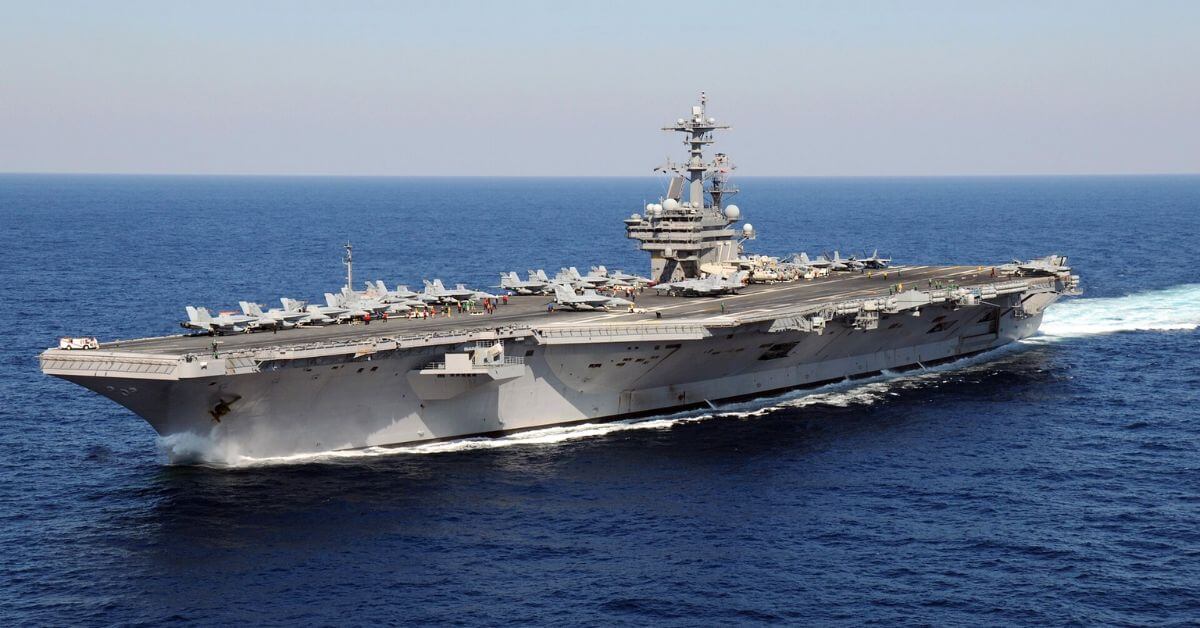
The strategic positioning of U.S. carrier groups in and around the Middle East, as reported, signifies a commitment to maintaining a heightened presence in a region of considerable geopolitical and economic importance. This deployment is not merely a display of military might but a calculated measure designed to deter potential aggression and ensure the stability of vital maritime trade routes. The presence of multiple carrier strike groups underscores the complexity of current regional dynamics and the necessity for a robust, adaptable response capability. World Data Ocean's perspective on such developments centers on the intricate interplay between human activity, environmental conditions, and global security. While our primary focus is on the scientific understanding and stewardship of the world's oceans, we recognize that geopolitical events can have tangible impacts on marine environments, from shipping lane security to the potential for environmental incidents. Understanding these connections requires integrated data and a collaborative approach to analysis.
From an ocean intelligence standpoint, the sustained presence of naval assets in key maritime chokepoints necessitates continuous monitoring and data acquisition. This includes tracking vessel movements, understanding patterns of maritime traffic, and assessing potential environmental risks associated with increased naval activity. World Data Ocean's commitment to providing validated, measurable data is crucial in such contexts. Our integrated data ecosystem aims to deliver real-time insights that can inform decision-making for a range of stakeholders, including those involved in maritime security and environmental protection. The ability to correlate geopolitical developments with observable oceanic changes, such as shifts in shipping patterns or potential environmental stressors, is a testament to the power of advanced technological solutions and a forward-thinking approach to data utilization.
The underlying principle guiding World Data Ocean's engagement with such news is the interconnectedness of global systems. While the immediate focus may be on strategic deployments, the broader implications for ocean health and sustainable practices remain paramount. Our work emphasizes that scientific understanding drives effective protection. Therefore, while acknowledging the strategic necessity of naval presence, we also advocate for the continuous collection and analysis of empirical data related to the marine environment. This ensures that decisions impacting both security and sustainability are informed by the most accurate and comprehensive ocean intelligence available, fostering a sense of shared responsibility for the health of our planet's most vital resource.