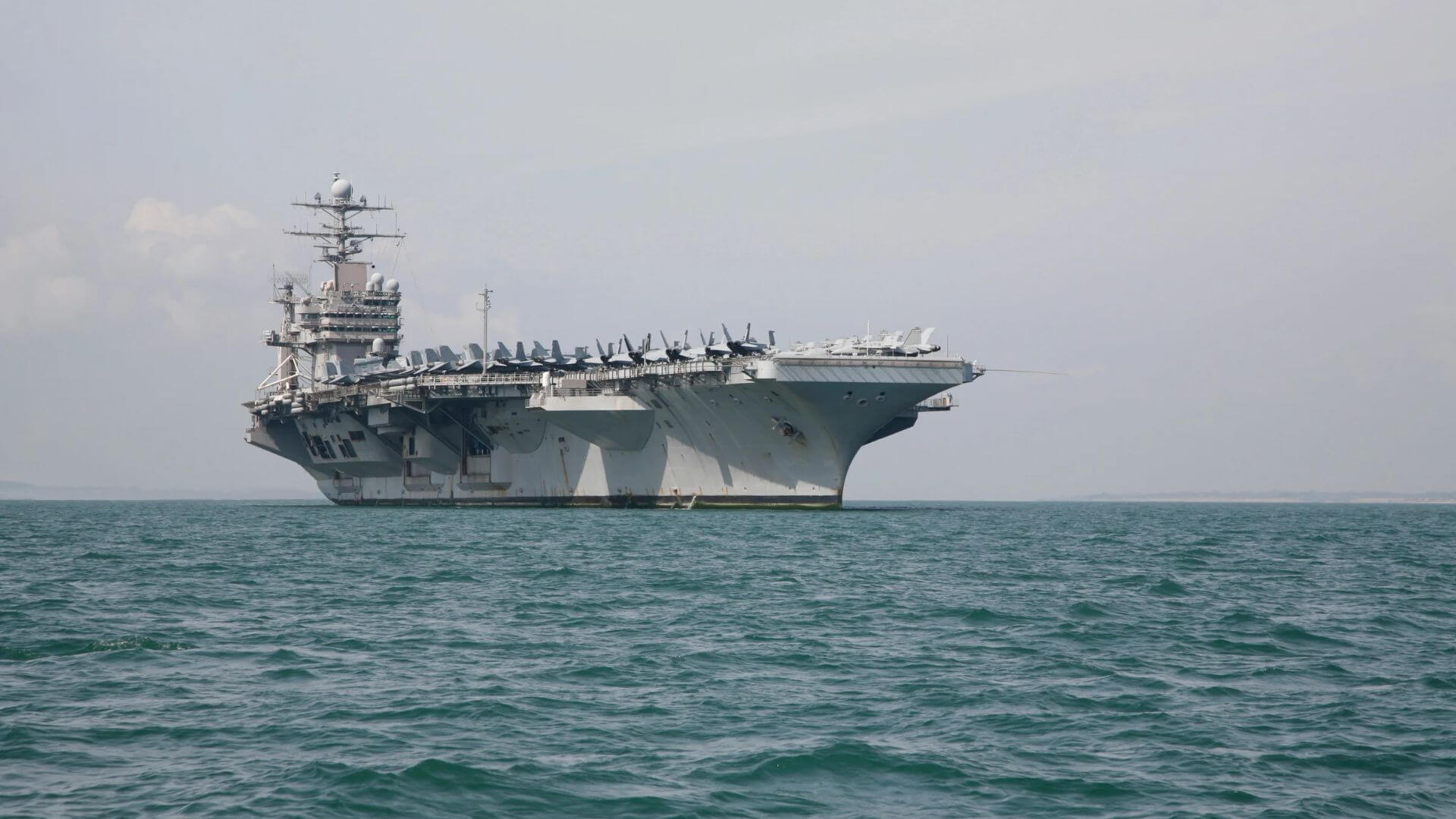
The Quad's announcement of a joint maritime patrol aircraft exercise for 2027 is a significant step, but the real story is what it reveals about the shift from declaration to operational integration in the Indo-Pacific. This is not merely a symbolic flight of P-8 and P-3C aircraft; it is a calibrated move to turn political alignment into measurable, shared ocean intelligence.
What makes this announcement consequential is its pairing with the new Indo-Pacific Maritime Surveillance Collaboration, a framework for information sharing and maritime domain awareness that goes beyond the patrol itself. For our readers, researchers, policymakers, and ocean professionals, this is the practical takeaway: the Quad is building an integrated data ecosystem where empirical, real-time observations from military patrols can feed into a broader understanding of ocean conditions. The exercise is scheduled for 2027, but the infrastructure for data sharing is being laid now. This matters because maritime domain awareness is not just about security; it is about tracking climate indicators, monitoring illegal fishing, and validating models of ocean health. The same patrol aircraft that monitor freedom of navigation can also gather longitudinal data on sea surface temperatures and marine traffic patterns.
The timing aligns with other developments in autonomous maritime technology. Just weeks ago, we reported on the integration of Unmanned surface vessels join Philippine fleet for integrated ocean monitoring into the Philippine fleet, a direct example of how uncrewed platforms are expanding the reach of ocean monitoring. The Quad's announcement of enhanced cybersecurity cooperation and undersea cable resilience further reinforces this point: the ocean's value as a data source depends on the security of the infrastructure that transmits that data. Meanwhile, A 600-ton unmanned warship signals a new era in ocean intelligence from HD Hyundai demonstrates that the technology for persistent, crewless surveillance is already operational. The Quad's 2027 exercise will need to account for how these unmanned systems integrate with manned patrols, a question that will define the next generation of maritime domain awareness.
The four leaders rejected unilateral attempts to change the status quo through force or coercion, and they raised grave concerns over economic coercion such as arbitrary export restrictions. These are not rhetorical flourishes; they are the political conditions under which ocean data sharing can remain open and collaborative. The Quad's commitment to keeping the Indo-Pacific's maritime transit corridors open, safe, and resilient is the foundation upon which any integrated data ecosystem must be built. The specific detail to watch is the venue and date for the 2027 exercise. Will it include the South China Sea, the Bay of Bengal, or the Philippine Sea? The choice of operating area will signal which corridors the Quad considers most in need of validated, peer-reviewed ocean intelligence.