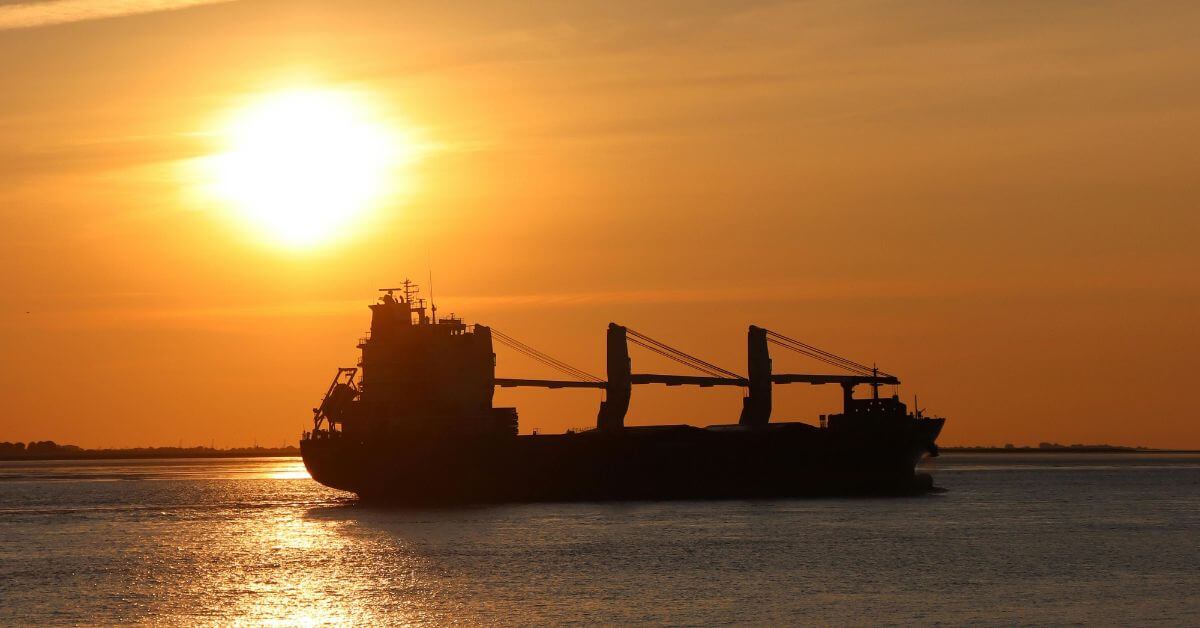
The Black Sea has become a corridor of consequence, not just of commerce. The loss of the HS Dignity and the attack on the Chelsea 3 off Bulgaria's coast, leaving eleven seafarers missing, are not isolated tragedies; they are empirical signals of a breakdown in maritime security that demands a calibrated, data-driven response. We have argued before that ocean intelligence must serve human safety, and these events make that case with grim clarity. The search for the missing crew of the sunken Guinea-Bissau-flagged vessel remains underway, while the Maltese-flagged Chelsea 3 survived its three-drone strike with all fifteen crew rescued, a split outcome that underscores how thin the margin between survival and loss has become in these waters. As we noted in our coverage of the Three-drone strike sinks Maltese-flagged vessel near Bulgarian coast, the pattern of attacks is accelerating, and the response must be equally integrated.
What this means for our readers, whether researchers, policymakers, or maritime operators, is that the traditional separation between geopolitical risk analysis and oceanographic monitoring is no longer tenable. The attacks occurred fifteen to seventeen nautical miles east of Krapets, close to Bulgarian territorial waters, and followed a previous incident on October 6 when the Alfa Watan sank with all ten crew lost. Bulgaria has now summoned Russia's ambassador and requested support from the European Commission and NATO for stronger maritime and airspace surveillance. This is a practical turning point: real-time vessel tracking data, such as the LSEG and MarineTraffic records showing the Chelsea 3 had called at Tulcea days earlier, must be integrated with security monitoring to create a validated, shared picture of risk. The Baltic States Call for EU to Halt Russian Grain Transit Amid Trade Route Shifts reveals a parallel concern about grain route security, and these two stories together show that the entire Black Sea logistics network is under stress.
The absence of clear attribution, Russian Ambassador Mitrofanova stated she had no information from the Russian Defence Ministry and did not rule out a third party, does not diminish the measurable impact. Both vessels were partly loaded, and the Chelsea 3 was carrying cargo at seventy-two percent of its full load. The HS Dignity had sailed from Algeria and was heading toward Braila, a Romanian port central to grain exports. When commercial shipping becomes a target, the climate indicators we track, food supply stability, maritime insurance costs, emission patterns from rerouted vessels, all shift in measurable ways. The grain supply chain, already strained by Russia's attacks on Ukrainian Black Sea ports and Ukraine's counterstrikes on Russian grain vessels near the Sea of Azov, now faces an additional layer of uncertainty.
The concrete point to watch is NATO's response timeline. Secretary General Rutte stated that NATO would adjust its military presence along the eastern flank as needed, but "as needed" is not a calibrated metric. Bulgaria, Romania, and Turkey are already coordinating, but without a shared, peer-reviewed surveillance framework that integrates satellite, drone, and ship-tracking data, the response will remain reactive. The question is whether the alliance will deploy a persistent, integrated monitoring system, or wait for the next attack to confirm the pattern.