resilience
15 stories filed under resilience on World Data Ocean. The newest of them: “Canada's largest polar icebreaker begins construction to expand Arctic ocean intelligence”, “Understanding drives protection: microscale environments reveal new pathways for coral reef restoration”, and “Western Atlantic corals face a critical test of resilience against rising heat”. Canada's largest polar icebreaker, the future CCGS *Imnaryuaq*, has begun construction, a calibrated step toward expanding year-round ocean intelligence in the Arctic. Coral recruitment is collapsing, and the scale of the problem has been hiding a critical piece of the solution. A Global Hub for Ocean Intelligence 4 World Data Ocean is a centralized digital platform where researchers, scientists, and ocean enthusiasts converge to… The list below is every resilience story on World Data Ocean, newest first.

Canada's largest polar icebreaker begins construction to expand Arctic ocean intelligence
Canada's largest polar icebreaker, the future CCGS *Imnaryuaq*, has begun construction, a calibrated step toward expanding year-round ocean intelligence in the Arctic. This vessel will establish a commanding presence in waters where empirical data is scarce but urgently needed. Understanding drives protection, whether in the Arctic or on coral reefs. For deeper insight into how microscale environments shape restoration, see our related coverage on coral reef pathways.

Understanding drives protection: microscale environments reveal new pathways for coral reef restoration
Coral recruitment is collapsing, and the scale of the problem has been hiding a critical piece of the solution. By focusing on the microscopic environments where coral larvae actually settle, researchers introduce the "settlement-sphere" concept, a microhabitat of chemical cues, microbial life, and physical complexity that governs survival. Anthropogenic stressors dismantle this sphere. Rebuilding it with targeted materials and chemical restoration offers a measurable path forward. For another perspective on restoring marine complexity, see our coverage of engineered reef structures.
Western Atlantic corals face a critical test of resilience against rising heat
Western Atlantic corals are facing a critical test of resilience. Ever more frequent heat waves and resulting bleaching threaten extinction unless these ecosystems can adapt rapidly. The region's unique geography and long history of pollution have made corals especially vulnerable. Yet evidence shows thermal resilience is increasing through symbiont shuffling and natural selection. Assisted reproduction can accelerate this progress. These promising signs will come to nothing unless overexploitation and pollution are severely reduced.
Calibrating port resilience against measurable cyclone-driven economic loss
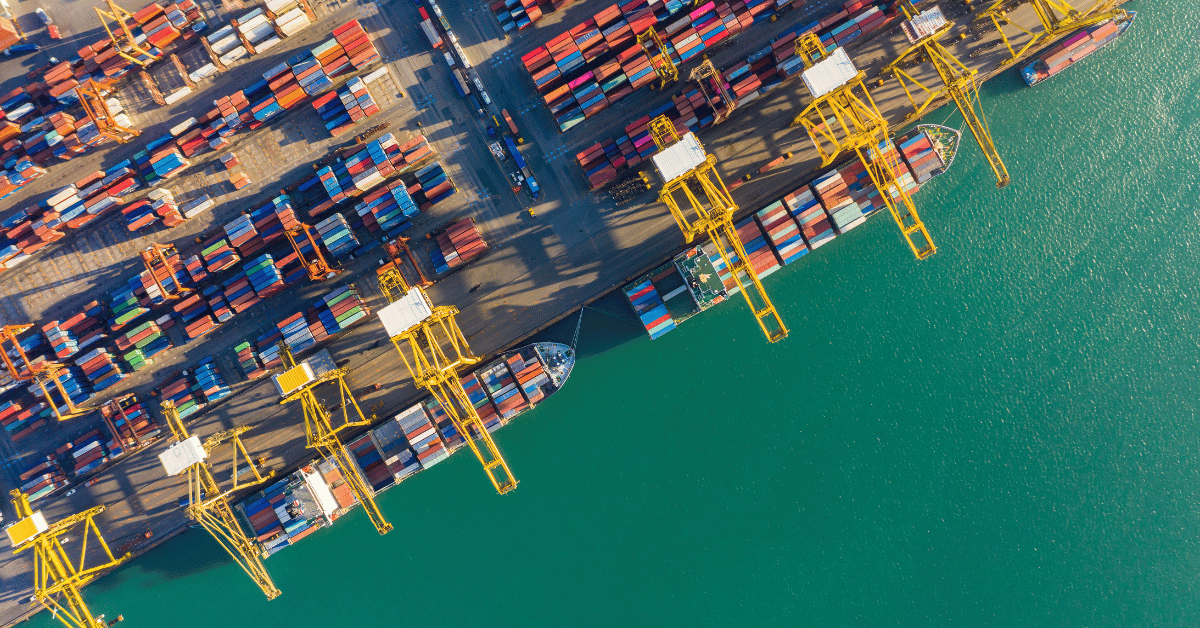
Shanghai Port emerges as the most vulnerable among five key Chinese ports when resilience is calibrated against measurable cyclone-driven economic loss. This is no surprise for a mega-hub whose efficiency and network importance may mask fragility. The study's integrated index, built from expert surveys, AHP, and TOPSIS, reveals that high importance does not guarantee lower losses. Cargo-handling fees bear the heaviest seasonal damage. Better berth planning and staff training offer clear, empirical paths to protection. Understanding drives protection.
Biodiversity and human pressure reshape marine ecosystem science
Marine ecosystem ecology now stands at a crossroads where biodiversity data and human pressures converge. Understanding how marine life supports ecosystem functioning remains central, but the urgency of climate-driven transformations demands we anticipate change, not just document it. Resilience, the capacity to persist through disturbance, has become a scientific priority under intensifying cumulative pressures. Major challenges include ecological non-stationarity and expanding data volumes. Our related piece, "Validated data and selective gear drive sustainable crab harvesting," demonstrates how empirical approaches already guide sustainable practice.
Storm Surge Costs in Coastal China Reveal Complex Economic Impacts
Storm surge losses in China's coastal provinces are not linear, and new panel data from 2011 to 2023 confirms it. The study finds that while hazard intensity and economic exposure drive direct damages, adaptive capacity consistently cushions the blow, yet only up to a point. Once storm intensity crosses a threshold, the amplifying effect sharpens. Notably, no single factor explains low losses; instead, distinct combinations, such as the Defense Strategy-Driven or Comprehensive Resilience-Driven pathways, emerge. This complexity matters.
Dynamic Port Governance: Assessing Resilience Through Stakeholder Collaboration
Port governance rarely gets the resilience analysis it deserves. Existing frameworks measure infrastructure and efficiency, but they miss the living relationships that keep a port system healthy. Our Stakeholder Symbiotic Resilience Index addresses that gap, treating the Port Authority, Port Enterprises, and Local Community as co-evolving actors. Applied to Qingdao Port's 2015-2024 data, the model reveals an asymmetric dynamic: authority supports enterprise, enterprise lifts community, and community reinforces authority. The resulting SSRI of 0.8587 outperforms the benchmark.
India Charts Course for European Shipping Collaboration at SMM 2026
India's push for European shipping collaboration at SMM 2026 arrives as the sector confronts rising geopolitical and economic pressures. The gathering signals a deliberate move toward integrated maritime strategy, where shared data and calibrated responses matter more than unilateral action. This is not about optics; it is about building resilience. For those tracking the broader picture, our coverage of the bulk carrier freed near Gladstone offers a practical reminder of how operational challenges test that very resilience.
Earthquake Alters Costa Rican Seep, Testing Chemosynthetic Ecosystem Resilience
A 6.5 magnitude earthquake struck the Pacific Costa Rican Margin in November 2017, and the resulting data is reshaping what we know about deep-sea resilience. Researchers mapped shifts in seepage and species distribution across Mound 12, finding that vesicomyid clams acted as pioneers by relocating in response to changing abiotic signals. This is direct evidence of movement in a methane-seep habitat. It suggests these ecosystems may recover from disturbance, but recovery is not uniform.
Ports Navigate Shocks: Integrating ESG for Resilience in a Changing World
A one-round survey of 44 managerial and professional respondents from Ningbo Zhoushan Port Group has produced a competency framework that places systemic risk foresight above all else. The study's multi-criteria model, built on Lagrange multipliers and TOPSIS, offers a practical tool for decision-support in an era of climate volatility and geopolitical disruption. Understanding drives protection, and this framework gives ports a measurable way to integrate ESG into their core roles.
Modeling China’s Coastal Growth: Integrating Economy, Innovation, and Ecology
Zhejiang's marine economy will not grow on scale alone. This study models it as a complex adaptive system, where innovation, port capacity, and ecological protection interact with delayed feedback. Notably, weaker innovation masks itself initially, but by 2030 it trims emerging-industry value added by 16.7%. Port shocks transmit directly to environmental investment, and ecological constraints shift from growth-supportive to limiting. Strong internal innovation buffers external shocks, adding RMB 35 billion to 2030 GOP. This is the integrated, systems-level thinking ocean management needs.
Sponges as Habitat Engineers: Restoring Life to Polluted Harbors
A single sponge species endured where its peers could not. In a 455-day transplant experiment across a recreational harbor, *Chondrosia reniformis* posted 91.7% survival while four other Mediterranean species perished during preparation or shortly after deployment. This resilience warrants attention. The survivors did more than persist: they crawled up to 12.7 centimeters, recovered from disease, and fissioned during warm months, nearly doubling their experimental population. Such clonal proliferation and morphological plasticity position this species as a credible habitat engineer for degraded coastal infrastructure.
Octocorals: Resilient Reef Builders Facing Anthropocene Challenges
In Hong Kong's turbid, hyposaline waters, octocorals are not just surviving; they are revealing how resilience functions under pressure. A genomic study of three species, including *Dendronephthya gigantea*, found low genetic diversity and weak population differentiation, suggesting a small founder population that expanded through asexual reproduction. This is not a weakness. These colonies persist where conditions should be suboptimal, and that adaptability carries real conservation weight. As we face accelerating climate instability, such marginal communities may hold essential genetic keys.
Climate Change Accelerates Invasive Species Threat to Ocean Ecosystems
Rising ocean temperatures are rewriting the rules of marine life, and not in ways we can afford to ignore. As climate change shifts habitable zones, invasive species are finding new footholds in ecosystems already stressed by warming waters. This is not a distant problem; it is an accelerating, measurable threat to biodiversity and coastal economies alike. The data is clear: we must integrate these patterns into our ocean intelligence now.
Integrated Insights: Bridging Natural and Human Systems for Ocean Solutions
Coastal communities face mounting pressure as storm surge costs in China expose the economic weight of climate-driven extremes, while Port Miami's record-breaking 10 million passengers shows how human systems adapt and thrive. These stories converge on a single truth: ocean solutions demand integrated insights. By bridging natural and human systems, we move beyond isolated data points toward a calibrated, whole-system view. This approach turns complexity into actionable intelligence, reinforcing that understanding drives protection.