U.S. Navy Loses 15,000 Operational Days As Submarine Maintenance Delays Cost $3.4 Billion
Our take
The recent Government Accountability Office (GAO) report highlighting the U.S. Navy’s escalating submarine maintenance delays and associated $3.4 billion cost is a stark illustration of the challenges facing maritime readiness in an era of heightened geopolitical tension. The projected 15,000 operational days lost between 2026 and 2030, representing a significant portion of the submarine fleet’s potential contribution, underscores a systemic issue demanding immediate attention. These delays aren't isolated incidents; they are symptomatic of broader trends within naval operations, as evidenced by the substantial overhaul required for the USS Boxer, an amphibious assault ship, after a Middle East deployment U.S Navy’s USS Boxer Slated For Up To $180 Million Overhaul After Middle East Deployment. The increasing complexity of modern naval vessels, coupled with aging infrastructure and skilled labor shortages, contributes to the lengthening maintenance cycles and escalating costs. This situation is further complicated by the evolving operational landscape, where naval assets are increasingly deployed in demanding environments, accelerating wear and tear and necessitating more frequent and extensive maintenance.
The implications extend beyond mere budgetary concerns. Reduced submarine availability directly impacts the Navy's ability to project power, conduct intelligence gathering, and deter potential adversaries. The recent incident involving Philippine and Chinese naval vessels exchanging radio challenges near Sabina Shoal during a joint exercise Philippine Navy & Chinese Warship Exchange Radio Challenges Near Disputed Sabina Shoal During Naval Exercise With U.S & Australia highlights the precarious nature of regional security and the need for a robust, consistently available naval presence. The delayed maintenance schedules effectively diminish this presence, potentially emboldening adversarial actions and increasing the risk of miscalculation. Moreover, the shift towards increasingly sophisticated underwater technologies, including the development of wind-powered underwater datacenters in China World’s first wind-powered underwater datacentre starts operating in China - The Guardian, further emphasizes the criticality of maintaining a technologically superior and readily deployable submarine fleet. The ability to leverage real-time ocean intelligence, derived from validated data and integrated systems, hinges on the operational readiness of these platforms.
The root causes of these maintenance delays are multifaceted. While increased operational tempo certainly contributes, a deeper examination reveals issues related to supply chain vulnerabilities, inadequate investment in modern maintenance facilities, and a potential misalignment between funding priorities. A reactive approach to maintenance, often addressing issues only after they arise, proves significantly more costly than proactive, preventative measures. Furthermore, the integration of advanced data analytics and predictive maintenance strategies, utilizing longitudinal data and calibrated models, remains largely underdeveloped within the Navy's maintenance infrastructure. Such an integrated data ecosystem could facilitate the early detection of potential failures, allowing for more efficient scheduling and resource allocation, ultimately minimizing downtime. The GAO report should serve as a catalyst for a comprehensive review of the Navy’s maintenance policies and practices, advocating for a shift towards a more data-driven, proactive, and resilient approach.
Looking forward, the Navy's ability to adapt to the evolving maritime environment hinges on its capacity to address these systemic maintenance challenges. A key question remains: will the Navy prioritize the necessary investments in infrastructure, workforce development, and technological innovation to ensure the long-term operational readiness of its submarine fleet, or will it continue to operate under a model that risks compromising its strategic capabilities and incurring unsustainable financial burdens? The escalating costs and prolonged delays serve as a clear signal that a decisive and forward-thinking course correction is imperative to safeguard U.S. national security interests in the oceans.
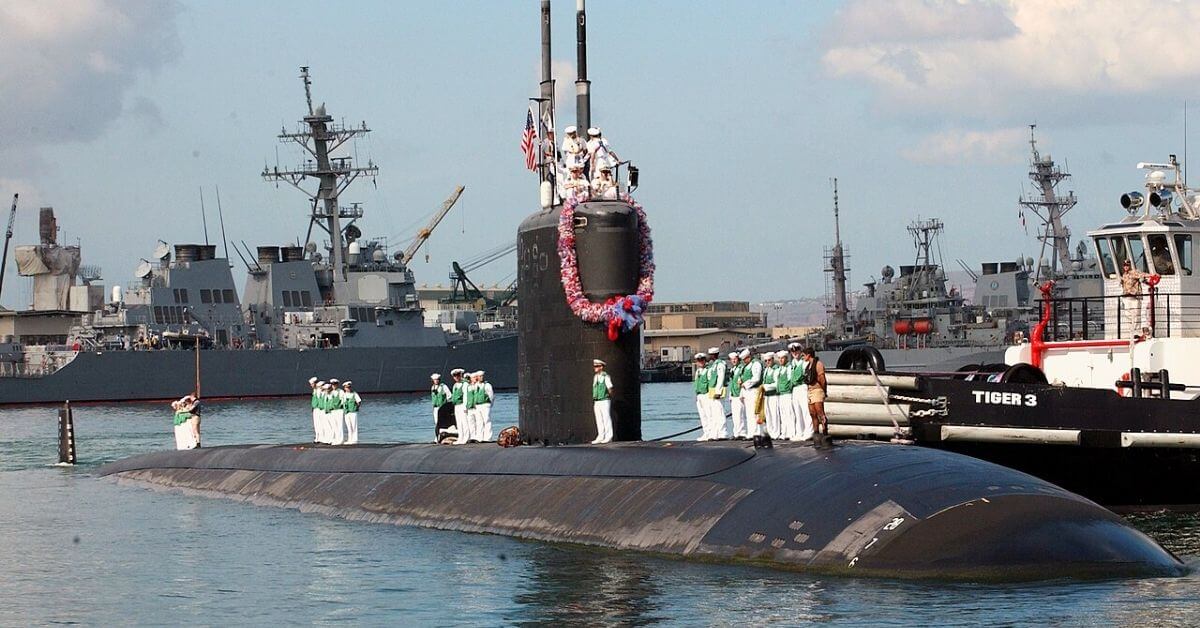
Delays in maintenance of U.S. Navy attack submarines have cost the service an estimated $3.4 billion and about 15,000 lost operational days over the past decade, a Government Accountability Office (GAO) report released Thursday said.
Los Angeles-class and Virginia-class attack submarines experienced delays between 2016 and 2025. Many submarines and their crews were stuck at the pier, waiting for a space at the shipyards for maintenance.
This has left fewer submarines available for operations, the report said. The problem could become more costly as more submarines wait to be decommissioned due to limited shipyard capacity.
The GAO estimates that 15 submarines could spend about 14,000 days in inactive idle time between 2026 and 2030. This could cost the Navy about $3.1 billion.
Diana Maurer, a GAO director who supervised the report, said the maintenance delays have reduced the fleet’s readiness. She said they have also cost taxpayers billions of dollars and left fewer submarines available for national security missions.
U.S. attack submarines gather intelligence and can attack enemy targets. The Navy considers them an important military advantage over China.
The Navy is also facing delays in delivering new Columbia-class and Virginia-class submarines. It has also faced extended deployments due to military operations in the Middle East and off the coast of South America.
15,000 Operational Days Lost
The Navy lost more than 15,000 operational days to maintenance delays between 2016 and 2025, the GAO said.
Some of this was because of what the GAO calls “active idle time.” This is when a submarine can no longer carry out normal operations but is still waiting to enter maintenance.
During this time, the submarine and its crew remain at the pier.
For the Los Angeles-class fleet, active idle time costs almost $220,000 a day. For the Virginia-class fleet, it costs more than $237,000 a day.
Maurer compared the situation to a backlog, with submarines waiting for space in dry docks for maintenance. She said this adds pressure to the heavily used fleet.
The Navy has reduced active idle time in recent years.
In 2025, submarines lost a total of 753 days while waiting to enter dry docks or because of maintenance delays. The GAO said this was equal to about two attack submarines being unavailable for operations.
The situation was worse in 2023, when the lost time was equal to five submarines.
The GAO said the Navy has made significant progress in reducing active idle time, but the maintenance backlog remains.
Decommissioning Delays Cost $722 Million
The Navy is also facing delays in taking submarines out of service.
The GAO calls this “inactive idle time.” These submarines remain at the pier until a shipyard has space to defuel their nuclear reactors.
These delays cost an estimated $722 million between 2016 and 2025.
The Los Angeles-class USS Pasadena became inactive in January 2025. It is not expected to enter Norfolk Naval Shipyard until November 2028, almost four years later.
The submarine cannot conduct normal operations because its dive certification has expired. It remains fully crewed, however.
The Navy plans to use the Pasadena as a training platform while it waits for shipyard space. The GAO estimates that the delay will cost more than $300 million.
The GAO said inactive idle time has been increasing and is expected to get worse.
Based on current trends, 15 submarines could spend about 14,000 days in inactive idle time between 2026 and 2030. The estimated cost is $3.1 billion.
U.S. Shipyards Struggle With Capacity
Nuclear submarine maintenance is carried out at four public Navy shipyards: Portsmouth Naval Shipyard in New Hampshire, Norfolk Naval Shipyard in Virginia, Puget Sound Naval Shipyard in Washington state and Pearl Harbor Naval Shipyard in Hawaii.
Portsmouth handles the most submarine work, according to the assessment.
Some maintenance can also be carried out at two private shipyards: Connecticut, General Dynamics Electric Boat in Groton, and Huntington Ingalls Industries’ Newport News Shipbuilding in Newport News, Virginia.
The GAO said expanding shipyard capacity could help reduce the backlog. But the existing facilities face aging infrastructure as well as shortages of workers and materials.
Upgrading the shipyards will take years.
The Navy is looking at other options to reduce the number of submarines waiting for shipyard space.
References: NavyTimes, GAO
Read on the original site
Open the publisher's page for the full experience