U.S Navy’s USS Boxer Slated For Up To $180 Million Overhaul After Middle East Deployment
Our take
The impending, extensive overhaul of the USS Boxer, an amphibious assault ship, highlights the sustained operational demands placed on U.S. naval assets in volatile regions. Scheduled to undergo repairs at BAE Systems’ San Diego yard until October 2028, this multi-million dollar refurbishment underscores the persistent strain of deployments in the Middle East and elsewhere. The Boxer’s recent service in that area, coupled with ongoing geopolitical tensions, necessitates this level of maintenance to ensure continued operational readiness. Recent events in the Strait of Hormuz, including a [Tanker Catches Fire After Being Hit By ‘Unknown Projectile’ In Strait Of Hormuz], demonstrate the continued risk to maritime traffic and the importance of a strong naval presence. Furthermore, considering the complexities in the South China Sea, as evidenced by the [Philippine Navy & Chinese Warship Exchange Radio Challenges Near Disputed Sabina Shoal During Naval Exercise With U.S & Australia], the Boxer’s availability is crucial for maintaining stability and projecting power in strategically significant waterways.
The sheer scale of the overhaul – approaching $180 million – isn’t merely about addressing immediate damage; it reflects the cumulative effect of prolonged exposure to harsh environmental conditions, demanding operational tempos, and the wear and tear inherent in advanced naval technology. Modern warships are complex integrated systems, reliant on countless calibrated components and sophisticated sensors. Longitudinal data collection on the performance of these systems, a critical area of focus for World Data Ocean, informs predictive maintenance and ultimately extends operational lifespans. The Boxer’s overhaul provides a valuable opportunity for applying this data-driven approach, identifying areas for upgrades and preventative measures that can improve future fleet resilience. The situation in the Strait of Hormuz, and the recent [Iran And Oman Reach Agreement On Strait Of Hormuz Control And Revenue Sharing], further emphasizes the need for reliable and adaptable naval assets capable of responding to evolving threats.
Beyond the immediate implications for the Boxer and the U.S. Navy, this situation raises broader questions about the sustainability of current deployment patterns and the necessary investments in naval infrastructure. The demand for rapid response and persistent presence in multiple global hotspots is placing an unprecedented burden on naval resources. While technological innovation, such as improved sensor capabilities and unmanned systems, offers potential solutions for reducing the reliance on traditional warships, significant investment in maintenance, modernization, and personnel training remains paramount. The long lead time for the Boxer’s overhaul (over four years) also highlights the challenges associated with naval shipbuilding and repair, underscoring the need for streamlined processes and robust supply chains to ensure fleet readiness. The empirical data generated during this overhaul will be invaluable for optimizing future maintenance schedules and resource allocation.
Looking ahead, the Boxer's overhaul serves as a stark reminder of the costs – both financial and operational – associated with maintaining a global naval presence. As climate change continues to reshape maritime environments, impacting everything from sea levels to storm patterns, the demands on naval vessels will only intensify. Will the increasing frequency and severity of extreme weather events necessitate even more frequent and extensive overhauls? Furthermore, the integration of artificial intelligence and machine learning into naval operations promises to enhance efficiency and predictive maintenance capabilities, but requires substantial investment and validated data sets. The ongoing modernization of the Boxer, and similar vessels, will be a critical indicator of the U.S. Navy’s ability to adapt and thrive in an increasingly complex and unpredictable oceanic landscape.
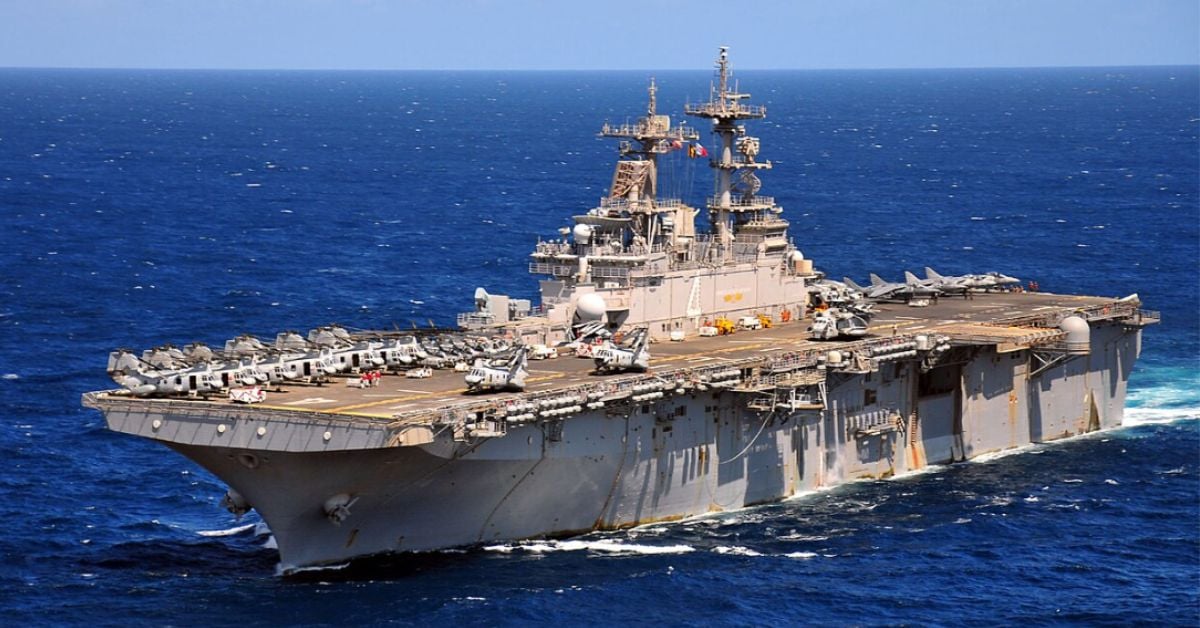
USS Boxer, an amphibious assault ship of the U.S Navy, will undergo a major overhaul at the San Diego yard of BAE Systems until October 2028 after coming back from its deployment in the Middle East.
The Wasp-class ship will see upgrades to its propulsion system, rudder systems, hulls and tanks, and repairs focusing on maintaining its structural integrity, given that the ship was commissioned in 1995 and is now quite old, needing modernisation.
The contract is valued at around $180 million; however, it is much needed, given the mechanical issues that the vessel encountered over the past 2 years.
In 2024, its rudder bearing failed, forcing it to return to its home port in San Diego just ten days after it left for a deployment.
The ship had undergone an overhaul in 2020, costing $ 200 million to modify its flight deck for supporting stealth fighter jets of the Marine Corps.
However, the U.S Navy deployed it as the flagship of an Amphibious Ready Group along with two other vessels, the USS Comstock and USS Portland, to the U.S Central Command along with the Marines from Camp Pendleton’s 11th Marine Expeditionary Unit to support Operation Epic Fury.
During its deployment, the vessel targeted Iranian military sites and strategic assets across the region to weaken Iran’s control over the Strait of Hormuz.
The ongoing U.S-Iran war had also extended the deployment of aircraft carrier USS Abraham Lincoln to over 250 days, raising concerns about the mental health of the 5000 personnel onboard the vessel, which had not made any port calls and suffered from a shortage of food, water, clogged toilets and even mould.
Nonetheless, Lincoln operated along with the USS Boxer group, and the Navy has not disclosed any return date for the latter or even given confirmation about their port calls in Guam or Hawaii.
Read on the original site
Open the publisher's page for the full experience