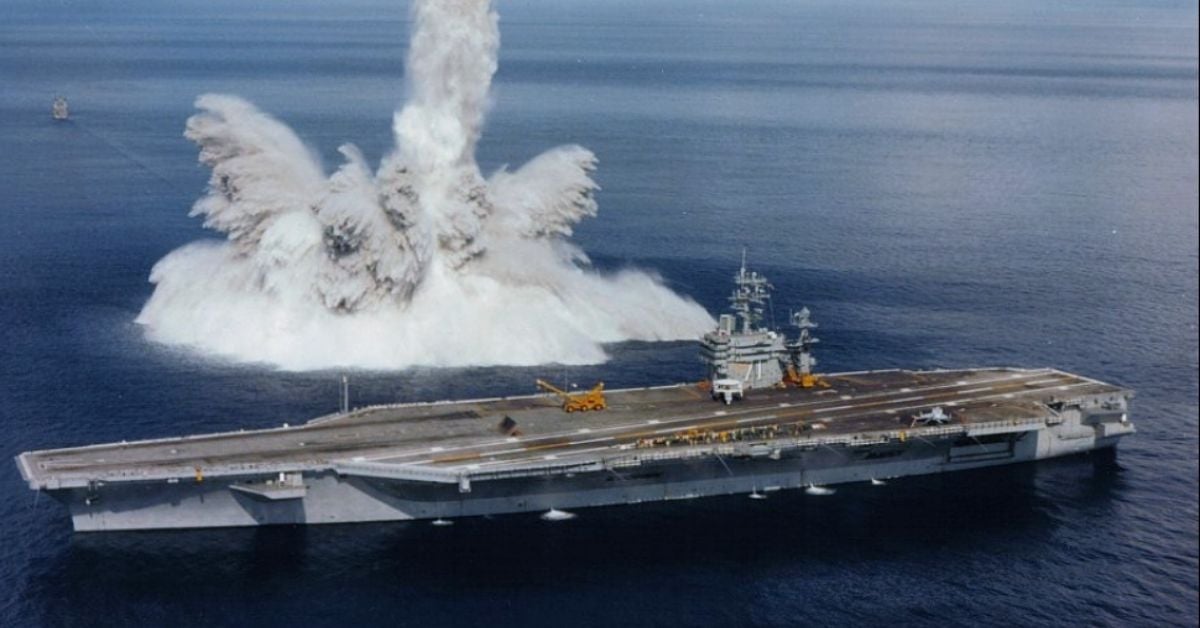
The USS Theodore Roosevelt's month-long preparation for its Middle East deployment is not a routine checklist. Following the largest Rim of the Pacific exercise in 2026, this carrier is not simply repositioning; it is transitioning from a training posture to a deterrence posture in a matter of weeks. For our readers, this compressed timeline is the story. It signals that the Navy expects its most complex assets to be adaptable enough to shift from the controlled chaos of a multinational exercise to the high-stakes, real-world pressure of a contested region without a lengthy maintenance and work-up cycle.
This operational flexibility is precisely what the service has been building toward, and it aligns with the institutional push we are tracking elsewhere. The Navy's new centre for robotic and autonomous systems integration, which we covered earlier, is not a separate initiative. It is part of the same logic that puts a carrier in the Middle East after a Pacific exercise: the force must be leaner, more networked, and capable of generating effects with less visible warning. The Roosevelt's ability to deploy immediately is a measure of how far the service has come in embedding these systems into daily operations, not as a novelty, but as a core function. Meanwhile, the pressure on maritime chokepoints is not theoretical. As we reported, ship-to-ship oil transfers in the Gulf of Oman have maxed out, a direct indicator of how much economic and strategic weight is moving through the same waters this carrier will now patrol. The carrier's presence is not just about strike capability; it is about guaranteeing the stability that keeps those transfers moving.
Our take is straightforward: do not read this as a single ship sailing west. Read it as a calibrated signal. The Navy is demonstrating that it can run a 26-nation exercise in the Pacific and then immediately project power into the Middle East, compressing what used to be a months-long transition into weeks. For policymakers and industry observers, the practical takeaway is that readiness is now defined by this kind of rapid integration, not by the size of a battle group alone. For those of us watching the maritime domain, the open question is whether the next step involves a more permanent presence in the Gulf, or whether this is a rotational pattern designed to complement the India Projects Expanded Naval Fleet to Navigate Evolving Maritime Landscape and the broader shift toward a more contested environment.
The concrete point to watch is the carrier's operational tempo once it arrives. A month of preparation tells us the crew is ready. The real test is whether the strike group can sustain a high-end alert posture in the Middle East while the Navy simultaneously accelerates its autonomous systems integration, a dual demand that will stress everything from logistics to decision-making. The Roosevelt is not heading into a vacuum; it is heading into a region where the rules of the game are being rewritten. The question is not whether it can get there fast, but whether the fleet's new, integrated model can hold the line once it does. That is the metric that will define this deployment, and the next.