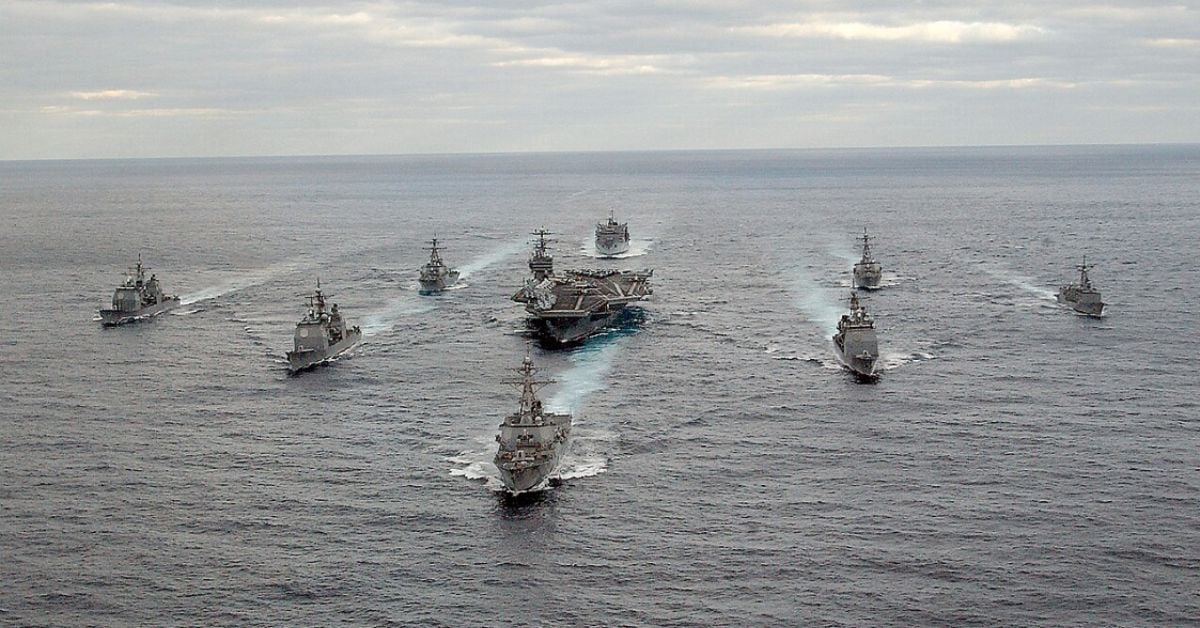
The Strait of Hormuz is not a theoretical question, and the IRGC's latest challenge to U.S. warships should be treated as a demand for verified, real-time maritime data, not as rhetoric. When Rear Admiral Ali Azmaei invites American vessels to test who controls the waterway, he is also testing the integrity of the information ecosystem that governs global shipping. For our readers, the practical takeaway is blunt: if the world's most critical oil chokepoint becomes a contested claims environment, then every transit log, every AIS ping, and every incident report becomes a weapon.
Azmaei's assertion that the IRGC Navy issues permits to commercial vessels and punishes those that violate Iranian conditions is a direct challenge to the principle of open navigation. The U.S. maintains that Hormuz remains open, while Iran frames control as a matter of sovereign enforcement. This is not a semantic dispute. It is a conflict over which authority's data is treated as ground truth. Consider the recent attacks on ships in and around the waterway: each one generates a narrative, and each narrative is calibrated to support a strategic position. The Oman coordinates engine room fire rescue 44 nautical miles offshore shows how a routine maritime emergency can be resolved with transparent coordination, but in Hormuz, the same kind of incident would be subject to competing interpretations of who was authorized to be there and who intervened.
The IRGC's claim that U.S. carriers keep their distance, citing one positioned 700 kilometres away, is a measurable assertion. That is precisely the kind of claim that should be validated with independent, peer-reviewed tracking data rather than accepted or dismissed on the basis of source credibility. The related report on Counter-Drone Electronic Warfare Now Protects Guided-Missile Submarine USS Ohio underscores how naval assets are being hardened for contested environments, but electronic warfare protects a platform, not the integrity of the information it reports. Meanwhile, exercises like the Baltic Allies Validate Uncrewed Target Engagement in Gulf of Bothnia Exercise demonstrate that allied navies are rehearsing coordinated responses, yet none of these drills address the core problem: who gets to define what happened in a strait where Iran claims permit authority and the U.S. claims open transit.
Our position is that this standoff will be resolved less by firepower than by information dominance. Azmaei's statement that Iran is better prepared than in February's strikes is a claim of readiness, but readiness in this context means the ability to control the narrative of any encounter. The specific detail to watch is not whether a warship enters the strait, but whether Iran publishes its own incident reports with verifiable timestamps and coordinates. If Tehran begins issuing official transit permits with unique identifiers, then the international community faces a choice: treat those records as authoritative or challenge them with independent monitoring. That is the open question, and it will determine whether Hormuz remains a shared waterway or becomes a toll booth with a disputed ledger.