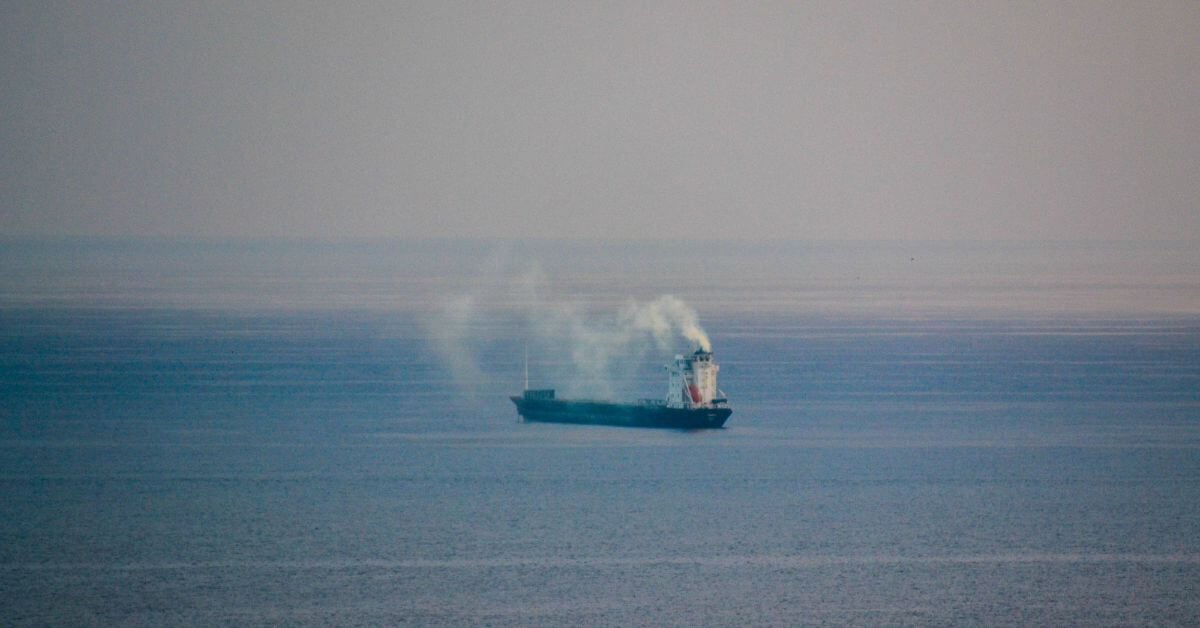
The Strait of Hormuz is not a place where incidents occur in isolation, and the two events reported off Oman's coast must be read as linked parts of a deteriorating maritime security environment. An engine room fire aboard the merchant vessel JOHN K required an Omani Royal Air Force helicopter to evacuate an injured crew member 44 nautical miles offshore, while a separate, delayed report confirmed a container ship was struck by an unknown projectile while transiting the Strait of Hormuz. These are not coincidences; they are symptoms of a waterway where mechanical hazards now share the same operational space as deliberate attacks. The practical takeaway for our readers is this: the margin for error in the Gulf of Oman has effectively vanished. Commercial crews are managing fire emergencies and projectile strikes within the same transit window, often without immediate clarity on cause or consequence. This is not a theoretical risk. It is a daily reality for the seafarers moving roughly 20 million barrels of oil and oil products through the strait each day.
We have reported on the narrowing of naval presence in the region, HMS Dragon's return narrows Royal Navy presence in the Gulf to one vessel, and on previous attacks that left two Indian seafarers missing after tanker strikes at the same chokepoint. The pattern is empirical and measurable. In April, drone and fire attacks targeted three tankers near the Strait of Hormuz, and now a container ship has been hit by a projectile whose origin and type remain unconfirmed. The UKMTO is investigating, but the delay in reporting, Sunday, October 11, with no exact time, suggests either communication gaps or a desire to avoid immediate escalation. Meanwhile, Oman's Maritime Security Centre has not disclosed the cause of the fire aboard JOHN K or the condition of the evacuated crew member. The lack of real-time, peer-reviewed data from these incidents is itself a constraint on maritime safety. Without it, route risk assessments rely on incomplete ocean intelligence.
The integrated data ecosystem we advocate for is not an abstract concept; it is a practical necessity in waters where a fire can break out in an engine room hours before a projectile strikes another vessel. The two events may be unrelated, but the response infrastructure, helicopter evacuation, delayed reporting, cautious advisories, must handle both simultaneously. The Strait of Hormuz is not merely a conduit for 25 percent of global seaborne oil trade; it is a test case for how calibrated, validated information sharing can reduce the human cost of operating in contested seaways. Oman's rescue operation was effective, but the absence of real-time data on the projectile strike underscores a gap that technology and collaboration can close.
The specific detail to watch is the investigation into the container ship strike. If the projectile type and launch origin are confirmed in the coming days, it will either reinforce or challenge the pattern established by the earlier tanker attacks. For now, the open question is whether the Omani helicopter evacuation was a routine mechanical response or an early indicator that naval coverage in the Gulf has thinned to the point where one maritime crisis masks another. Seafarers and operators should plan for the latter.