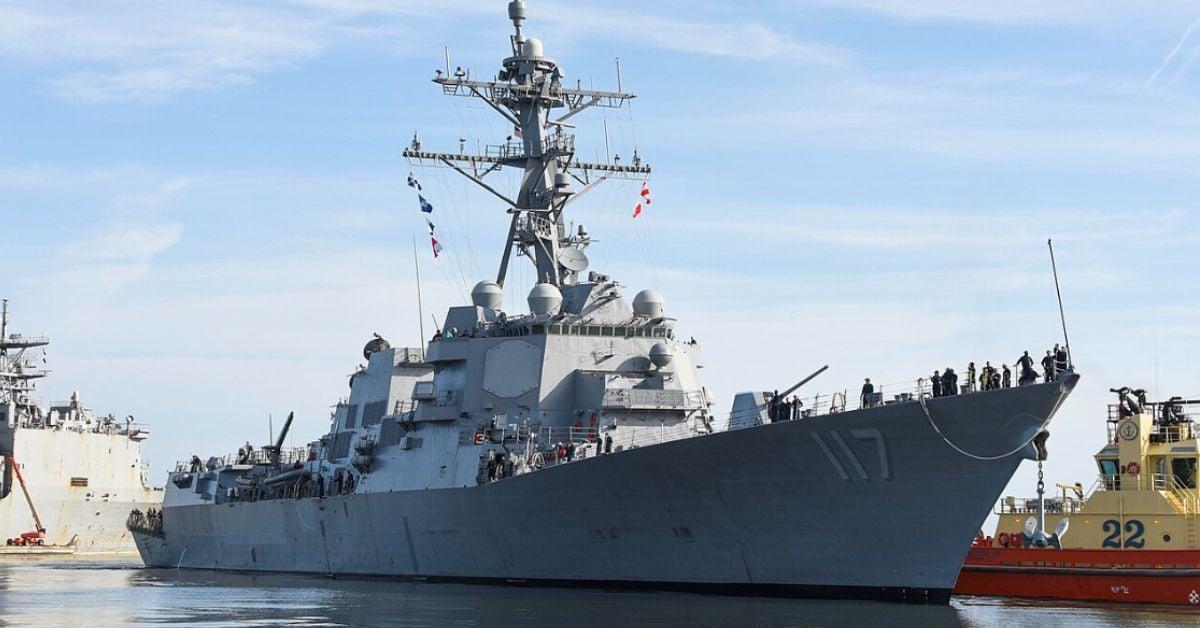
The integration of Finnish and Swedish naval forces with a U.S. destroyer in the Gulf of Bothnia is not a routine exercise; it is a calibrated response to a measurable shift in the regional security environment. The trilateral drills aboard the USS Paul Ignatius, which involved live-fire engagements against uncrewed surface targets, demonstrate that allied interoperability has moved from theoretical planning to empirical validation.
What matters here is not the hardware but the coordination. Finnish and Swedish crews boarded the destroyer to share local knowledge, allowing the ship to navigate shallow channels that a U.S. command would otherwise find opaque. This is the practical value of NATO expansion: not simply adding hulls to a fleet, but integrating the kind of hydrographic and operational expertise that cannot be replicated from a headquarters in Naples. The exercise's focus on protecting undersea cables and vital infrastructure, as stated by Finnish Navy Commander Tuomas Tiilikainen, reflects a shared understanding that the Baltic's critical vulnerabilities lie beneath the surface, not just on it. This aligns with our earlier analysis of how Black Sea stability is a measurable climate and food security indicator, where disruption to maritime chokepoints produces cascading effects far beyond the immediate theater.
The broader context is one of thinning naval presence elsewhere. As we noted when HMS Dragon's return narrows Royal Navy presence in the Gulf to one vessel, the Atlantic alliance cannot assume that capacity in one region offsets commitments in another. The Gulf of Bothnia exercise is an attempt to build redundancy where it is most needed, but it also exposes a simple arithmetic problem: every destroyer assigned to the Baltic is a destroyer not available elsewhere. The recent dry-dock maintenance of a forward-deployed destroyer in Spain, as reported in our coverage of the Forward-deployed destroyer marks first Spanish dry dock for maintenance, underscores the logistical strain on the fleet.
The stated goal, according to U.S. Sixth Fleet Commander JT Anderson, is combat readiness against military aggression anywhere in the region. That is a broad mandate, and the exercise's success in firing at unmanned targets suggests the allies can coordinate air and naval assets against a simulated common enemy. But the real test will come in sustained operations, not a single transit. Sweden's Supreme Commander Michael Claesson's emphasis on newly launched air-defense frigates and regional integration is encouraging, yet the question remains whether these assets can be maintained at readiness levels that match their rhetoric.
The concrete point to watch is the undersea cable protection plan. Tiilikainen said the exercise helped develop a plan of action, but a plan is only as good as its execution timeline. If the three navies can translate this exercise into a standing protocol for infrastructure defense, the Gulf of Bothnia will become a model for allied maritime cooperation. If it remains a one-off drill, the vulnerability persists. The difference will be visible in the next reported incident, not in the next press release.