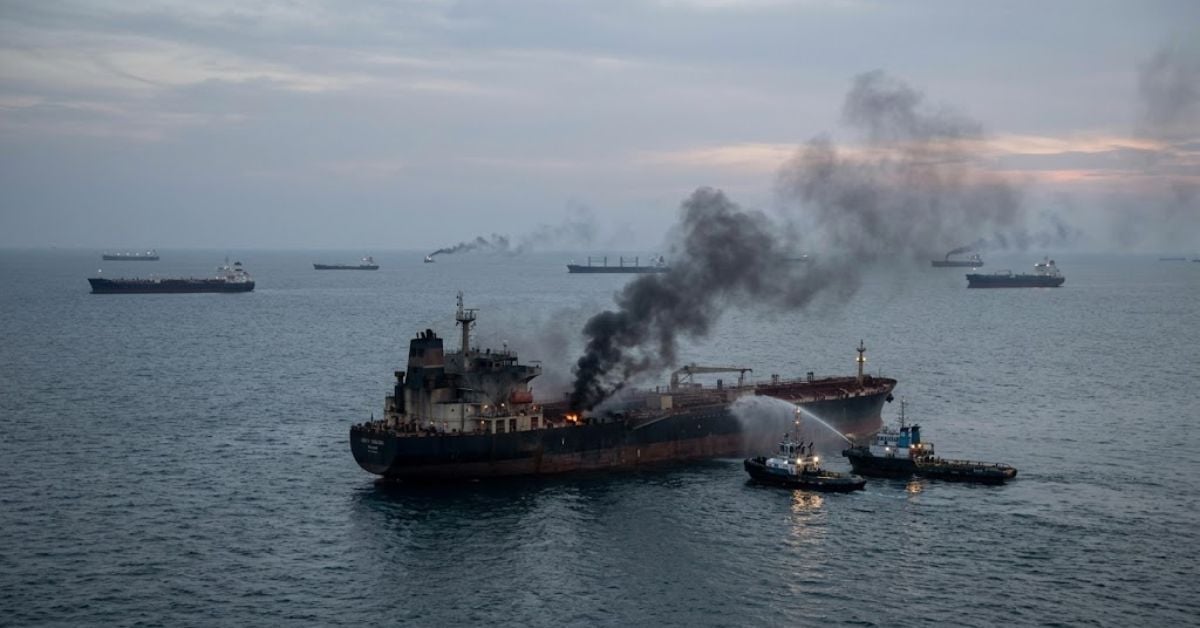
The Strait of Hormuz is no longer a maritime chokepoint in the abstract sense; it is a live battlefield, and the consequences for global trade are now measurable and immediate. The reported strikes on seven oil tankers, whether by Iranian forces or naval mines, represent a dangerous escalation that moves the conflict from a blockade into active interdiction of commercial shipping. For our readers, the key takeaway is this: the cost of moving oil through the strait has already increased, and that cost will compound with every unverified claim and each new naval deployment.
This incident must be viewed through the lens of systemic fragility. We have previously documented how other critical passages, such as the Panama Canal sets 2022 cargo record despite drought and global chokepoints, have faced operational pressures from environmental factors. Now we see a man-made disruption of far greater magnitude. The canal's record cargo year was achieved despite water shortages; the Strait of Hormuz carries roughly 20% of the world's oil, and its integrity is being deliberately challenged. The parallels are instructive: both chokepoints demonstrate that global shipping is only as resilient as its narrowest point. Meanwhile, the reopening of a historic route in Iraq, as covered in A historic shipping route reopens, restoring Iraq's role in regional trade, offers a counterpoint. That development showed how regional trade can be rebuilt through cooperation. The current crisis shows how quickly it can be dismantled through conflict.
Our position is clear: the lack of independent confirmation for Iran's claims is as significant as the claims themselves. The UKMTO's observation that shipping companies are becoming less willing to report attacks is an empirical red flag. When the reporting chain breaks, the data chain breaks. This is not merely a journalistic problem; it is a risk-management problem for every entity that depends on predictable ocean transit. President Trump's counter-narrative, that Iran is fabricating attacks to manipulate oil prices, introduces another layer of uncertainty. Whether the tankers were struck or not, the strategic effect is the same: insurers are recalibrating premiums, operators are recalculating routes, and the United States is sending a third aircraft carrier to the region. That is the largest concentration of US warships in decades, a fact that speaks louder than any disputed casualty count.
What should readers watch? The specific condition Iran has placed on reopening the strait within one week: an end to the US blockade of Iranian ports. This is not a new demand; it mirrors the agreement that collapsed in June. The practical question is whether the United States can accede to that condition without appearing to reward the use of force against civilian tankers. The answer will determine whether this crisis becomes a short-term spike in insurance costs or a long-term restructuring of how energy moves through the Persian Gulf. For now, the only certainty is that the data is contested, the stakes are rising, and the ocean is neither silent nor neutral.