research
69 stories filed under research on World Data Ocean. The newest of them: “Charting Your Path from Marine Biology to Ocean-Derived Medicine”, “From theory to thesis bridging Vallis's derivations and real ocean data”, and “Navigating Oceanography Careers: Fieldwork, Demand, and Growth by Branch”. The uncertainty you feel is a sign you're taking this seriously, and that's a good thing. Deriving every formula in Vallis isn't necessary; understanding drives protection. A Global Hub for Ocean Intelligence 4 World Data Ocean is a centralized digital platform where researchers, scientists, and ocean enthusiasts converge to… The list below is every research story on World Data Ocean, newest first.
Charting Your Path from Marine Biology to Ocean-Derived Medicine
The uncertainty you feel is a sign you're taking this seriously, and that's a good thing. Marine pharmacology demands a foundation that is both broad and deep. A bachelor's in biochemistry provides the molecular toolkit for drug development, while microbiology offers critical insight into the organisms themselves. Neither is a wrong path; both are validated routes into an integrated field. For deeper context on ocean discovery, see our related piece, *"Precision identification of 5mm bivalve and tufted polychaete in southern China mudflats."*
From theory to thesis bridging Vallis's derivations and real ocean data
Deriving every formula in Vallis isn't necessary; understanding drives protection. Focus on the core physical principles, scale analysis and the governing equations, then test them against real-time, calibrated data. Pair the text with a practical guide like *Data Analysis Methods in Physical Oceanography* to bridge theory and your research. For more on translating academic theory into applied skills, see our related guide "Translating Fishery Experience into Validated Ocean Research Skills."
Navigating Oceanography Careers: Fieldwork, Demand, and Growth by Branch
Choosing a branch of oceanography is a decision best guided by validated, real-world demand rather than passion alone. Among the three, physical oceanography currently shows the strongest measured growth, driven by its integrated data ecosystems and climate indicators essential for both academic research and industry. Biological oceanography offers significant fieldwork. Chemical leans more toward calibrated lab analysis. For field work, physical and biological branches demand more time at sea. Our article, "Pathways to Ocean Science: Untold Stories of Unconventional Beginnings," explores similar career navigation.
Charting a Career in Ocean Science Beyond Academia and Research
Ocean science careers extend far beyond the lab or lecture hall, and that is a fact worth validating. A BSc opens doors to roles in environmental consulting, policy analysis, and the private sector, fields where empirical data on climate indicators drives real-world decisions. Skills in data calibration, integrated monitoring, and peer-reviewed analysis are measurable assets. For deeper context on how climate data informs global action, see our piece on China's electric vehicle acceleration for measurable climate indicators.

Squid hair cells offer a validated model for human hearing research
A new study in *Current Biology* reveals that squid hair cells provide a validated, empirical model for human hearing research. This is ocean intelligence applied to biomedical discovery. By studying a cephalopod's mechanosensory systems, researchers gain calibrated insights into our own auditory mechanisms. Understanding drives protection. For another example of marine biology informing broader science, see our related coverage of how the tassled scorpionfish reveals the value of integrated observation in marine camouflage.
Acidification Alters Phytoplankton Chemistry, Shifting Ocean Carbon Cycles
Rising ocean acidity is quietly rewriting the rules of phytoplankton chemistry, with measurable shifts in cellular composition that ripple through global carbon cycles. This isn't a distant forecast, it is empirical change, now documented in peer-reviewed findings. Understanding these biological recalibrations is essential for calibrating climate models. For a deeper look at how Earth's systems respond to change, see our coverage of "A vanished billion-year cliff may explain a gap in Earth's geologic record."
Acoustic restoration: attracting marine life back to damaged reefs with sound
The segment on *How to Live on Earth* introduced a concept I had not encountered: using recorded sounds from healthy reefs, what the film calls "coral jazz", to draw marine life back to damaged ecosystems. It is a compelling blend of ecology and acoustics. This kind of empirical, restorative research aligns with our coverage of ocean intelligence, including work on translating fishery experience into validated research skills.

Caregiving stress data demands reexamination not dismissal of real support needs
A decades-old claim linking caregiving stress to risk of death has persisted, constraining research into its benefits with an incomplete frame. The data demands reexamination, not dismissal of real support needs. Caregivers still require resources, validated, measurable support systems that reflect actual stressors. A decade of empirical data illuminates the ocean's hidden reef ecosystems, reminding us that revisiting established assumptions often yields clearer understanding. For caregivers, that clarity is overdue.
A decade of empirical data illuminates the ocean's hidden reef ecosystems
A decade of empirical data now reveals the hidden architecture of our ocean's reef ecosystems, measured, validated, and mapped in real-time. These are not speculative models; they are calibrated observations from orbit to ocean floor. Understanding drives protection. For deeper context on the systemic challenges facing marine environments, see our related coverage on validated data gaps in Europe's marine policy demanding integrated solutions. The science is clear; the call to act is measurable.
Deep-sea survey confirms 200,000 leaking barrels of Cold War radioactive waste
Two hundred thousand barrels of Cold War-era radioactive waste are now visibly leaking on the Atlantic seafloor. A new deep-sea survey confirms what many feared: this historical dumping was never truly contained. The measured data are sobering, but they also empower action. This is not an alarm, it is empirical evidence demanding a calibrated, global response. Understanding drives protection. For more on how we track ocean pollutants, see our coverage of "Seafloor sediment confirmed as a vast plastic pollution reservoir."
Calibrating ocean intelligence to navigate a warming world
Calibrating ocean intelligence requires more than collecting data, it demands integration. Our warming world is outpacing fragmented observation systems. Validated, real-time measurements from orbit to ocean floor must become an integrated data ecosystem, not isolated snapshots. This is measurable, empirical work. Understanding drives protection. For deeper coverage, explore our related piece, "From orbit to ocean floor: integrated data reshapes our view of the sea," which examines how this unified approach is transforming marine science.
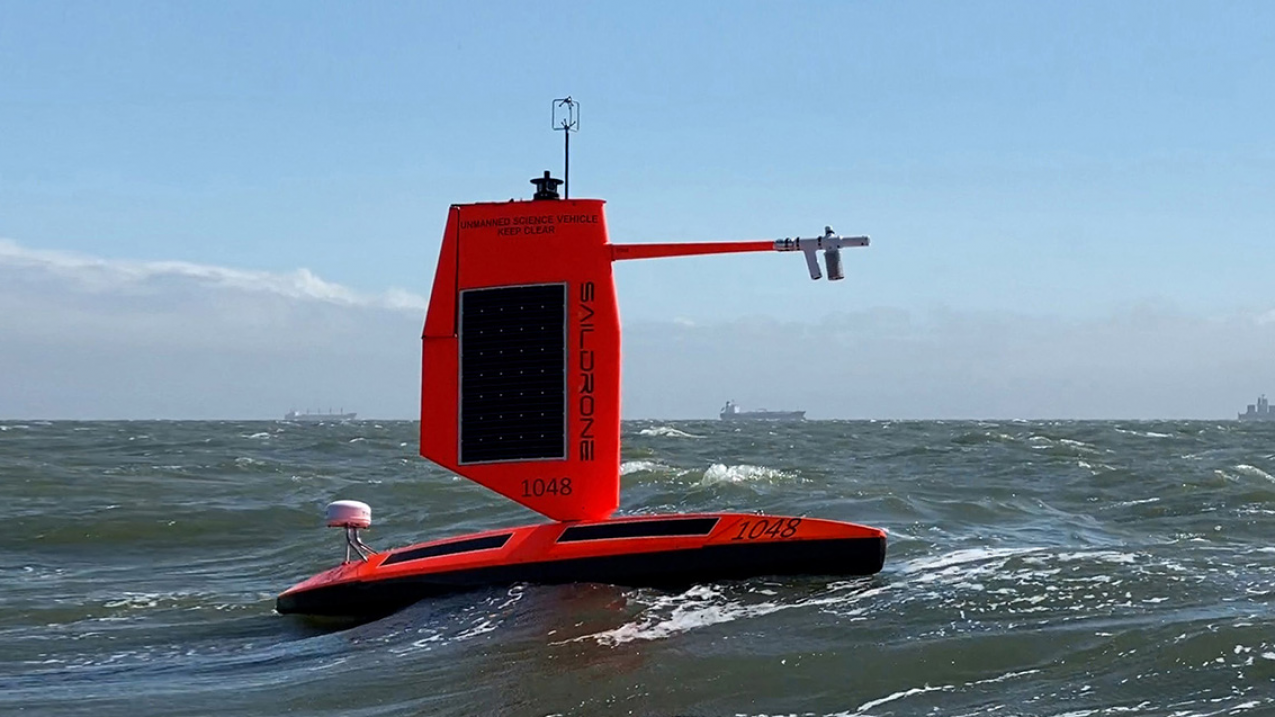
Saildrone delivers first-ever hurricane interior video from the ocean surface
For the first time, a Saildrone has captured video from inside a hurricane at the ocean surface, offering a new window into the forces that drive these storms. This is not abstract data; it is direct, empirical observation from a place we have never seen. Understanding drives protection, and this ocean intelligence is a measurable leap forward. For deeper context on the conditions fueling such storms, see our coverage of August's record-breaking ocean heat readings.

Cruise fleet expands its role as a calibrated platform for ocean intelligence
Royal Caribbean Group's cruise fleet is now a calibrated platform for ocean intelligence, extending its collaboration to capture critical conservation data onboard its ships. This is empirical science at scale, measurable, real-time data collected where the ocean meets industry. Understanding drives protection, and this partnership delivers validated climate indicators from orbit to ocean floor. For deeper context, our coverage of the newly appointed global experts calibrating the Ocean Decade's path for integrated data stewardship complements this story well.
A thousand rivers drive eighty percent of ocean plastic emissions
A thousand rivers drive eighty percent of ocean plastic emissions, a finding that demands a calibrated, not alarmist, response. This is not about panic; it is about measurable action. Understanding the source of the problem allows us to target interventions where they matter most. For deeper context on how disclosure transforms data into accountability, see our related coverage, "Closing the data gap: disclosure as a calibrated step toward ocean action." Precision, not hype, guides real protection.
The Global Ocean Speaks Through a Shared, Measurable Data Ecosystem
The World Ocean Database 2023 transforms how we understand our planet's largest life-support system by integrating validated, peer-reviewed data from across the global community. It is not merely a repository, it is a shared, measurable ecosystem of ocean intelligence. This foundational resource empowers researchers and policymakers alike to track real-time climate indicators with precision. For deeper context on one critical signal, see our related coverage of "Measuring the Ocean's Warming Pulse at 2,000 Meters." Understanding drives protection.
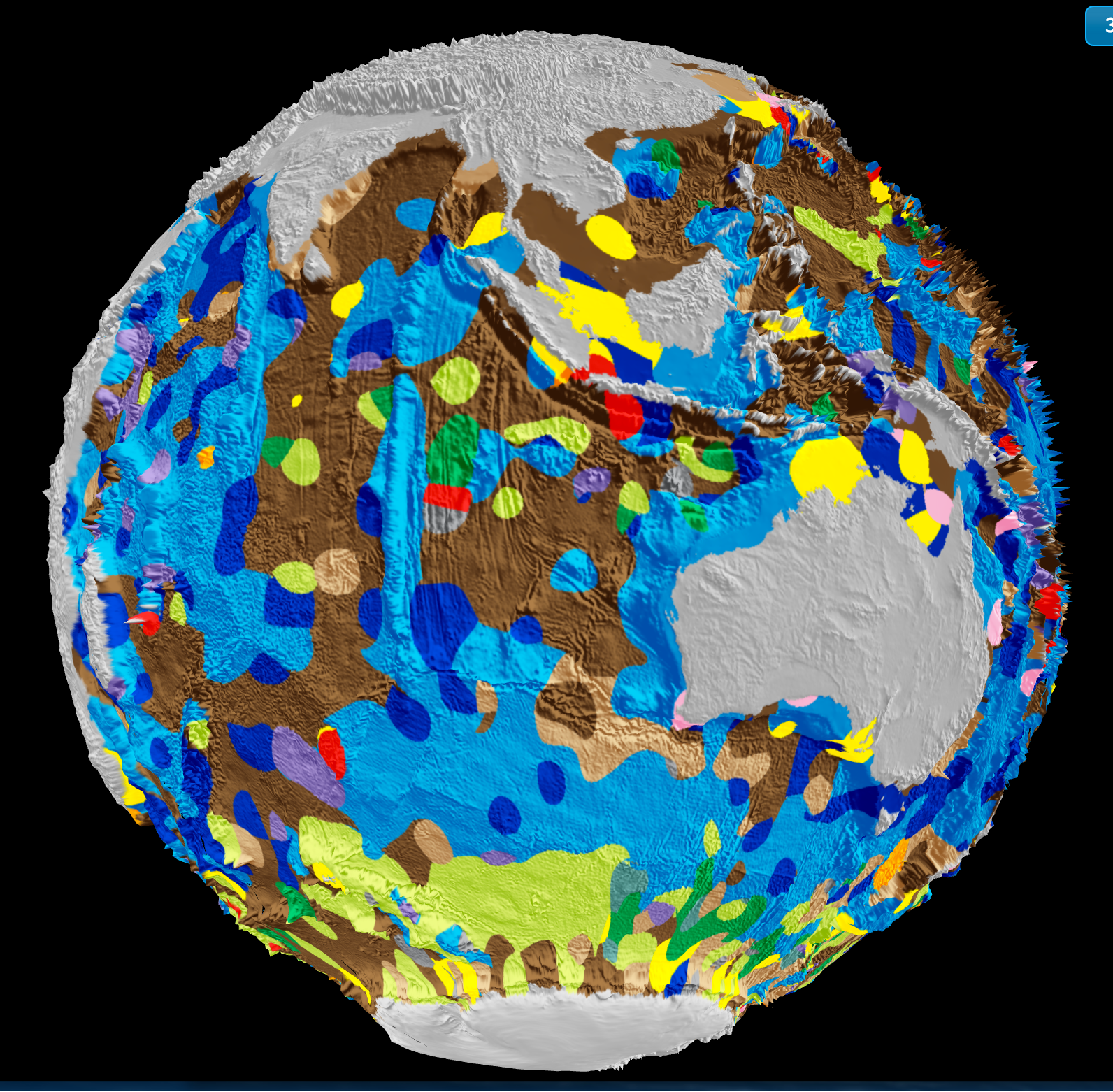
From orbit to ocean floor: big data maps the seafloor with precision
A University of Sydney-led team has integrated satellite altimetry with shipboard sonar data to produce a calibrated, high-resolution map of the global seafloor. This isn't just a sharper image, it's a validated baseline for measuring change. Understanding drives protection. When we can track sediment transport, tectonic activity, and benthic habitat shifts with empirical precision, ocean stewardship becomes measurable. For deeper context on how ocean intelligence reveals system-wide change, see our coverage of the century-long current slowdown.
Ocean Color Shift Reveals Measurable Climate Indicators Worldwide
A measurable shift in ocean color, detected across decades of satellite data, now offers a new, empirical window into global climate change. These are not subtle variations; they are validated indicators of biological and chemical transformation at planetary scale. Understanding drives protection. For deeper context, our coverage of "Decades of Atlantic circulation data reveal measurable climate indicators" complements this finding, reinforcing how integrated ocean intelligence reveals the pulse of a changing Earth.
Calibrating a new global standard for dissolved organic phosphorus
Measuring dissolved organic phosphorus across the global ocean has long been a fragmented effort. The DOPv2021 database changes that. By integrating decades of peer-reviewed data into a single, calibrated standard, this work gives researchers a validated baseline for tracking nutrient cycles and their influence on climate indicators. Understanding drives protection. For a related view of ocean intelligence in action, see how Saildrone captured first-ever video from inside a hurricane, another example of real-time observation expanding what we know.
A validated global atlas of ocean thermohaline structure from WOA18
A validated global atlas of ocean thermohaline structure from WOA18 now offers the scientific community an empirical, peer-reviewed baseline for understanding ocean circulation and climate indicators. This integrated data ecosystem transforms decades of measurements into a measurable, calibrated resource. Understanding drives protection. For deeper context on how real-time ocean intelligence is gathered, see our coverage of Royal Caribbean Group's expanded role as a calibrated platform for ocean data.
JWST data reveals an unexpected ice world within the habitable zone
An ice world where we least expected it. JWST data has revealed a frozen planet orbiting within the habitable zone, a finding that recalibrates our understanding of where life-sustaining conditions can exist. This is empirical observation challenging assumption. It reminds us that ocean intelligence extends beyond our own blue planet. For complementary insights into Earth's own dynamic systems, explore our coverage of the validated global atlas of ocean thermohaline structure. Understanding drives protection, whether in orbit or at depth.

Refining Global Ocean Intelligence with New Empirical Climatologies
New empirical climatologies have been added to the World Ocean Atlas, refining our understanding of ocean state with validated, measurable data. This update strengthens the integrated data ecosystem that underpins global ocean intelligence. Those tracking marine debris will find a natural companion in our recent mapping of microplastic drift from surface to seafloor. Understanding drives protection, and these calibrated baselines give us the precision we need to act.
Citizen Science Meets Machine Learning: Inside MBARI's Fathomverse
Understanding drives protection. MBARI's Fathomverse turns ocean exploration into a shared mission, letting anyone classify marine life from rover-captured imagery. The AI doesn't replace researchers; it accelerates their work, flagging species patterns that would take humans months to catalog. Your clicks calibrate algorithms, not displace jobs, they refine models that already guide conservation. It's measurable, peer-reviewed progress, not a threat. For those questioning the ethics, this is transparent, collaborative science.

Calibrated ocean intelligence, now within reach through integrated data discovery
Calibrated ocean intelligence is no longer a distant ambition; it is a practical tool for researchers and policymakers alike. NOAA's National Centers for Environmental Information brings that capability into focus, offering integrated data discovery that turns raw observations into actionable insight. This is the kind of clarity that strengthens our shared stewardship of the seas. For those tracking how marine environments shift, from deep-sea mapping to unexpected benthic finds, our coverage of the Port Phillip Bay debate adds a useful layer of context.
Exploring Plankton Science: Accessible Research for Curious Ocean Observers
A two-year fondness for plankton, sparked by picture books and a saved-for net, is exactly how meaningful ocean observation begins. This researcher's request for accessible depth, rather than just surface-level facts, reflects a genuine curiosity that we share. It is a reminder that scientific literacy grows through patient, specific questions. For those ready to move beyond identification guides, we recommend exploring related coverage on species distribution, such as the unexpected chiton discovery challenging current models, to see how amateur observations can align with empirical inquiry.