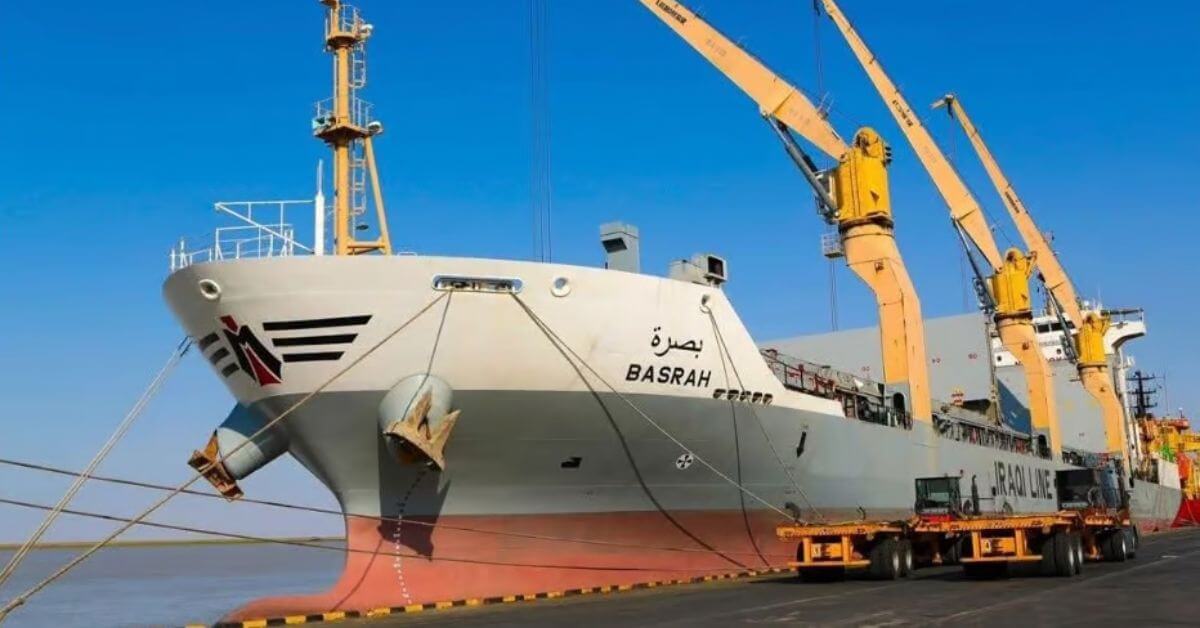
The reopening of Iraq's national shipping line after more than 50 years is a pragmatic move that deserves measured optimism, not hype. This is not a romantic revival of maritime heritage; it is a calculated response to a supply chain crisis. For our readers, researchers, policymakers, and logistics professionals, the real story lies in what the *Basrah*'s eight-day shuttle between Jebel Ali and Umm Qasr reveals about the region's fragile trade architecture.
The timing is telling. Iraq's Ministry of Transport launched this service amid the ongoing Strait of Hormuz crisis, which has already forced shipping lines to invent costly workarounds. As we reported in Projectile Strike on Tanker in Strait of Hormuz Endangers 21 Seafarers, the waterway remains a high-risk corridor. The *Basrah* must still transit that same strait. The vessel departed Jebel Ali on October 21, the same day the UK Maritime Trade Operations reported a projectile strike on a tanker near Al Faw. While the Iraqi government has not confirmed a link, the coincidence underscores a stubborn reality: this route does not bypass the chokepoint. It re-enters it. The Strait of Hormuz disruption strands thousands of seafarers amid mounting maritime threats is not an abstract headline, it is the daily operating environment for this vessel.
What makes this development empirically significant is the context of the alternatives. The data from the Jordan Shipping Association is stark: transit containers handled by Aqaba for Iraq surged 933% in the first seven months of 2026 compared to the same period in 2025. Maersk, CMA CGM, and Hapag-Lloyd have all built landbridge and multimodal routes that avoid the upper Gulf entirely. These are not temporary patches; they are structural reconfigurations of trade flows. Iraq's resumption of its own line is a bid to recapture cargo that has already been rerouted. The question is whether a single vessel, the *Basrah*, built in 2014, with a capacity of roughly 900 TEU, can pull traffic back through a waterway that many operators are actively avoiding. The vessel is registered in Jordan, and AIS data initially showed its destination as Kuwait, not Umm Qasr, suggesting operational coordination is still being calibrated.
Our take is clear: this is a test, not a triumph. The measurable metric to watch is not the first departure but the sustained frequency of the shuttle over the next six months. If the *Basrah* runs consistently without incident and attracts volume away from the Aqaba landbridge, it will validate the ministry's strategy. If it faces delays, security incidents, or low utilization, the alternative routes will harden into permanent fixtures. The reopening restores Iraq's role in theory; the empirical data from AIS tracking and port throughput figures will tell us whether it restores it in practice. That is the detail to watch.