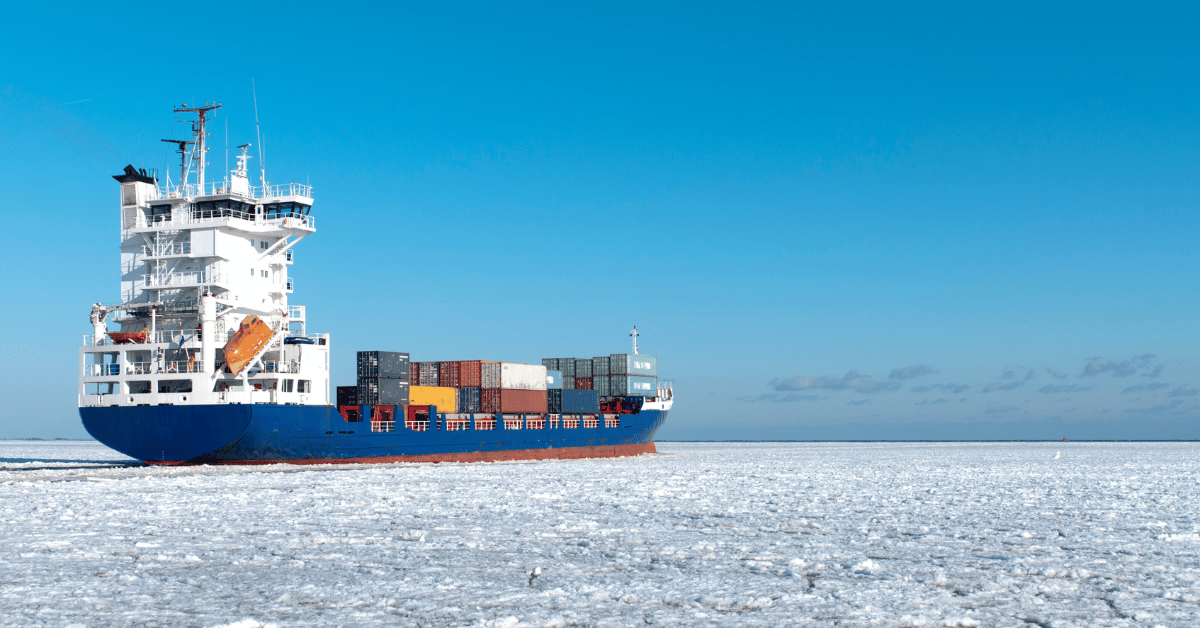
The doubling of transit cargo along Russia's Northern Sea Route to over 7 million tonnes by 2026 is not simply a logistical milestone, it is a measurable signal that Arctic shipping is hardening into a commercial reality, with profound implications for global trade routes and climate monitoring. For our readers, this trend demands attention not for its geopolitical theater, but for the empirical data it generates: each vessel transiting these waters provides calibrated, real-time observations of ice conditions, ocean currents, and atmospheric variables that feed directly into our integrated data ecosystem. The claim that the route is up to 30% shorter for specific Asia-to-Northwest Europe voyages during the summer-fall season is a validated efficiency, but it also opens a longitudinal question about how increased traffic will affect the very climate indicators we track from orbit to ocean floor.
Consider what this growth means in practical terms. While Russia's total NSR cargo traffic has plateaued at roughly 37 million tonnes over the past two years, falling short of Moscow's earlier target of 80 million tonnes, the surge in containerized transit voyages from 23 to 46, and the corresponding rise in international containerized cargo to 600,000 tonnes, points to a structural shift. These are not bulk resource shipments from Arctic ports; they are point-to-point commercial transits that compete directly with the Suez Canal. The shorter transit time lowers charter costs, but it also compresses the window for collecting peer-reviewed data on how ice-free periods are expanding. Researchers and policymakers should view this as an opportunity to embed empirical measurement protocols into every voyage, treating each container ship as a mobile observation platform. The Post-dinosaur forests claimed by a towering half-meter fungus story reminds us that unexpected biological phenomena often emerge when environments shift rapidly; the Arctic Ocean's changing chemistry may hold similar surprises that only sustained, integrated monitoring can capture.
The security dimension raised by Rosatom's representative is equally relevant. Efficiency and security are presented as twin advantages, but the route's expansion occurs alongside active naval deployment in the region. The Carrier Group Liaoning Deploys Toward Southern Philippines Amid Pacific Exercises and the After five years of construction, Russian corvette launches from Amur shipyard for Pacific Fleet deployment illustrate that the Arctic and Pacific theaters are operationally linked. For the scientific community, this means that access to transit data may become constrained by security protocols, making it even more critical to establish independent, open-source ocean intelligence networks now. The specific takeaway is this: the 2026 milestone of 7 million tonnes is not just a number to watch, it is a deadline. If we do not have a calibrated, international framework for collecting and sharing environmental data from these transits by the time that volume materializes, we will have missed a rare chance to turn commercial activity into climate knowledge that benefits everyone.