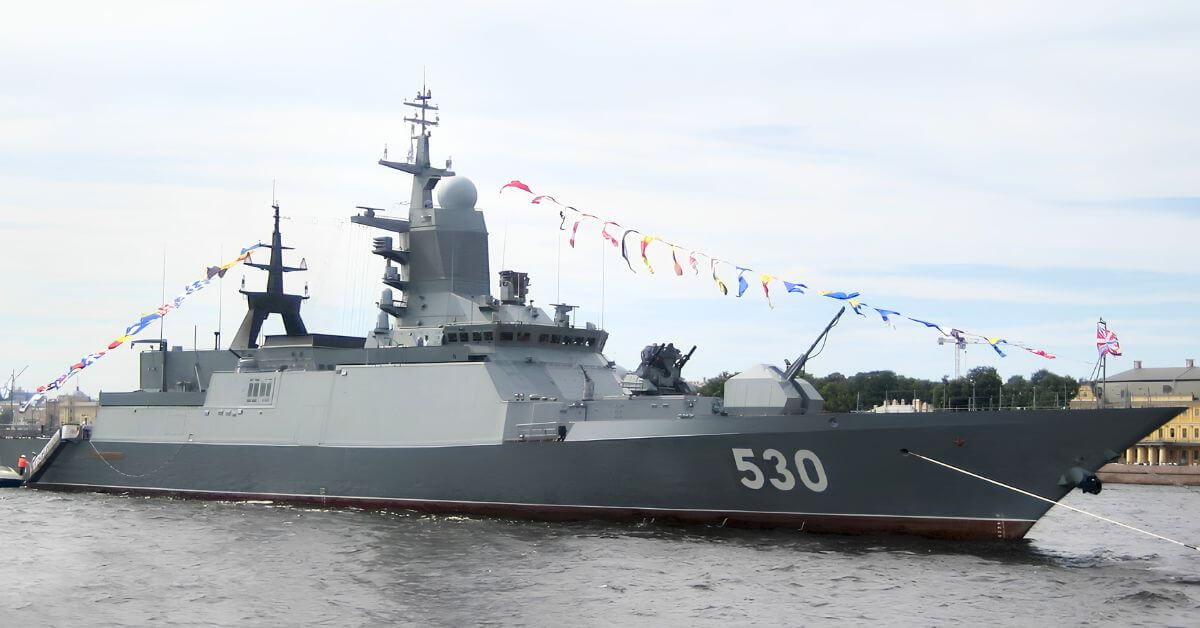
The launch of the *Grozny* corvette at the Amur Shipbuilding Plant represents a measured, but deliberate, expansion of Russia's naval footprint in the Pacific, and the real story is not the ceremony itself but the vulnerability these vessels now face. This is the ninth Project 20380 hull built overall, and the fifth from this yard, yet the class's recent combat record in the Baltic should give any observer pause. The *Boikiy*, a sister ship, was severely damaged in dry dock at Kronstadt in June 2026 by a Ukrainian drone strike, satellite images showing a significant portion of its superstructure consumed by fire. This is not an isolated event; the maritime threat environment has shifted, as detailed in our recent coverage of a Black Sea drone strike claims life, cargo vessel loss underscores maritime threat, where a Comoros-flagged cargo ship sank after an attack. The *Grozny* is being built for multi-role operations, patrolling, anti-ship, anti-submarine, and amphibious support, but its designers are now forced to retrofit countermeasures against a threat that was not the primary specification when the keel was laid in 2021.
The Pacific Fleet currently operates four of these corvettes, and the *Grozny* will bring the total to five once it completes outfitting, harbour trials, sea trials, and state testing. The crew has already begun training, and the vessel will be finished with the help of the shipyard team. The fleet commander expects the ship to join in the coming years, a timeline that leaves a significant window for both the completion of work and the evolution of the threat it will face. The class has already seen field modifications: the *Stoikiy*, a Baltic Fleet corvette, received 12.7 mm Kord and 7.62 mm PKM machine-gun mounts in late July to defend against drones. This is empirical evidence that the design's original electronic warfare and air-defence suite is being empirically validated as insufficient against low-cost, massed drone attacks. The *Grozny* will almost certainly require similar or more advanced modifications before it is truly combat-ready.
What this means for readers tracking global naval force structure is a concrete question of resource allocation. Russia is investing in hull numbers in the Pacific at a time when its Black Sea Fleet has taken losses and its Baltic Fleet has demonstrated a critical vulnerability. The Russian fuel shipment to US resumes under sanctioned diplomatic deal shows that maritime logistics remain a point of geopolitical leverage, and the *Grozny's* role in protecting such supply lines in the Pacific will be tested. The specific detail to watch is not the launch date, but the outcome of the *Boikiy* repair effort and whether the lessons from that fire are integrated into the *Grozny* before it is commissioned. If the *Grozny* enters service with the same baseline configuration as its damaged sister, the fleet will have gained a hull that is already obsolete in the one domain, uncrewed surface vessel defense, that has proven decisive in recent combat.