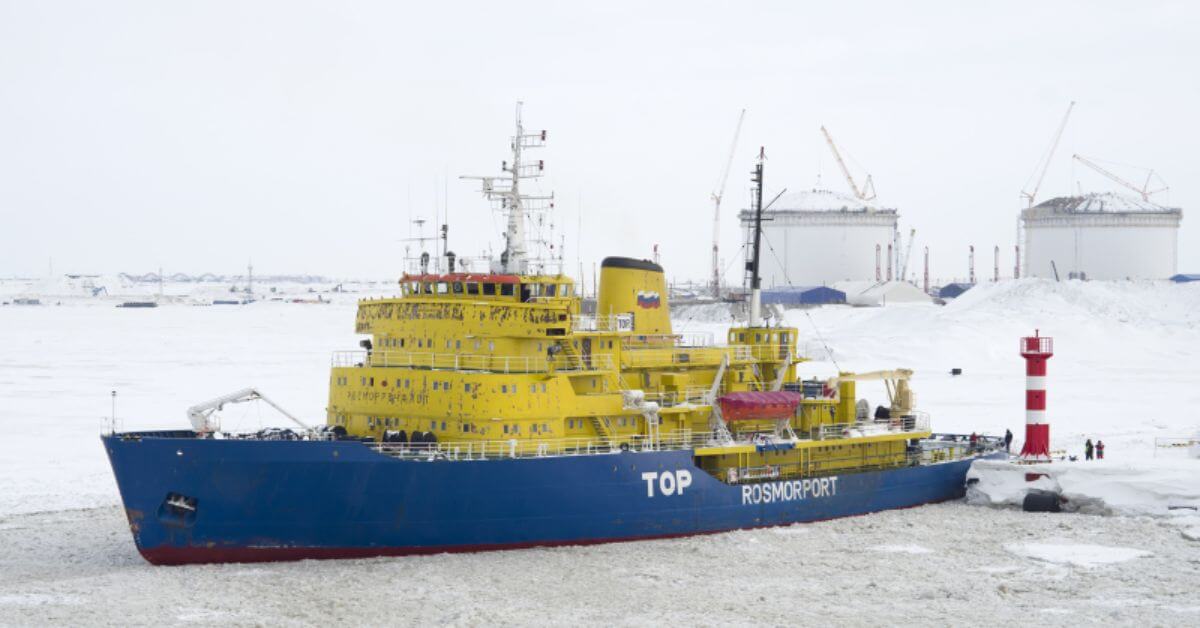
Russia Calibrates Export Revenue for Northern Sea Route Icebreaker Fleet
Russia is recalibrating its financial strategy to bolster Arctic infrastructure, announcing plans to collect over 200 billion roubles from exporters to fund the construction of two new icebreakers servicing the Northern…
·5 min read·Marine Insight
Image Credits: Wikipedia
Russia plans to collect more than 200 billion roubles ($2.35 billion) from exporters to help build two new icebreakers for the Northern Sea Route.
The plan is set out in a draft government decree published this week.
Under the proposal, 27 Russian companies would pay a new fee on cargo exported through Russian ports. The companies operate Russian-flagged vessels.
The fee would be 20.07 roubles ($0.2363) per metric tonne of cargo. The government expects it to raise more than 200 billion roubles over the next 10 years.
The money would be used to build the Leningrad and Stalingrad, the fifth and sixth icebreakers in Russia’s Project 22220 series. The two ships would be built without using money from the government budget.
The draft says the two ships are needed to keep cargo moving along the Northern Sea Route. Without them, cargo volumes on the route could fall.
This could include cargo from oil and gas projects run by Novatek and Rosneft.
The draft also sets out what could happen if the new fee is not introduced. It says customers could have to pay 52 million roubles ($612,124) a day to use Russian icebreakers.
That is more than nine times the level considered reasonable in the document.
The proposed fee would help raise money for the new ships and keep icebreaker costs from reaching that level.
The Northern Sea Route runs through the Arctic and connects Russia’s western ports with Asia.
The route can be used during summer and autumn. It can also cut shipping times by up to 10 days compared with the Suez Canal.
Russia wants to move more cargo through the route.
President Vladimir Putin has backed the project. He has said cargo traffic on the Northern Sea Route will double to 70 million metric tonnes a year by the end of this decade.
The new icebreakers are planned as part of the infrastructure needed to support that target.