Heat-trapping asteroid dust may have incinerated the dinosaurs within hours
Our take
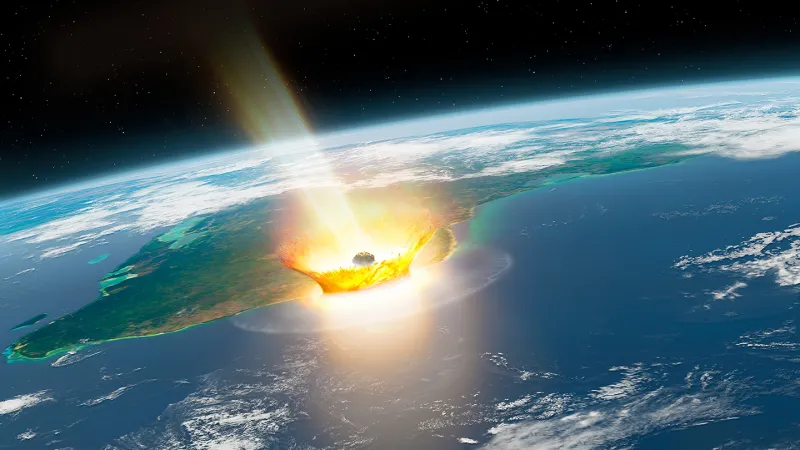
The recent findings suggesting that heat-trapping asteroid dust may have contributed to the rapid demise of the dinosaurs represent a significant refinement of our understanding of this pivotal moment in Earth’s history. While the initial impact of the Chicxulub asteroid is well-established as a catastrophic event, the precise mechanisms leading to the subsequent mass extinction have been a subject of ongoing scientific debate. This new research, focusing on the radiative properties of fine dust particles suspended in the atmosphere, proposes a compelling and potentially rapid heating mechanism that could have occurred within hours of the impact. It builds upon a foundation of empirical observation and modelling, offering a more nuanced picture than previous theories that primarily focused on prolonged darkness and subsequent cooling. This kind of integrated data ecosystem approach, combining impact modelling with atmospheric science, is crucial for validating these complex scenarios. Consider the challenges of accurately modelling such events, which are inherently chaotic and involve a multitude of interacting factors, as highlighted by our own work tracking Linear trends in salinity for the World Ocean, 1955–1998, which underscores the importance of longitudinal data sets for understanding Earth system dynamics.
The implications of this discovery extend beyond simply refining the timeline of the dinosaur extinction. It highlights the profound and often underestimated role of atmospheric processes in shaping planetary habitability. The rapid heating scenario suggests that even relatively small changes in atmospheric composition and particulate matter can have dramatic and immediate consequences for life on Earth. This is particularly relevant in the context of contemporary climate change, where aerosols and dust particles play a crucial role in regulating Earth’s radiative balance. The speed with which this event unfolded also presents an intriguing comparison to the slower, but equally impactful, environmental changes currently underway. Furthermore, the research underscores the interconnectedness of seemingly disparate fields, requiring collaboration between geologists, atmospheric scientists, and climate modelers to fully grasp the complexities of past and present planetary events. It’s a testament to the power of interdisciplinary research, much like the discovery of a new primate species in Congo’s forests, A new monkey species has been found deep in Congo’s forests, which similarly reveals the continued potential for new discoveries and the urgency of conservation efforts.
The methodological rigor employed in this study is notable. Researchers utilized sophisticated radiative transfer models, calibrated against laboratory experiments, to simulate the heating effects of the dust cloud. The emphasis on measurable, validated data strengthens the credibility of the findings, moving beyond speculative scenarios to a more data-driven explanation. This approach aligns with the principles of scientific authority that we strive to uphold at World Data Ocean. The discovery also provides a valuable case study for understanding the potential impacts of large-scale dust events on other planets, including Mars, where similar impact events are believed to have occurred. The ability to extrapolate these findings to other planetary bodies reinforces the broader significance of this research for advancing our understanding of planetary evolution. Even seemingly unrelated events, such as the recovery of a broken wind turbine blade from the North Sea, German Police Recover Broken 20 Meter Wind Turbine Blade Drifting In North Sea, can highlight the importance of meticulous data collection and analysis across diverse fields.
Looking ahead, it will be crucial to refine the models used in this study by incorporating more detailed information about the composition and size distribution of the dust particles. Future research should also investigate the potential for similar rapid heating events to have occurred during other periods of intense volcanism or asteroid bombardment in Earth’s history. The development of advanced remote sensing techniques, capable of directly measuring the radiative properties of atmospheric dust clouds, will also be essential for validating these models and improving our ability to predict the impacts of future dust events. A key question remains: how sensitive are different ecosystems to such rapid and extreme temperature fluctuations? Understanding this vulnerability will be critical for assessing the potential consequences of ongoing climate change and developing effective strategies for mitigating its impacts.
Read on the original site
Open the publisher's page for the full experience