paleontology
World Data Ocean keeps paleontology in one place: 10 stories so far. The section currently leads with “Whale ear bone fossil identified on Costa Rica beach by citizen science”, “Fossilized Poop Reveals Feathered Dinosaur Traits Linked to Survival”, and “Paleodictyon's True Origins: New Research Reinterprets Ancient Honeycomb Structures”. A lightweight whale ear bone fossil, identified by a citizen scientist using Google Lens on a Costa Rica beach, presents a compelling case for integrated data ecosystems in paleontology. A rare fossilized coprolite is reshaping how we read survival in the Cretaceous. A Global Hub for Ocean Intelligence 4 World Data Ocean is a centralized digital platform where researchers, scientists, and ocean enthusiasts converge to… The list below is every paleontology story on World Data Ocean, newest first.

Whale ear bone fossil identified on Costa Rica beach by citizen science
A lightweight whale ear bone fossil, identified by a citizen scientist using Google Lens on a Costa Rica beach, presents a compelling case for integrated data ecosystems in paleontology. The specimen's lack of smell and porous texture are empirically consistent with validated marine mammal remains. This discovery echoes themes explored in our related coverage, "Squid hair cells offer a validated model for human hearing research," where biological structures yield measurable, peer-reviewed insights. Such finds remind us that ocean intelligence begins with observation.

Fossilized Poop Reveals Feathered Dinosaur Traits Linked to Survival
A rare fossilized coprolite is reshaping how we read survival in the Cretaceous. The specimen hints that feather differences among early birds were not just aesthetic but functional, tied directly to which lineages endured the asteroid impact. It is a quiet but compelling clue, one that turns a familiar extinction narrative toward smaller, more specific biological drivers. For broader context on ancient catastrophes, our coverage of the *Ancient Impact Crater, 390 Million Years Old, Identified in Quebec* offers a deeper look at Earth's violent history.

Paleodictyon's True Origins: New Research Reinterprets Ancient Honeycomb Structures
The honeycomb patterns of Paleodictyon have puzzled scientists for centuries, even capturing Leonardo da Vinci's imagination. New research now challenges the long-held assumption that these ancient structures were built by soft-bodied creatures. This reinterpretation asks us to look again at what we thought we knew, and it is a reminder that empirical evidence can overturn even the most elegant hypotheses. Understanding drives protection, and this finding sharpens our view of ancient ocean life.
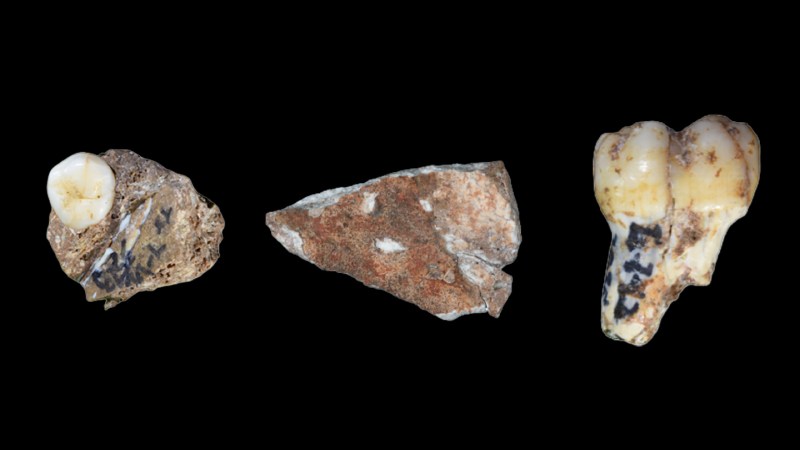
Denisovan Life Unveiled: Fossil Discoveries Offer New Insights
A fragment of tooth, a scatter of bone, and stone tools from a cave in China now sharpen our view of Denisovan life. This is empirical evidence, not speculation. These fossils, alongside animal remains, offer measurable clues about how this enigmatic species lived. Understanding drives protection. For deeper context on how ancient and modern systems connect, see our related coverage on integrated subsea infrastructure shifting Indian Ocean connectivity.

Ancient Insect Fossil Illuminates Evolution of Six-Legged Forms
A many-legged oddball from deep time is helping close a persistent gap in the fossil record, offering a clearer view of how six-legged forms emerged. The find is a reminder that evolution often experiments before it settles on a winning design. Understanding these ancient transitions sharpens our grasp of the planet's biological history. For more on how prehistoric traits shaped survival, see our related piece on fossilized feces revealing feathered dinosaur adaptations.

Coastal Discoveries: Identifying Shark Teeth from Tybee Island and Hilton Head
Identifying shark teeth from Tybee Island and Hilton Head starts with reading the sediment as much as the shape. The user's find from Fish Haul Beach and the Tybee sites shows how each beach delivers different clues, and that larger tooth likely holds a deeper story. We'd point to comparative jaw structure and serration patterns, though without a scale, species ID stays provisional.
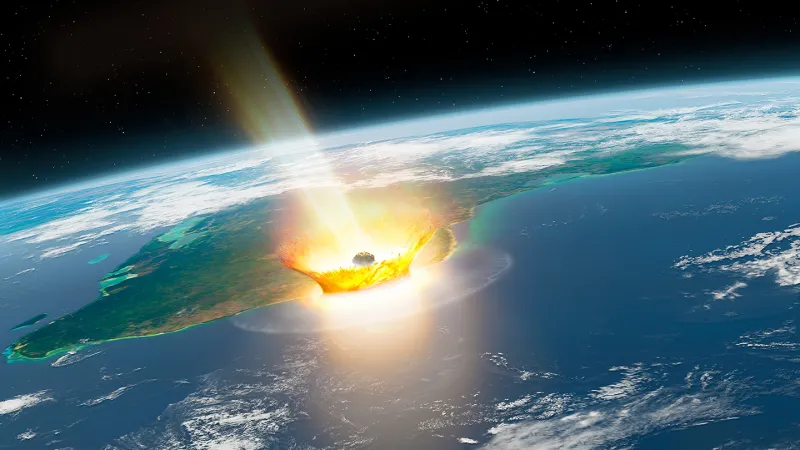
Rapid Atmospheric Heating: Asteroid Dust’s Role in Dinosaur Extinction
Within minutes of impact, debris began heating Earth's atmosphere, and fine dust trapped that heat. The result was a rapid, lethal spike in global temperatures. This mechanism, not the blast alone, may have killed the dinosaurs quickly. It is a stark reminder that extinction can arrive with terrifying speed. For a broader view of how Earth's systems respond to sudden change, see our coverage of the Cascadia Subduction Zone's fragmented tectonic process.
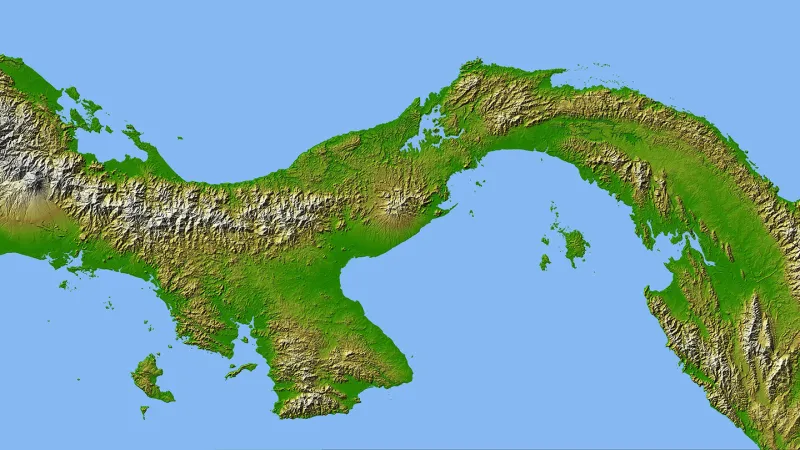
Mexico's Climate: A Pathway for Ancient Mammal Migration
The Isthmus of Panama is often framed as a barrier, but new findings suggest Mexico's climate may have turned it into a corridor for ancient mammals moving north to south. That distinction matters. It reframes a migration story we thought we understood, grounding it in measurable, empirical conditions rather than simple geography. For researchers tracking how species respond to shifting climates, this is a useful calibration of past patterns.

Deeper Insights: Carbonate Production in the Sicilian Channel
The Mediterranean's mesophotic zone remains a scientific gap, but new work from the Sicilian Channel is closing it. Analysis of seafloor samples from the R/V Meteor M191 expedition reveals a clear split: coralline algae thrive on Terrible Bank's shallow, irregular summit, while Nameless Bank's deeper, smoother surface hosts only dead crusts. Aphotic depths shift to cold-water corals and oysters. Topography and hydrodynamics drive this distribution, and the slow accumulation rates, paired with abandoned fishing gear, highlight how fragile these ecosystems are.
Ocean Heat and Oxygen Loss Linked to Ancient Marine Extinctions
Ancient marine extinctions carry a warning that reaches across millions of years. Ocean heat and oxygen loss, the same forces stressing today's seas, align with past die-offs in the fossil record. The study, published in PNAS, offers empirical grounding for what climate indicators already suggest. We treat this as more than a historical footnote, it is a calibrated measure of risk. For deeper context, our related piece on Cascadia's fragmented subduction zone shows how geological processes compound biological vulnerability.