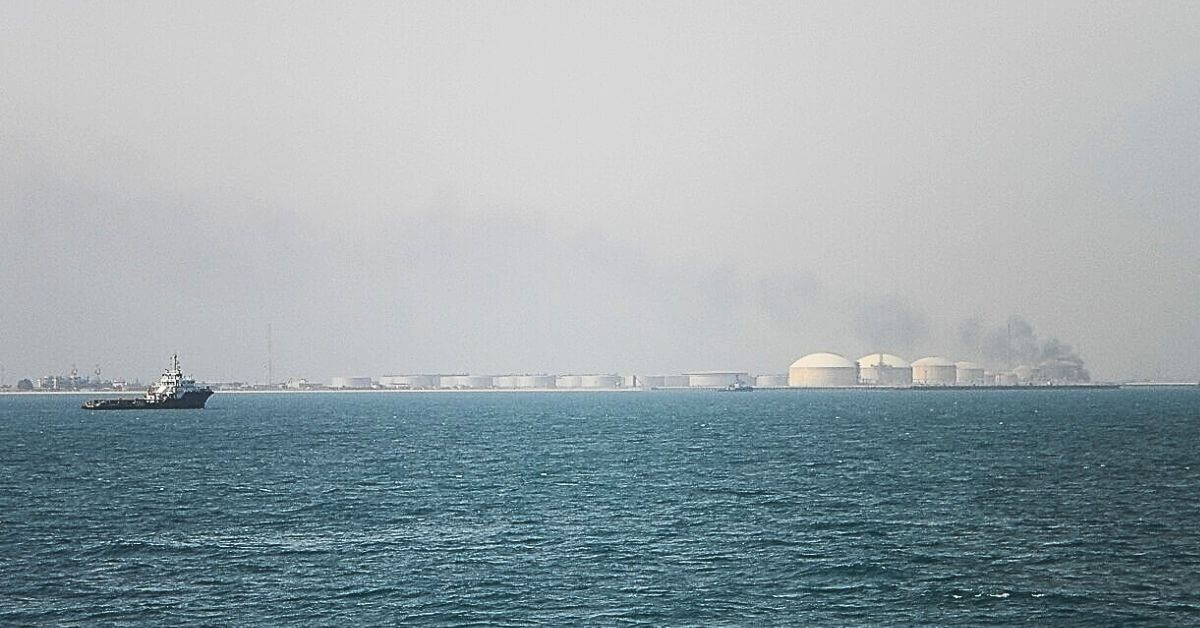
A single ballistic missile claim against Ras Tanura, the nerve center of Saudi oil exports, should unsettle every participant in global energy markets, not because the attack was confirmed, but because the pattern is now empirically validated. The Houthi group stated it struck the 550,000 barrel-per-day refinery complex on the Gulf coast, and while Saudi authorities have not yet confirmed the strike, the very fact that such a claim is credible reflects a measurable escalation in risk to the world's most concentrated energy infrastructure. For our readers tracking the intersection of ocean intelligence and geopolitical stability, this is not a distant headline; it is a real-time climate indicator for supply chains. The Strait of Hormuz has long been the focal point of maritime security discussions, and our recent coverage of CENTCOM Command Confirms 1.5 Billion Barrels Moved Through Hormuz underscored the sheer volume that transits that chokepoint. But Ras Tanura sits west of that strait, and Yanbu, Saudi Arabia's other primary export hub, sits on the Red Sea. When both ports have now been targeted, the integrated data ecosystem of global oil flows faces a dual-point vulnerability.
The Houthis reported striking not only Ras Tanura but also military facilities near the Bab el-Mandeb Strait, the southern gateway to the Red Sea. This is the same waterway that connects to the Gulf of Aden, and it is the route through which Yanbu-bound tankers must pass. The Saudi-led coalition reported intercepting two ballistic missiles toward Riyadh, four drones, and three additional missiles on Tuesday alone. These are not isolated incidents; the Houthis have intensified attacks since July, with October seeing a measurable uptick in missile and drone launches targeting civilian airports, oil facilities, and military sites. The collapse of the 2022 UN-brokered truce has removed whatever calibrated buffer existed, and the Saudi-backed Yemeni government forces' recent push near the Bab el-Mandeb Strait suggests a renewed ground contest for control of that coastline. For anyone relying on empirical data to assess energy security, the signal is clear: the Red Sea route is no longer a reliable alternative to the Gulf. The Fire Reported on Unidentified Vessel Near Al-Faw Port, Crew Status Unknown incident, while separate, fits into the same pattern of maritime infrastructure under pressure across the region.
What this means in practical terms is that the margin for error in global oil supply chains has narrowed measurably. Saudi Arabia ships nearly all its crude through Ras Tanura and Yanbu; both are now confirmed targets. A successful strike on either terminal would not be a temporary disruption, it would be a longitudinal shock to markets that have already priced in tension but not direct infrastructure damage. The reported strike on Ras Tanura, even if contained, validates the Houthi capability to threaten the kingdom's core export capacity. Egypt's parliament has authorized military support for Saudi Arabia if requested, and discussions in Tehran involving Saudi, Turkish, and Pakistani officials indicate a recognition that the conflict is no longer contained to Yemen. Our readers should watch for one specific detail in the coming weeks: whether Saudi authorities officially confirm the Ras Tanura fire, and if they do, what the measured response reveals about their assessment of the Houthi threat to both Gulf and Red Sea infrastructure. That confirmation, or continued silence, will be the most calibrated indicator of whether the world's largest oil exporter believes its primary ports remain secure.