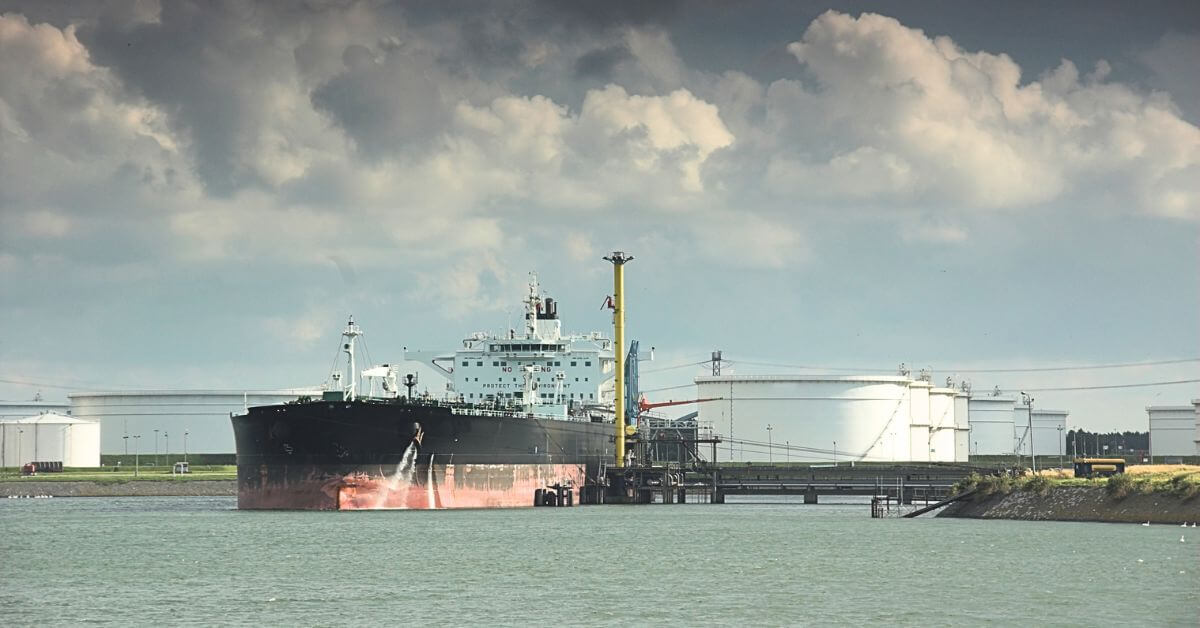
The Strait of Hormuz is no longer a theoretical risk; it is a live disruption actively redrawing the map of global crude flows. The surge in loadings at Yanbu to roughly 2 million barrels per day is a measurable, real-time response to a corridor under pressure, and it signals a durable shift rather than a temporary workaround. This is not a minor reroute, it is a structural recalibration of how and where the world moves its oil.
For readers tracking maritime security and energy logistics, the connection to recent events is immediate. The Vessel Struck by Unknown Projectile in Strait of Hormuz, Fire Reported and the tragic Five seafarers killed as pirates open fire on hijacked tanker during rescue are not isolated headlines; they are the operational context that makes the Yanbu ramp-up both necessary and fragile. When a chokepoint becomes a hazard zone, alternative ports become strategic assets. Yanbu's capacity to absorb 2 million bpd of crude loadings is a validated indicator of infrastructure resilience, but it also concentrates risk. A single point of failure in the Red Sea now carries outsized consequences for global supply chains.
Our opinion is straightforward: this is a story about adaptation under duress, not about solving the underlying vulnerability. The integrated data ecosystem we rely on to monitor these flows, satellite imagery, port call data, and empirical loading estimates, must now account for a world where the Strait of Hormuz is a variable, not a constant. The practical takeaway for our readers is that every barrel loaded at Yanbu represents a decision made under uncertainty, and the empirical record of these decisions will shape future insurance premiums, vessel routing, and geopolitical leverage. The 6,000-nautical-mile delivery of a catamaran from Thailand to Turkey, as reported in 6,000-nautical-mile delivery signals a new chapter for ocean-going vessel, underscores that long-range maritime logistics are being tested and proven in real time, but a catamaran and a crude tanker face very different threat profiles.
The specific consequence to watch is whether Yanbu's sustained throughput of 2 million bpd becomes a ceiling or a floor. If disruptions in the Strait of Hormuz persist or escalate, that volume will need to increase, testing port infrastructure, pipeline capacity, and the willingness of insurers to underwrite Red Sea transits. If the Strait stabilizes, the question becomes whether the Yanbu route retains its share of traffic or reverts to a backup option. The data from the coming weeks, empirical, measurable, peer-reviewed in the commercial sense, will answer that question. We will be watching the loadings, the transit times, and the incident reports with calibrated attention.